Ukraine launched another large-scale drone attack on Russia overnight, deploying hundreds of long-range drones in one of its biggest aerial assaults of the war. The strikes targeted an oil refinery and military installations near St. Petersburg, while Russian authorities acknowledged the scale of the attack, saying nearly 500 drones were involved.
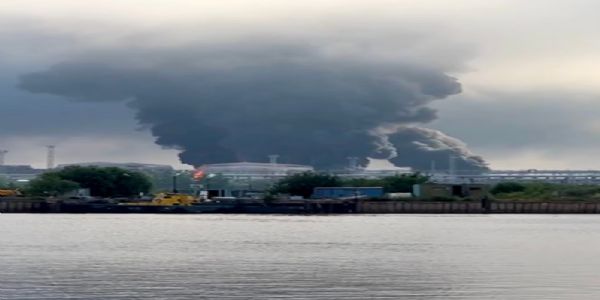
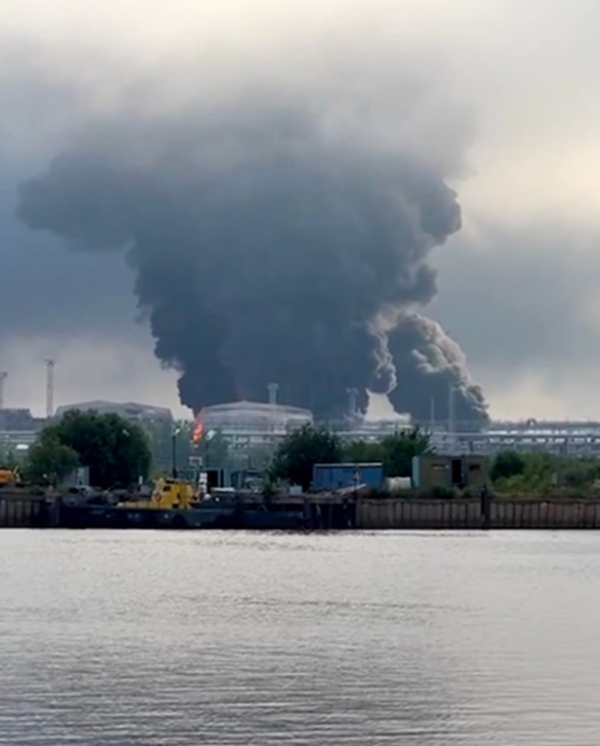
Ukrainian President Volodymyr Zelenskyy shared a video of the operation on X, showing a massive plume of smoke rising from an oil facility at the Port of St. Petersburg following the strike.
According to ABC News, President Zelenskyy said Ukrainian forces had successfully targeted an oil facility at the Port of St. Petersburg as well as military positions near the Kronstadt Naval Base. He described the operation as another step in Ukraine's campaign to weaken Russia's military infrastructure and logistics.
Russia's Ministry of Defence stated that approximately 500 long-range drones participated in the overnight attack. Moscow Mayor Sergei Sobyanin said around 200 drones specifically targeted the Russian capital, with air defence systems deployed to intercept the incoming aircraft.
Ukraine has increasingly intensified its long-range drone campaign deep inside Russian territory, regularly striking oil refineries, fuel depots, defence industry facilities and other strategic infrastructure. The attacks are aimed at disrupting Russia's military logistics and reducing its ability to sustain military operations.
According to the report, the repeated strikes on energy infrastructure have led to fuel shortages in several parts of Russia. Videos circulating on social media show motorists waiting in long queues at petrol stations as supplies become limited.
The report further said Ukraine's expanding use of medium- and long-range drones is increasingly targeting Russia's logistical network and attempting to disrupt supply routes to Russian forces stationed in occupied Crimea. Authorities in Crimea have reportedly declared a state of emergency due to fuel shortages and imposed curfews amid power outages caused by the Ukrainian attacks.
Meanwhile, Russian President Vladimir Putin visited a military installation late at night wearing military attire, underscoring the importance Moscow attaches to the evolving battlefield situation.
Separately, the Russian military claimed on Saturday that its forces had captured the strategically important city of Kostiantynivka, a key Ukrainian defensive stronghold in the eastern Donbas region. International military analysts said that if the claim is confirmed, it would represent Russia's first major battlefield success of the year.
However, defence experts cautioned that Russia's territorial gains have come at a significant cost. Konrad Muzyka, Director of Rochan Consulting and a Polish defence analyst, said Russian forces continue to advance only slowly and may ultimately have lost more territory overall than they gained during May.
Independent military observers and intelligence assessments from Western countries have also indicated that Russian forces have suffered substantial casualties and equipment losses during the prolonged fighting, despite recent advances claimed by Moscow.
---------------
Hindusthan Samachar / Jun Sarkar