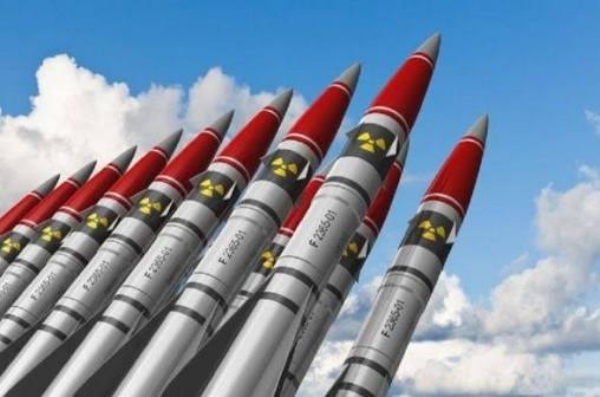
Vilnius, 04 July (H.S.): A proposal to remove Lithuania's constitutional ban on the deployment of nuclear weapons has been formally introduced in the country's Parliament (Seimas). The constitutional amendment has secured the backing of 51 of the 141 members of Parliament, enabling it to be officially registered for legislative consideration.
The proposal seeks to repeal Article 137 of the Constitution, which prohibits the deployment of weapons of mass destruction and the establishment of foreign military bases on Lithuanian territory.
The initiative follows recent remarks by President Gitanas Nausėda, who described the constitutional provision as outdated and argued that Lithuania should keep its future security options open in light of the evolving regional security environment. Following a meeting with parliamentary party leaders, Nausėda said that most political parties support the complete removal of Article 137.
The President stated that the regional security situation continues to become increasingly challenging and stressed that Lithuania should not be viewed as a weak link or a grey zone within NATO. Referring to Finland, he noted that the country revised its restrictions related to nuclear weapons after joining the NATO alliance.
Russia, however, has dismissed the security concerns expressed by Lithuania and other Baltic nations. Moscow has repeatedly stated that it has no intention of attacking NATO member states and has accused the alliance of using the alleged Russian threat as a justification for expanding its military presence in Eastern Europe.
Meanwhile, international media reports have claimed that the United States is considering the possible deployment of nuclear weapons in some NATO countries along the alliance's eastern flank. Several countries bordering Russia have reportedly expressed interest in hosting such deployments.
Amid growing militarisation across Europe, NATO leadership has urged member states to strengthen their defence preparedness. Russia has warned that the establishment of NATO's nuclear infrastructure near its borders would be regarded as a direct military threat and would prompt an appropriate response. At the same time, Moscow has reiterated that it remains open to dialogue with NATO on the basis of equality.
---------------
Hindusthan Samachar / Jun Sarkar


04 Jul 2026