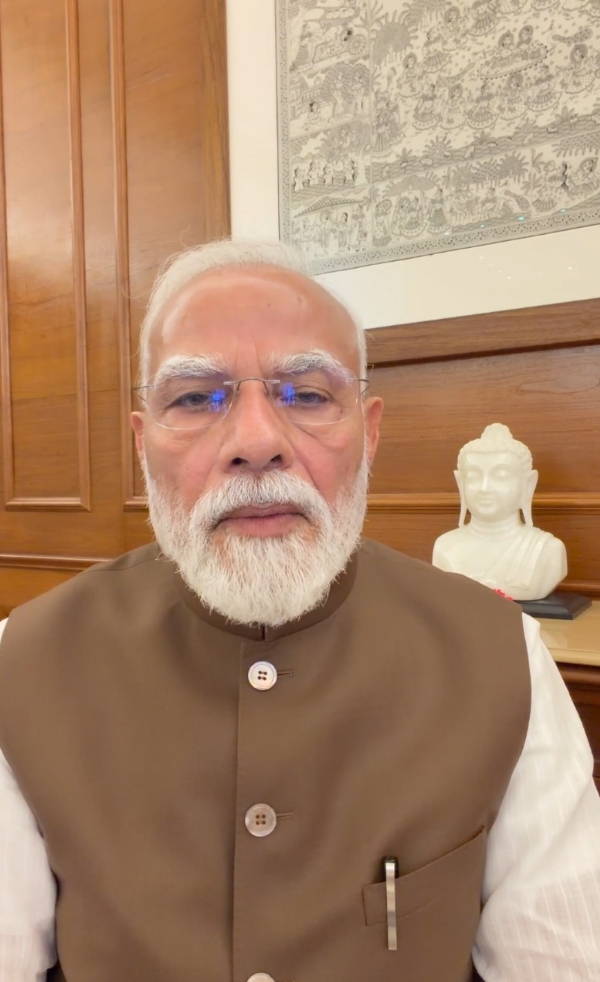
New Delhi, 31 July (H.S.):
Prime Minister Narendra Modi has welcomed Parliament's passage of the Public Examination (Prevention of Unfair Means) Amendment Bill, 2026, describing it as a major step towards making India's examination system more transparent, secure and trustworthy. In a video message shared on Instagram late Thursday, the Prime Minister said the legislation reflects the government's commitment to protecting the future of students and eliminating paper leak networks.
The Bill, which was approved by both Houses of Parliament this week, introduces stricter legal provisions to curb examination malpractices, including tougher punishments for paper leaks, the establishment of fast-track courts and a stronger enforcement mechanism to deal with organised cheating syndicates.
Addressing students and citizens, Modi said paper leaks have troubled both the Centre and states for several decades, putting the careers of millions of young people at risk. He stressed that comprehensive reforms, wider use of technology and stringent legal action were necessary to safeguard the integrity of public examinations across the country.
The Prime Minister said the government had fulfilled its commitment to introduce stronger legislation after holding extensive discussions in Parliament. He added that the new law marks an important milestone in building a credible examination system and reaffirmed that the government would continue taking steps to ensure such incidents do not persist.
Modi also highlighted a series of measures initiated by the government to strengthen the examination ecosystem, including the formation of a dedicated task force, the creation of fast-track courts and consultations with state governments to improve examination management.
Under the amended law, individuals found guilty of paper leaks or using unfair means in public examinations can face imprisonment ranging from five to ten years, along with fines of up to Rs 50 lakh. In cases involving organised crime, the legislation prescribes a minimum prison term of seven years and fines that may extend to Rs 10 crore.
The amendment further empowers state governments and Union Territory administrations to designate Courts of Session as special fast-track courts for paper leak cases. These courts will be expected to conclude trials within three months of the filing of a chargesheet, ensuring faster adjudication of offences.
The latest video is the Prime Minister's fourth social media message within a week focusing on examination reforms and education. In his earlier messages, he had announced plans to strengthen the legal framework against paper leaks, thanked young people for their suggestions, and revealed the formation of a high-level task force led by Infosys co-founder Nandan Nilekani to recommend long-term reforms for India's examination system.
The government has maintained that the new law is aimed at restoring public confidence in competitive examinations, protecting deserving candidates and ensuring that organised paper leak rackets are dealt with firmly through stricter legal and institutional mechanisms.
---------------
Hindusthan Samachar / Jun Sarkar

31 Jul 2026
President, Vice President and Defence Minister Congratulate India's Commonwealth Games 2026 Medallists
31 Jul 2026