Washington/Tehran, 25 July (H.S.): The conflict between the United States and Iran showed no signs of easing on Friday, as both sides continued military operations amid growing concerns over a wider regional confrontation. The US military said it had fired on a merchant vessel attempting to breach its blockade of Iranian ports, while Iran targeted American and allied positions across the Persian Gulf region.
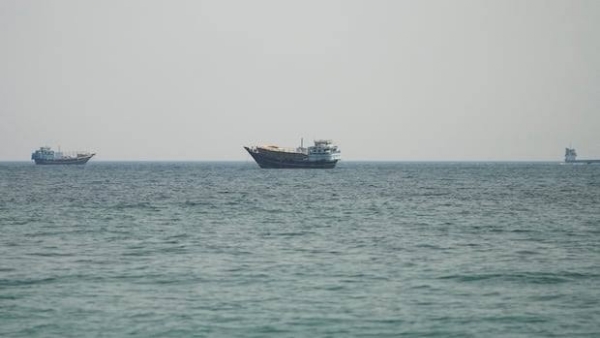
According to US Central Command spokesperson Captain Tim Hawkins, American forces disabled the merchant ship M/T Lavine in the Gulf of Oman after the vessel allegedly ignored repeated warnings and attempted to cross the blockade multiple times. The US military said its forces fired into the ship’s engine room after the crew failed to comply with instructions. It was the second commercial vessel to be disabled since Washington reinstated the maritime blockade.
The latest developments came as the US and Iran entered the 13th consecutive night of military exchanges, with both nations carrying out strikes and issuing warnings against each other. The escalating confrontation has raised concerns over energy supplies, international shipping routes and regional stability.
US President Donald Trump held discussions with senior national security officials on Friday regarding the ongoing crisis and possible future steps. During an event at the White House, Trump described talks with Iran as “the most serious” negotiations so far, while also saying he was not in a hurry to end the conflict.
Meanwhile, Iranian Foreign Minister Abbas Araghchi said Tehran would not surrender to what he described as US pressure. He said Iran was continuing discussions with China and Russia and insisted that the country would not be intimidated by threats.
The Strait of Hormuz remained at the centre of the crisis. The strategically important waterway, through which a significant portion of global oil and gas supplies passes, has been severely affected by Iranian attacks and restrictions. The disruption has pushed up fuel prices and increased fears of economic instability worldwide.
In Iraq, security officials reported that US-led forces intercepted five explosive-laden drones near Erbil, the capital of Iraq’s semi-autonomous Kurdish region, where American military advisers are stationed. Explosions were reported near the airport area, although US officials did not immediately comment on the incident.
Iran’s Islamic Revolutionary Guard claimed it had carried out attacks on US facilities in Kuwait and Bahrain, including a US base in Udairi and a facility linked to the US Navy’s Fifth Fleet. However, American officials did not confirm the claims.
Bahrain and Jordan also said they had intercepted aerial attacks linked to Iran on Friday. In response, US forces reportedly targeted Iranian military facilities, including a Revolutionary Guard naval base in northern Iran and locations connected to Iran’s naval capabilities.
The United States said its latest strikes were aimed at reducing Iran’s ability to threaten commercial shipping and civilian vessels operating in regional waters. Washington has been pushing to reopen the Strait of Hormuz, a vital trade route for global energy transportation.
Diplomatic efforts continued despite the ongoing military confrontation. A delegation from Oman, which has previously mediated between Washington and Tehran, visited Iran on Friday to discuss the security situation and management of shipping traffic in the Strait of Hormuz.
The crisis expanded further after Saudi Arabia carried out strikes on Houthi-controlled areas in Yemen following attacks on Saudi oil tankers in the Red Sea. The Iran-backed Houthi group had threatened to target shipping linked to Saudi Arabia, raising concerns over another major maritime route, the Bab el-Mandeb Strait.
Saudi authorities said they would take necessary measures to protect their vessels and warned the Houthis against continuing attacks. US President Donald Trump also threatened strong military action if attacks on commercial ships continued.
The economic impact of the conflict has already been felt globally. Brent crude oil prices remained significantly higher than before the war, while fuel prices increased in several countries. The disruption around key maritime routes has created uncertainty in global energy markets.
The humanitarian consequences have also grown. Iran’s Health Ministry reported thousands of deaths since the beginning of the conflict, while the International Maritime Organization said thousands of sailors remained stranded on hundreds of vessels near the Strait of Hormuz. The United Nations raised concerns that some seafarers had been left without essential supplies, medical assistance and communication facilities.
Despite ongoing diplomatic contacts, there have been no major breakthroughs in negotiations. Pakistan’s Foreign Minister Ishaq Dar met his Iranian counterpart Abbas Araghchi on Friday as part of discussions related to possible mediation efforts, but Tehran indicated that it wanted changes in the US position rather than additional mediators.
The conflict began after US and Israeli strikes on Iran on February 28, with Washington and its allies citing concerns over Iran’s nuclear programme and regional activities. Israel has indicated that it may re-enter the conflict, with Israeli Prime Minister Benjamin Netanyahu expected to meet President Trump in the United States next week.
Hindusthan Samachar / Jun Sarkar