Warsaw, 02 July (H.S.): Poland has criticised Ukrainian President Volodymyr Zelenskyy's initiative to establish a national memorial honouring controversial Ukrainian nationalist figures associated with the Second World War, a move that has further strained historical relations between the two neighbouring countries. Israel and Russia have also criticised the proposal, with both attributing it to what they described as the growing influence of neo-Nazi ideology in Ukraine.
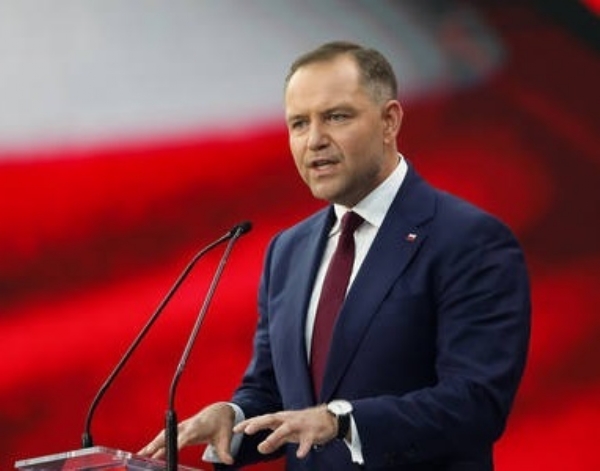
The Office of Polish President Karol Nawrocki said Ukraine's decision would deepen long-standing historical disputes between the two countries. Presidential spokesperson Rafał Leśkiewicz described the move as the latest in a series of escalatory actions by the Ukrainian authorities.
Ukraine's Parliament on Wednesday unanimously approved legislation providing for the establishment of a Memorial to Outstanding Ukrainians. The development came shortly after President Zelenskyy participated in a state ceremony to rebury the remains of controversial Ukrainian nationalist leader Andriy Melnyk and his wife, Sofiya Fedak-Melnyk, with official honours.
Andriy Melnyk was one of the prominent leaders of the Organization of Ukrainian Nationalists (OUN). According to historical records, he maintained links with Nazi Germany during the Second World War, although relations between him and the Nazi leadership reportedly deteriorated later in the conflict.
Polish Defence Minister Władysław Kosiniak-Kamysz said Ukraine would continue to face obstacles in its bid to join the European Union as long as it continued to glorify controversial figures such as OUN leader Stepan Bandera.
Israel's Ministry of Foreign Affairs also objected to the decision to accord state honours to Melnyk. Russia, meanwhile, criticised the move, alleging that it reflected the increasing influence of neo-Nazi ideology in Ukraine.
The Ukrainian government has not issued an official response to the criticism.
Within Ukraine, some nationalist groups regard the Organization of Ukrainian Nationalists (OUN) and the Ukrainian Insurgent Army (UPA) as symbols of the country's struggle for independence against Soviet rule. However, Poland, Israel and numerous historians have consistently raised serious concerns regarding the organisations' historical role and wartime activities.
The UPA, the armed wing of the OUN, has been accused of carrying out large-scale massacres of ethnic minorities during the Second World War in territories that now form part of western Ukraine. Its members are believed to have killed at least 100,000 Polish civilians in what is widely known as the Volhynia Massacre.
According to records presented during the Nuremberg Trials, Melnyk co-founded the Organization of Ukrainian Nationalists in 1929 and became one of its principal leaders in 1938. Prior to Nazi Germany's invasion of the Soviet Union, he reportedly established contacts with Germany's military intelligence agency, the Abwehr. Historical accounts state that he requested Adolf Hitler to create a Ukrainian Waffen-SS division. Relations between Melnyk and the Nazi leadership later deteriorated, and he was imprisoned by the Nazis in 1944. Following the end of the Second World War, Melnyk settled in Luxembourg.
---------------
Hindusthan Samachar / Jun Sarkar
02 Jul 2026