




Tehran/Washington,, 14 July (H.S.): The United States carried out a third consecutive night of strikes on Iran, targeting port cities and other locations across the country, further escalating tensions in the region. The US Central Command (CENTCOM) said the attacks were launched on the orders of President Donald Trump and targeted multiple locations simultaneously.
In response to the US strikes, Iran reportedly launched missile attacks on two United Arab Emirates (UAE)-flagged tankers transiting the Strait of Hormuz. According to the UAE Ministry of Defence, one Indian crew member was killed in the attack. The ministry also confirmed that the Iranian missile strike left eight others injured, including six Indian nationals and two Ukrainian nationals. Four of the injured are said to be in critical condition. The UAE stated that it reserves the right to respond to the attack.
According to reports by CNN and Al Jazeera, CENTCOM said the latest US strikes resulted in explosions in the Iranian port city of Bandar Abbas as well as on Kish, Qeshm, and Abu Musa islands. Iranian authorities also confirmed the attacks.
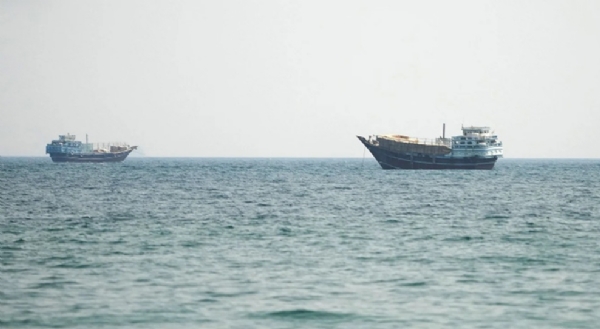
The UAE Ministry of Defence said the missile strikes hit two of its tankers in Omani waters within the Strait of Hormuz. It reiterated that one Indian national serving as a crew member had been killed and that eight others had sustained injuries.
CENTCOM also announced that it would resume a naval blockade of Iranian ports from 4:00 p.m. Eastern Time on Tuesday. Following the announcement, global oil prices reportedly surged by more than nine per cent.
The renewed military confrontation between the United States and Iran has intensified regional tensions. Hostilities have also reportedly resumed between Saudi Arabia and the Iran-backed Houthi rebels in Yemen, raising concerns that the informal ceasefire has effectively collapsed. Saudi Arabia said it intercepted a Houthi ballistic missile, while the Houthis claimed that Saudi airstrikes targeted Sana'a International Airport.
Flight-tracking data on Tuesday morning reportedly showed at least a dozen US military aircraft operating over the Persian Gulf, the Gulf of Oman, areas near the UAE coast, and Saudi Arabian airspace. At the same time, CENTCOM announced another wave of strikes on Iran, marking the third consecutive night of military operations.
As of 8:00 p.m. Eastern Time (3:30 a.m. Iran time), aircraft operating in the area reportedly included nine KC-135R and two KC-46A aerial refuelling tankers. Flight-tracking data also indicated the presence of several intelligence and surveillance aircraft, including an E-3B Sentry Airborne Warning and Control System (AWACS) aircraft and a US Navy P-8 Poseidon maritime surveillance aircraft.
The E-3B Sentry is capable of monitoring an airspace covering approximately 120,000 square miles and can reportedly track nearly 600 targets simultaneously. Aerial refuelling aircraft play a critical role in sustaining long-duration military operations by allowing fighter jets and other combat aircraft to refuel without landing.
Meanwhile, President Donald Trump said during an interview with a conservative radio network, We are going to hit them hard tonight, and we will hit them hard again tomorrow. He alleged that Iran had failed to honour its commitments and asserted that the United States would ultimately gain control over the Strait of Hormuz.
Trump also said that countries receiving US support in the conflict with Iran should bear the financial cost of that assistance. He named several regional allies, including Israel, Saudi Arabia, Qatar, and the United Arab Emirates.
According to Iranian media reports on Tuesday morning, loud explosions were heard in the southern port city of Bandar Abbas, as well as on Kish, Qeshm, and Abu Musa islands. The Iranian military stated that the United States had carried out drone strikes on the targeted locations.
---------------
Hindusthan Samachar / Jun Sarkar


14 Jul 2026