Mumbai, 14 July (HS):
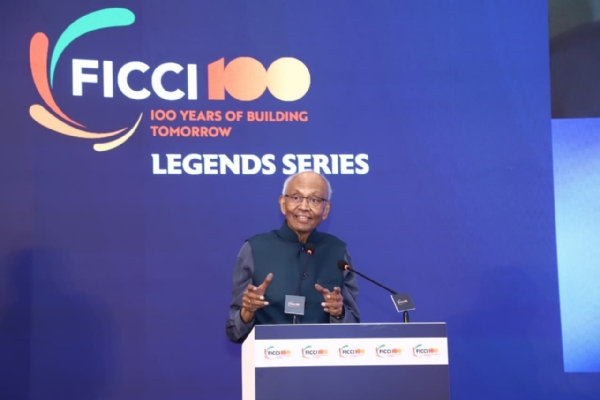
Padmabhushan Raghunath Mashelkar emphasised effective use of deep-tech innovation,
Artificial Intelligence and inclusive technologies to realise the dream of
Viksit Bharat 2047, with a focus on creating affordable, globally competitive
solutions that benefits millions rather than a privileged few.
Padma Vibhushan Dr Raghunath Mashelkar
who is Fellow of Royal Society and Former Director of FCCI (Federation of
Chamber of Commerce of India) and former Director of CSIR, was delivering a
lecture on ‘Winning through innovation: Lessons for industry and society’, in
Mumbai.
Dr Mashelkar said
India must transform from being a consumer of global technologies to a creator
of the innovations through deep science, AI and public-private collaboration.
Speaking about his globally acclaimed philosophy ‘More
from less for more’ Dr Mashelkar said, India’s greatest op[pertunity lises in
creating world-class products and technologies that deliver superior
performance with fewer resources while making them affordable to millions of
people. Innovations should be measured by its ability to solve society’s
problems.
India has demonstrated that breakthrough innovations can emerge despite limited
resources, from affordable healthcare technologies and digital public infrastructure
to AI-enabled diagnostics and deep-tech Startups, which are globally
competitive low cost innovations, Dr Mashelkar said. He quoted examples of
AI-powered tuberculosis detection through smartphones, affordable breast cancer
screening, digital maternal care and non-invasive anaemia detection all of
which embodied in the ‘More from less for more’ philosophy.
Dr Mashelkar called upon Indian industry to move become
creator of ‘Next Practices’ than following global best practices. India’s
digital transformation, affordable data revolution, deep-tech entrepreneurship
and green hydrogen initiative are examples of its ability to lead global innovation.
AI should not serve as a co-pilot and never an autopilot ensuring that human
judgement, ethics and compassion remain at the centre of technological progress.
He urged that the government actively supports
high-risk research and disruptive technologies because of which innovation
flourishes. If India wants to become a developed nation by 2047, it must invest
in grand challenges, deep science and technologies that can transform the
society than merely buying the cheapest available solutioms, he added.
R V Kanoria, Past President, FICCI and
CMD of Kanoria Chemicals and Industries Ltd said, “Innovation is no longer
confined to laboratories or research institutions. It is defining force that
will determine India’s economic competitiveness, technological leadership and
inclusive growth in the decades ahead. The challenges before the industry is
not simply to grow bigger, but to create solutions that generate greater values
while benefiting a large section of the society.
Dr Mashelkar’s philosophy of ‘More from less for more’ provides a powerful
roadmap for achieving sustainable, inclusive and globally competitive growth,
he added.
Ankit Mehta, Co-Chair, FICCI Drones Committee and Co-founder and CEO of
ideaForge emphasised strnger collaboration between industries. Academia,
Dtartups, research institutions and government for achieving the dream of Viksit
Bharat 2047.
The session held under the FICCI
Legend Series brought together leading industrialists, policy makers,
scientists, entrepreneurs, Startup founders, researchers and members of
business community to deliberate on how innovation can drive Indian economic
transformation
---------------
Hindusthan Samachar / Ajay Vasant Mardikar
14 Jul 2026