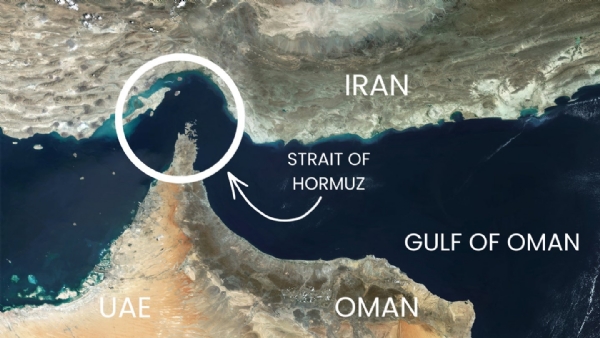
Tehran, 12 July (H.S.): The Islamic Revolutionary Guard Corps (IRGC) Navy has claimed that the Strait of Hormuz has been closed until further notice, citing foreign military activity and regional security concerns. According to the IRGC, the strategic waterway will remain closed until the United States ends its military intervention in the region.
According to Iran's state-run Press TV, the IRGC said in a statement issued on Sunday that no vessel would be permitted to pass through the Strait of Hormuz until further orders. The organisation added that the closure would remain in effect as long as the United States continued its military involvement in the area.
The IRGC also warned that if the current situation were used as a pretext for launching any new military campaign against Iran, it would deliver a strong response.
The organisation further stated that the United States, Israel and any countries that provide military bases or logistical support for operations against Iran would bear full responsibility for any future escalation or military confrontation.
According to the statement, warning shots were fired recently after a vessel allegedly ignored Iranian directives and switched off its onboard tracking systems, creating what the IRGC described as a threat to maritime security.
The IRGC reiterated that it had previously warned against what it called foreign interference in the Strait of Hormuz and the illegal designation of shipping routes, asserting that any such actions would be met with decisive measures.
It is noteworthy that Iran closed the strategically important waterway after February 28 following military strikes by the United States and Israel on Iranian targets. Iran later tightened enforcement after US President Donald Trump announced the continuation of what Tehran described as an unlawful naval blockade against Iranian ships and ports, despite declaring a ceasefire on April 7.
In May, Iran officially introduced a new system to regulate maritime traffic through the Strait of Hormuz. It instructed vessels to coordinate their navigation plans with Iranian authorities and warned against using routes outside the supervisory management zones designated by Tehran.
In June, Iran and the United States reached an agreement aimed at easing tensions arising from what Tehran described as unprovoked aggression. Although Washington subsequently claimed that the naval blockade had been lifted, it also stated that it would continue maintaining a military presence in the strategic waterway.
---------------
Hindusthan Samachar / Jun Sarkar
12 Jul 2026
US Launches Third Round of Strikes on Iran After Alleged IRGC Attack on Commercial Cargo Ship
12 Jul 2026