New Delhi, 01 July (H.S.): The Delhi Government has officially notified the Delhi Electric Vehicle (EV) Policy 2026, which came into effect on July 1 and will remain in force until March 31, 2030.
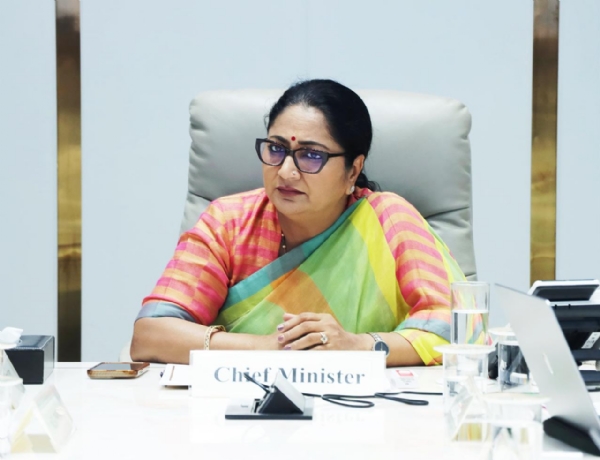
The Chief Minister's Office announced the policy on Wednesday. Chief Minister Rekha Gupta said the new policy aims to accelerate the adoption of electric vehicles across the national capital while improving air quality, reducing dependence on conventional fossil fuels, expanding charging and battery-swapping infrastructure, and developing a robust electric mobility ecosystem. She said the policy gives equal importance to financial incentives, digital transparency, institutional oversight and environmental responsibility.
The policy makes special reference to the latest report of the Commission for Air Quality Management (CAQM), which states that vehicle emissions account for nearly 23 per cent of Delhi's air pollution, particularly during the winter months, making it the single largest source of pollution in the city.
According to the report, around 67 per cent of all registered vehicles in Delhi are two-wheelers. The policy, therefore, identifies their rapid electrification as essential for reducing air pollution. It also highlights that three-wheelers, commercial cars and N1-category goods vehicles travel longer distances every day and contribute significantly to urban emissions. Consequently, these vehicle categories have been prioritised for electrification.
The Chief Minister said the policy extends far beyond encouraging the purchase of electric vehicles. It presents a comprehensive roadmap for establishing a long-term clean transportation system by integrating charging infrastructure, battery swapping, battery recycling, energy management, digital service delivery and environmental protection.
She said a strong institutional framework has been created to ensure effective implementation of the policy. The Transport Department will serve as the nodal department and will establish a dedicated EV Cell responsible for policy implementation, issuing guidelines, providing clarifications and coordinating among stakeholders. A dedicated Project Management Consultant (PMC) will also be appointed to support implementation.
Gupta further said that a Model Approval Committee will be constituted under the Transport Department to determine the eligibility of electric vehicle models for government incentives and subsidies. The committee will evaluate and approve EV models based on prescribed technical standards, eligibility criteria and operational guidelines. Only models approved by the committee will qualify for government incentives.
To strengthen charging and battery-swapping infrastructure, Delhi Transco Limited (DTL) has been designated as the nodal agency. DTL will be responsible for planning public charging stations, coordinating implementation, setting technical standards, operating the digital portal and ensuring coordination among various government departments. The agency will facilitate the phased expansion of public and community charging networks while simplifying the establishment of charging stations through a single-window clearance system.
The Chief Minister also announced that a High-Level Committee, chaired by the Chief Secretary, will be constituted to monitor the effective implementation of the policy. The committee will include representatives from the Transport, Energy, Planning, Environment and Finance Departments, along with DTL, power distribution companies (DISCOMs) and other departments and agencies as required. It will regularly review policy implementation and ensure inter-departmental coordination.
She added that the Delhi Electric Vehicle Apex Committee will oversee key aspects of policy implementation, recommend necessary amendments and advise the government on future clean mobility technologies, including hydrogen-powered transport and other emerging sustainable fuel solutions. The composition and terms of reference of both committees will be notified separately following the Chief Minister's approval.
Gupta said battery recycling and environmental responsibility have also been given significant importance under the policy. The Environment Department will ensure that all vehicle manufacturers and related entities comply with the Battery Waste Management Rules. Meanwhile, the Delhi Pollution Control Committee (DPCC) will develop battery collection centres under the public-private partnership model and notify standard operating procedures for the safe collection, storage, transportation and transfer of used batteries to authorised recyclers.
The Chief Minister further said that the Education Department has also been assigned a key role under the policy. It will monitor the phased electrification of school buses and conduct awareness programmes in schools on air pollution, environmental conservation, energy efficiency and clean transportation.
The Revenue Department will be responsible for identifying and making available suitable government land for the development of charging stations and battery-swapping infrastructure across the national capital.
---------------
Hindusthan Samachar / Jun Sarkar


01 Jul 2026