
-Northeast India to Soon Gain Access to Bone Marrow Transplants and Advanced Cancer Care
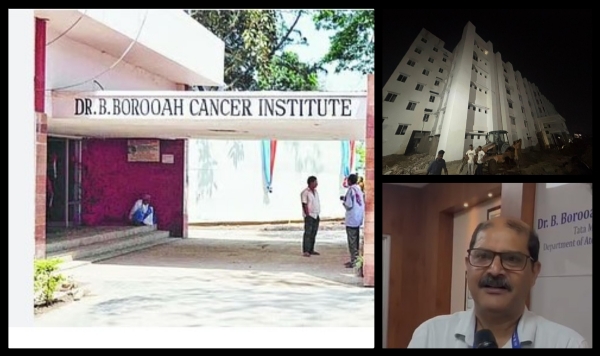
New Delhi, 01 July (H.S.): A state-of-the-art 292-bed Paediatric and Adult Hemato-Lymphoid Cancer Unit nearing completion at the Dr. B. Borooah Cancer Institute (BBCI) in Guwahati is expected to transform cancer care across Northeast India, bringing advanced treatment closer to thousands of patients who currently travel to distant cities for specialised care.
The new facility, coming up at the region's largest cancer treatment centre, will offer services including bone marrow transplantation, advanced chemotherapy, specialised paediatric oncology, modern intensive care, advanced diagnostics and comprehensive treatment for blood cancers. It is expected to significantly reduce the need for patients to seek treatment in cities such as Delhi, Mumbai and Vellore.
Developed under the Prime Minister's Development Initiative for North East (PM-DevINE) with support from the Ministry of Development of North Eastern Region (DoNER), the project has entered its final stage of construction. Physical progress has reached 78.9 per cent, with finishing work currently underway. The work order was issued on May 31, 2023, and Rs 33.91 crore had been released for the project by June. The institute aims to commission the facility within the scheduled timeline.
Speaking to Hindusthan Samachar, Dr. Bibhuti Bhushan Borah Thakur, Professor of Surgical Oncology and Director (Administration) at BBCI, described the project as a major milestone for cancer care in the Northeast.
The new unit will provide dedicated treatment facilities for both paediatric and adult patients suffering from blood cancers. Once bone marrow transplantation services become operational, patients from the Northeast will no longer have to travel extensively for specialised treatment, he said.
Dr. Thakur added that robotic surgery, molecular diagnostics and several other advanced technologies are also being introduced in phases. He said the institute is being developed into a major referral centre serving the entire Northeast and eastern India.
Among the project's most significant additions is a dedicated Bone Marrow Transplant (BMT) Unit. At present, patients suffering from blood cancers and several serious haematological disorders often have to travel to a handful of specialised hospitals elsewhere in the country. The availability of BMT services within the region is expected to improve access to timely treatment and enhance patient outcomes.
BBCI has already established itself as a pioneer in cancer care and research. It became the first institution in India to introduce a community-based gastric cancer screening programme and continues to play a leading role in cancer awareness, early detection and oncology research. The institute is also expanding its capabilities in advanced cancer treatment technologies and translational research.
The project, with an estimated cost of approximately Rs 300.16 crore, includes a seven-storey hospital block covering nearly 19,675 square metres. The facility will house outpatient and inpatient departments, intensive care units, step-down ICUs, a Bone Marrow Transplant Unit, advanced operation theatres, modern laboratories and comprehensive diagnostic services. Additional support facilities for patients and caregivers are also being developed.
A dedicated Skill Development Centre is being established within the campus to train doctors, nurses, technicians and other healthcare professionals in oncology and allied medical disciplines.
BBCI, an institution aided by the Department of Atomic Energy and functioning as a unit of the Tata Memorial Centre, Mumbai, currently serves as the largest cancer care centre in Northeast India. The institute treats around 40,000 to 45,000 patients annually, while nearly 12,000 new cancer cases are registered each year, making it the region's principal referral centre for oncology services.
Cancer incidence in Northeast India remains among the highest in the country. According to the Indian Council of Medical Research (ICMR), India's annual cancer incidence ranges between 90 and 120 cases per 100,000 population, while the corresponding figure in the Northeastern states ranges from 220 to 270 cases per 100,000 population. More than 45,000 new cancer cases are diagnosed in the region every year.
Medical experts attribute the higher incidence to widespread tobacco consumption, areca nut use, dietary habits and other socio-geographical factors.
ICMR data also show that nearly 95 per cent of cancer patients from Sikkim, 58 per cent from Nagaland, 16 per cent from Manipur and 13 per cent from Meghalaya have traditionally travelled outside the region for specialised treatment. The dependence is even greater for patients requiring treatment for blood cancers and paediatric malignancies, often resulting in delays in diagnosis and therapy.
The PM-DevINE scheme, announced in the Union Budget 2022-23 with an initial allocation of Rs 1,500 crore, supports high-impact infrastructure projects across the Northeastern states through the Ministry of Development of North Eastern Region and the North Eastern Council. The BBCI expansion is among its flagship healthcare initiatives and is expected to significantly strengthen specialised cancer care in the region.
Hindusthan Samachar / Jun Sarkar