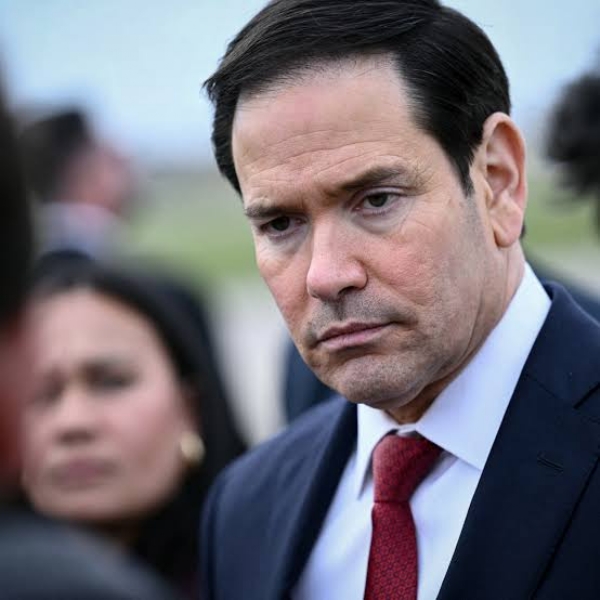
WASHINGTON, June 4(HS): United States Secretary of State Marco Rubio has stated that Washington's military campaign against Iran, known as Operation Epic Fury, has concluded, even as violence and instability continue across the Middle East.
Speaking before the House Foreign Affairs Committee on Wednesday, Rubio said the United States was no longer conducting sustained military strikes inside Iran because the operation had achieved its primary objectives. According to him, the campaign significantly weakened Iran's military capabilities by damaging its defense-industrial infrastructure, reducing its missile-launching capacity, diminishing its drone stockpiles, and neutralizing much of its conventional air and naval forces.
The conflict, which began with coordinated US-Israeli strikes on Iranian targets on February 28, has triggered one of the most serious regional crises in recent years. Since then, tensions have spread across the Gulf region, affecting international shipping routes, regional security, and diplomatic relations.
Despite Rubio's assertion that the military operation has ended, several lawmakers challenged his assessment, arguing that the conflict remains active. Critics pointed to recent Iranian attacks against regional targets, including a missile and drone strike on Kuwait International Airport that reportedly left one person dead and dozens injured. Additional drone attacks were also reported in Bahrain, a country that hosts a significant American military presence.
Democratic lawmakers warned that US military personnel stationed throughout the region remain vulnerable and that the security situation has not stabilized. They argued that the continuation of hostilities and the closure of key maritime routes demonstrate that the conflict's broader consequences are far from resolved.
A major concern remains the Strait of Hormuz, one of the world's most strategically important shipping corridors for oil and natural gas exports. Iran's actions have severely disrupted maritime traffic through the waterway, creating uncertainty in global energy markets and raising concerns among international trading partners.
Rubio also provided an update on ongoing diplomatic contacts with Iran. He said discussions continue regarding Tehran's stockpile of highly enriched uranium, which remains a central issue in negotiations. According to the Secretary of State, while both sides have exchanged proposals, Iran has not yet formally approved a comprehensive peace agreement.
The United States has maintained that any lasting settlement must include restrictions on Iran's nuclear activities, the transfer or neutralization of its near-weapons-grade enriched uranium stockpile, and the reopening of the Strait of Hormuz to international shipping.
Iran, however, has reportedly insisted on the release of approximately $12 billion in frozen assets before engaging in substantive negotiations. Iranian officials have also rejected suggestions that the country's enriched uranium reserves would be completely eliminated under a future agreement.
The latest developments highlight the gap between military achievements claimed by Washington and the continuing security challenges facing the region. While US officials describe the campaign as a strategic success, ongoing attacks, disrupted shipping lanes, and unresolved nuclear negotiations indicate that broader regional tensions remain far from settled.
---------------
Hindusthan Samachar / Jun Sarkar

04 Jun 2026