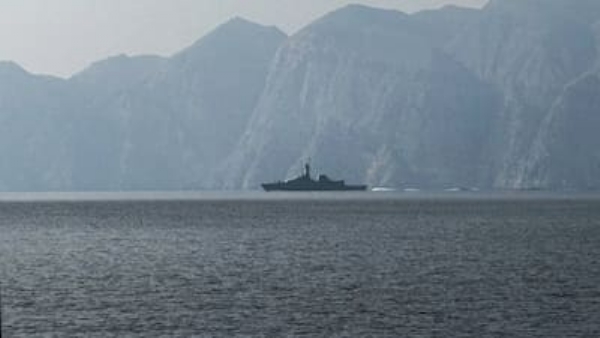
WASHINGTON, June 4(HS): Tensions in the Middle East escalated further on Thursday after Iran claimed that its naval forces had targeted an American military vessel in the Sea of Oman, a claim that was swiftly rejected by the United States military.
According to Iranian media reports, the vessel was allegedly struck while operating near Iran’s territorial waters in the strategically important Sea of Oman. Iranian authorities described the action as a response to what they called American attacks on Iranian commercial shipping and alleged violations of regulations governing navigation through the Strait of Hormuz.
The United States Central Command (CENTCOM), however, categorically denied the claim. In a statement posted on social media, CENTCOM said all American military assets in the region remained fully operational and unharmed. The command dismissed Tehran’s assertion as false, maintaining that US naval forces continue to conduct their missions safely and without disruption.
The dispute comes amid a broader regional crisis that has intensified following weeks of military exchanges between Iran and the United States and its allies. The latest maritime controversy unfolded only hours after Iran launched missile and drone attacks aimed at American military installations in Kuwait and Bahrain, according to US and Gulf officials.
The confrontation has also been accompanied by a sharp disagreement over a devastating attack on Kuwait International Airport. Iranian authorities have denied responsibility for the strike, while American and Kuwaiti officials have blamed Tehran for the assault.
Iran’s Islamic Revolutionary Guard Corps (IRGC) argued that damage at the airport was caused by a malfunction involving a US-made Patriot air defence system rather than by Iranian missiles or drones. American military officials strongly rejected that explanation, accusing Iran of carrying out a deliberate attack against civilian infrastructure.
The airport strike has become one of the most serious incidents since a fragile ceasefire was established across the Gulf region in April. Kuwaiti authorities reported that the attack killed one person and injured 63 others, while causing extensive damage to Terminal One and disrupting airport operations. Several flights were diverted before services were gradually restored.
India confirmed that the person killed in the attack was an Indian national. The Ministry of External Affairs expressed condolences and renewed its call for all parties to refrain from targeting civilian infrastructure and non-combatants.
Kuwaiti defence officials stated that approximately 30 ballistic missiles and drones were involved in the assault. Authorities described the incident as a major act of aggression that caused significant structural damage to airport facilities.
Meanwhile, Iran has continued to defend its military actions, arguing that they were retaliatory measures against countries that allegedly facilitated American military operations. Gulf states, including Kuwait and Bahrain, have rejected those accusations and accused Tehran of attempting to pressure regional governments into influencing US policy.
Former Qatari Prime Minister Hamad bin Jassim bin Jaber Al Thani also criticized Iran's recent actions, questioning the rationale behind attacks on neighbouring Gulf countries. While reaffirming Qatar's interest in maintaining constructive relations with Tehran, he stressed the importance of a united regional response to threats against sovereign states.
Iran's Revolutionary Guards later stated that their primary targets were the Ali Al Salem Air Base in Kuwait and the headquarters of the US Fifth Fleet in Bahrain. Notably, the statement did not mention Kuwait International Airport, despite widespread allegations linking Iran to the attack.
The Pentagon said American and allied air-defence systems intercepted several Iranian missiles and drones directed at military targets in Kuwait and Bahrain. According to US officials, some missiles failed before reaching their intended destinations, while others were destroyed by defensive systems.
Bahrain also reported successfully intercepting incoming missiles and drones, preventing damage to critical facilities.
The latest exchange has placed renewed strain on the already fragile ceasefire and complicated diplomatic efforts aimed at reducing tensions. With negotiations over Iran’s nuclear programme still unresolved and military incidents continuing across the region, fears are growing that the conflict could widen further despite ongoing international calls for restraint and dialogue.
---------------
Hindusthan Samachar / Jun Sarkar


04 Jun 2026