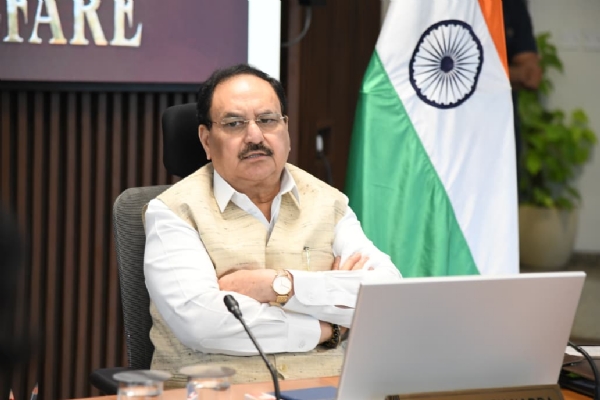
New Delhi, 29 June (H.S.): In a major initiative aimed at reducing maternal and neonatal mortality and achieving the Sustainable Development Goals (SDGs) by 2030, the Central Government will on Monday unveil the 'SUMAN Roadmap 2030'. Union Health and Family Welfare Minister Jagat Prakash Nadda will release the roadmap during the 16th Conference of the Central Council of Health and Family Welfare (CCHFW). The document is a comprehensive, multidimensional and evidence-based strategic framework designed to strengthen maternal and newborn healthcare services across the country.
The Ministry of Health and Family Welfare said that India has made significant progress in maternal healthcare over the past decade. However, several states and districts continue to face persistent challenges that have prevented the desired reduction in maternal and neonatal mortality rates. Keeping these challenges in mind, the roadmap has been developed with state-specific action plans tailored to local needs and circumstances, rather than adopting a uniform national strategy.
The roadmap integrates the entire continuum of maternal and newborn care, including preconception care, regular antenatal check-ups during pregnancy, safe childbirth, and postnatal care for both mother and child. It also aligns these interventions with programmes relating to reproductive, maternal, newborn, child and adolescent health (RMNCAH), family planning, and nutrition to ensure coordinated and comprehensive healthcare delivery.
One of the key features of the strategy is a four-tier system for identifying and managing high-risk pregnancies. Under this framework, high-risk mothers will be identified during the early stages of pregnancy, particularly in the third trimester, during childbirth, and throughout the postnatal period to ensure continuous monitoring and timely medical intervention. The roadmap also addresses access to healthcare in tribal and remote areas, improvement in the quality of emergency obstetric services, transport facilities, and emerging challenges such as climate change.
Under the roadmap, a focused strategy will be implemented in 130 districts across 13 high-priority states—Assam, Bihar, Chhattisgarh, Haryana, Jharkhand, Karnataka, Madhya Pradesh, Odisha, Punjab, Rajasthan, Uttar Pradesh, Uttarakhand, and West Bengal. These districts will implement the 'SUMAN Package for Pregnant Women' to ensure timely registration of pregnancies, completion of all essential antenatal check-ups, quality clinical examinations, and adequate institutional care after childbirth.
The Health Ministry said that Accredited Social Health Activists (ASHAs) will conduct fortnightly home visits during the eighth and ninth months of pregnancy. During these visits, they will assess the health of pregnant women, identify danger signs, provide nutritional counselling, help families prepare for safe deliveries, and encourage institutional childbirth.
The roadmap also proposes financial assistance for a designated caregiver who stays with the mother during the critical postnatal period. In addition, it emphasises strengthening emergency referral transport systems, particularly in remote and inaccessible regions, and expanding healthcare infrastructure through the establishment of Birth Waiting Homes, Maternal and Child Health (MCH) Wings, Obstetric High Dependency Units (HDUs), and Intensive Care Units (ICUs).
The roadmap further recommends several important measures for all states and Union Territories. These include providing folic acid supplements to women planning pregnancy, implementing comprehensive nutrition programmes to combat maternal anaemia and malnutrition, and ensuring effective monitoring of high-risk pregnancies from conception through delivery and the postnatal period.
Community participation has also been accorded significant importance in the strategy. The roadmap proposes promoting the concept of 'SUMAN Panchayat' to achieve zero maternal deaths, zero infant deaths, timely health check-ups for all pregnant women, universal institutional deliveries, and complete immunisation coverage. It also introduces innovative initiatives such as 'Mothers' Picnic' to raise awareness among women and communities about healthy maternal and newborn care practices and the healthcare services available to them.
According to the Health Ministry, the 'SUMAN Roadmap 2030' will strengthen maternal and newborn healthcare services through targeted interventions tailored to the needs of individual states and districts, improved health infrastructure, stronger community participation, and time-bound implementation. The initiative is expected to play a crucial role in helping India achieve a significant reduction in maternal and neonatal mortality by 2030.
---------------
Hindusthan Samachar / Jun Sarkar

29 Jun 2026
Namakkal: India's egg capital powering a ₹40,000-Cr poultry industry and global exports
Namakkal: India's egg capital powering a ₹40,000-Cr poultry industry and global exports..