Washington DC , 19 June (H.S.):
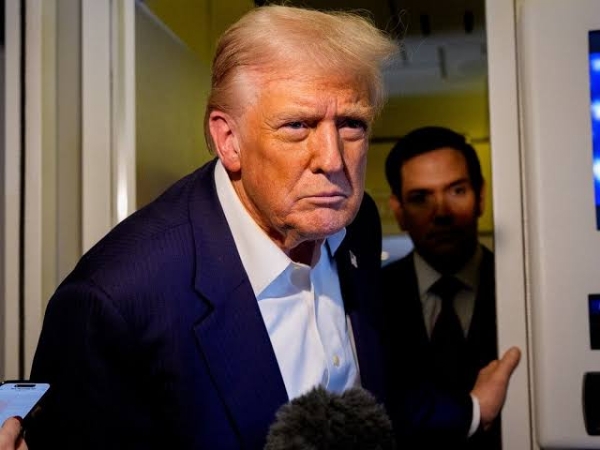
US President Donald Trump is facing growing criticism from members of his own Republican Party following the signing of an interim agreement with Iran aimed at ending the recent conflict and paving the way for broader negotiations over Tehran's nuclear programme and regional security.
The preliminary agreement, signed earlier this week, seeks to halt hostilities, keep the strategically vital Strait of Hormuz open for global shipping, and create a framework for further diplomatic negotiations between Washington and Tehran. The document was circulated to members of the US Congress on Thursday, prompting lawmakers from both parties to seek greater clarity on its provisions.
Several Republican lawmakers voiced strong reservations about the agreement, arguing that it grants significant concessions to Iran without securing sufficient commitments in return. Critics have particularly questioned reported provisions involving the release of frozen Iranian assets, the easing of certain economic sanctions, and the establishment of an investment mechanism intended to support Iran's economy if future negotiations progress.
Republican Senator Bill Cassidy described the agreement as the worst foreign policy blunder in decades, arguing that Iran's nuclear ambitions had not been adequately restrained. He also expressed concern that Tehran could interpret the agreement as a sign that threatening maritime security in the Strait of Hormuz yields diplomatic advantages.
Senator Roger Wicker, Chairman of the Senate Armed Services Committee, also questioned the framework, saying it appeared to risk undermining the military gains achieved during the conflict. He opposed easing sanctions or releasing Iranian funds before Iran makes concrete and verifiable commitments on its nuclear programme and regional activities.
Responding to the criticism on Thursday, President Trump defended the agreement through a social media post, rejecting claims that his administration had been too lenient toward Iran. He argued that the deal had already helped stabilise global markets, lower oil prices and reduce the risk of a prolonged military conflict, insisting that diplomacy would better serve American interests than an extended war.
The agreement has also generated debate among conservative commentators. Some influential Republican voices argued that the framework does not adequately address Iran's missile capabilities or permanently curb its nuclear ambitions. Others questioned whether the interim arrangement offers Tehran economic benefits without obtaining meaningful security guarantees for the United States and its allies.
At the same time, several Republican leaders welcomed Trump's diplomatic approach, describing the agreement as an opportunity to prevent another prolonged conflict in the Middle East while maintaining pressure on Iran through future negotiations. They argued that the framework could provide a pathway to a broader and more durable settlement if Tehran complies with its commitments.
Lawmakers from both political parties have called for detailed briefings from the White House on the agreement and its implementation. Under the Iran Nuclear Agreement Review Act (INARA), any future agreement involving Iran's nuclear programme and sanctions relief may be subject to congressional review before taking full effect.
The interim accord represents an important diplomatic step after weeks of heightened tensions in the region. However, with negotiations expected to continue in the coming weeks, the agreement is likely to remain the subject of intense political debate in Washington as lawmakers scrutinise its long-term implications for US national security, Middle East stability and global energy markets.
---------------
Hindusthan Samachar / Jun Sarkar

19 Jun 2026