Guwahati, 19 June (HS): A sweeping wave of infrastructure development is redefining the landscape of North East India, with multi-billion-rupee investments in highways, railways, airports, and waterways accelerating connectivity across the region. Driven by the Centre’s Act East Policy, these projects are not only bridging geographical barriers but also positioning the North East as a strategic gateway to Southeast Asia.
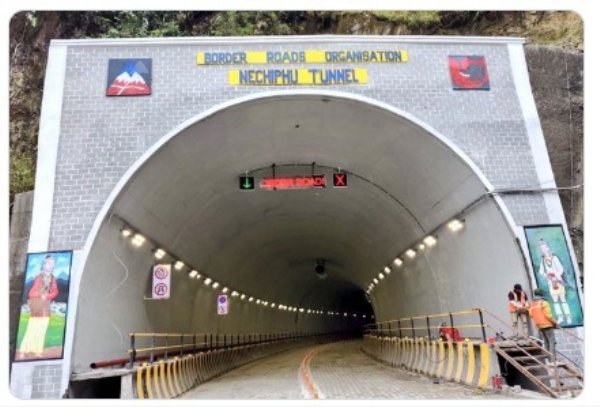
Once hindered by difficult terrain and limited transport networks, the region is witnessing unprecedented progress through flagship road projects. The ₹23,000-crore Shillong-Silchar Greenfield Corridor is expected to significantly reduce travel time between Meghalaya and Assam, while the ₹4,000-crore Dalu-Waghmara-Darugiri Highway is set to strengthen access to border areas and improve trade links with Bangladesh. In Arunachal Pradesh, the Trans-Arunachal Highway and Sela Tunnel are ensuring year-round connectivity to remote and high-altitude districts.
Rail connectivity is undergoing a historic expansion with several landmark projects nearing completion. The ₹22,275-crore Jiribam-Imphal railway line is already poised to connect Manipur’s capital with the national railway network for the first time, while the Dimapur-Kohima rail project is bringing Nagaland’s capital closer to the rest of the country. Mizoram’s ambitious Bairabi-Sairang railway line is expected to transform passenger and freight movement, linking Aizawl with major Indian cities. Simultaneously, railway doubling and electrification works across Assam are enhancing network capacity and operational efficiency.
The aviation sector has emerged as another major beneficiary of the development push. Under the UDAN scheme, commercial air services have expanded rapidly, connecting remote destinations across all eight northeastern states. Guwahati, the region’s principal urban centre, is witnessing large-scale infrastructure upgrades, including new administrative complexes, flyovers and urban mobility projects aimed at supporting future growth.
Inland waterways are also gaining prominence as cost-effective logistics corridors. The Brahmaputra and Barak river systems, designated as National Waterways, are facilitating the movement of bulk cargo, petroleum products and commercial goods. Modernisation of terminals at Pandu, Dhubri, Jogighopa, Karimganj and Badarpur is expected to further strengthen trade and transportation networks.
Officials believe the ongoing infrastructure boom will not only reduce travel time and logistics costs but also attract investment, boost tourism, generate employment and deepen economic integration with neighbouring countries. As these projects take shape, North East India is steadily emerging as a key pillar of India's connectivity and growth strategy in the eastern region.----------
Hindusthan Samachar / Sriprakash

19 Jun 2026