




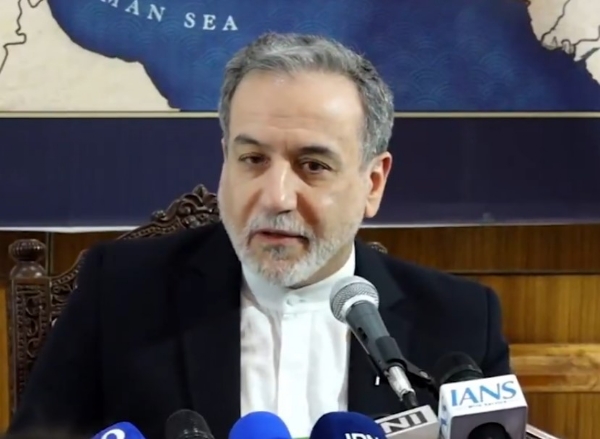
WASHINGTON/TEHRAN, 10 June (HS): Tensions between the United States and Iran escalated sharply on Wednesday after Iranian Foreign Minister Abbas Araghchi warned Washington to leave the Persian Gulf region, saying Iran's armed forces would respond decisively to any attack or threat.
In a statement posted on social media on Tuesday, Araghchi said Iran remained determined to defend its sovereignty and security interests. He asserted that Iran would not leave any attack unanswered and cautioned that foreign powers operating in the Persian Gulf had historically faced serious consequences.
The warning came after the United States launched what it described as self-defence strikes against Iranian targets following the reported downing of a U.S. Army Apache helicopter near the strategically important Strait of Hormuz.
According to the U.S. Central Command (CENTCOM), American forces began carrying out strikes on Tuesday evening under the direction of President Donald Trump. The military said the operation was a proportional response to what it termed unjustified Iranian aggression after the helicopter incident.
President Trump claimed that an Iranian attack had brought down a highly sophisticated AH-64 Apache helicopter while it was conducting patrol operations over the Strait of Hormuz. He stated that both pilots were safely rescued and did not suffer injuries. Nevertheless, Trump emphasized that the United States would respond to the attack and hold those responsible accountable.
The latest developments mark a significant escalation in regional tensions, which have already intensified amid ongoing hostilities involving Iran and Israel. Recent exchanges have included reported strikes on Iranian energy infrastructure and attacks targeting Israeli military installations.
Military officials in the United States highlighted the successful rescue of the Apache crew, noting that advanced unmanned systems played a key role in locating and recovering the pilots after the aircraft went down in the waters near the Strait of Hormuz.
Iran has maintained a firm stance against the increased U.S. military presence in the region, while Washington has reiterated its commitment to protecting international shipping routes and safeguarding its military personnel and assets.
The Strait of Hormuz remains one of the world's most critical maritime chokepoints, handling a substantial portion of global oil shipments. Any escalation in the region is being closely monitored by governments and energy markets worldwide due to its potential impact on international security and global energy supplies.
Hindusthan Samachar / Jun Sarkar

10 Jun 2026
New US Strikes on Iran May Distance Tehran From Dialogue With Washington- Iranian Lawmaker
10 Jun 2026