-Highlights Sporting Excellence, Return of Chola-Era Artefacts, Indigenous Traditions and Citizen-Led Conservation Efforts
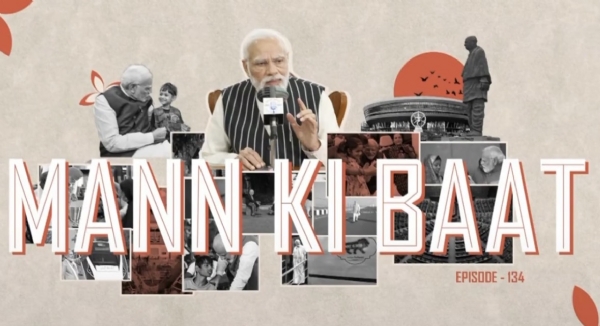
NEW DELHI, May 31 (H.S.): Prime Minister Narendra Modi on Sunday discussed a wide range of inspiring themes in the 134th episode of his monthly radio programme Mann Ki Baat, including the outstanding achievements of young Indian athletes, the repatriation of priceless cultural artefacts, the diversity of India’s mango varieties, traditional summer beverages, growing interest in astronomy among youth, citizen contributions to soldiers’ welfare, river-cleaning initiatives, and wildlife conservation efforts.
Through these examples, the Prime Minister highlighted the spirit of nation-building, cultural pride, community participation, and collective responsibility that continues to shape modern India.
The Prime Minister began the programme by applauding the recent achievements of Indian athletes. Referring to the National Senior Athletics Federation Championships held recently in Ranchi, Jharkhand, he noted that nearly 800 athletes from across the country participated in the competition and that new national records were established in four different events.
He specifically praised athletes Gurindervir Singh, Vishal T.K., Tejaswin Shankar, Dev Meena and Kuldeep Kumar for their exceptional performances and contributions to Indian athletics.
Prime Minister Modi pointed out that the men's national record in the 100-metre sprint was broken three times within just two days—an extraordinary achievement in Indian track and field history. The record was successively improved by Gurindervir Singh and Animesh Kujur.
He said the performances had generated excitement across the country and were inspiring a new generation to embrace sports. According to the Prime Minister, the dedication, discipline and perseverance displayed by these athletes are laying the foundation for a brighter future for Indian sports. During the programme, he also interacted with both athletes and discussed their journeys and accomplishments.
Recalling his recent visit to Europe, the Prime Minister spoke about the return of ancient Chola-era copper plates to India during a special ceremony in the Netherlands attended by the Dutch Prime Minister.
The collection includes 21 large and three small copper plates primarily associated with Emperor Rajendra Chola I fulfilling a pledge made by his father, Rajaraja Chola I. The inscriptions document the donation of the village of Anaimangalam to a Buddhist monastery.
Prime Minister Modi said the copper plates provide valuable insights into the Chola Empire’s formidable maritime strength, its extensive trade and cultural links with countries across Southeast Asia, and the richness of its civilisational legacy.
He noted that the return of these historic artefacts had generated immense pride throughout the country, particularly among the Tamil community, and reflected the deep emotional connection Indians maintain with their cultural heritage.
Turning to the summer season, the Prime Minister described mangoes as an integral part of every Indian household and highlighted the country's remarkable diversity of mango varieties.
He mentioned Maharashtra and the Konkan region’s Hapus and Alphonso varieties, Gujarat’s Kesar, Uttar Pradesh’s Dasheri and Langra, Bihar’s Jardalu, Chausa and Malda, South India’s Banganapalli, Totapuri, Neelam and Malgova, West Bengal’s Himsagar, and the Suvarnarekha variety found in Odisha and Andhra Pradesh.
He observed that while the taste, aroma and colour of mangoes vary across regions, they universally symbolize the joy of the summer season. He also commended mango growers for strengthening India’s agricultural economy and expanding the global reach of Indian produce.
Amid rising summer temperatures, Prime Minister Modi urged citizens to remain vigilant against heat-related illnesses by staying hydrated, avoiding excessive exposure to direct sunlight, and following health advisories issued by authorities.
He also highlighted traditional regional beverages that have long helped people cope with the summer heat. These included Aam Panna in northern India, Lassi in Punjab and Haryana, Chaas in Rajasthan and Gujarat, Sattu Sharbat in Bihar and Jharkhand, Kokum Sharbat and Sol Kadhi in the Konkan region and Goa, Panakam, Neer Mor and Sambaram in southern India, and Bela Pana in Odisha.
The Prime Minister described these drinks as living examples of the spirit of “Ek Bharat, Shreshtha Bharat,” adding that they are rooted in generations of experience and offer significant health benefits.
Speaking about scientific curiosity among young people, Prime Minister Modi noted that astronomy clubs are becoming increasingly active across both metropolitan cities and smaller towns.
He praised the efforts of the Bengaluru Astronomical Society in popularising astronomy in rural areas and lauded the “Khagol Mandal” team for launching an innovative 30-hour astronomy course aimed at nurturing scientific interest among students.
The Prime Minister also shared the inspiring story of Girija Amma, a teacher from Tamil Nadu who manages 15 schools. Inspired by a previous episode of *Mann Ki Baat*, she encouraged her students to contribute one rupee each day towards the welfare of Indian soldiers.
Through this initiative, nearly ₹40 lakh was raised and subsequently donated for the welfare of members of the armed forces. Prime Minister Modi highly appreciated the patriotic spirit demonstrated by Girija Amma and her students.
Highlighting grassroots environmental action, he spoke about Akash Gupta, a young resident of Basti district in Uttar Pradesh, who launched a campaign to clean the Manorama River in his village.
Working alongside friends and volunteers, Gupta removed water hyacinth and cleared between 50 and 60 kilograms of plastic and waste every day, significantly improving the condition of the river and restoring its natural flow.
Prime Minister Modi also acknowledged the efforts of retired teacher Balakrishna Adaya from Goa, who played a crucial role in addressing water scarcity in the Maddi-Tolap region by facilitating the installation of a pipeline network.
The Prime Minister further highlighted a remarkable wildlife rescue operation conducted under the Namami Gange programme. He said that a Ganges river dolphin trapped in a canal in Uttar Pradesh was successfully rescued after 13 hours of continuous efforts with the assistance of the country’s first Ganga Dolphin Rescue Ambulance.
Following treatment and rehabilitation, the dolphin was safely released into the Rapti River, demonstrating India's growing commitment to biodiversity conservation and wildlife protection.
---------------
Hindusthan Samachar / Jun Sarkar

01 Jun 2026