Lucknow,
30 May (HS): Indian Navy Chief Admiral Dinesh K Tripathi said on Saturday that
despite being a landlocked state, Uttar Pradesh has a strong connection to the
sea, citing the region's historical maritime linkages and contributions to the
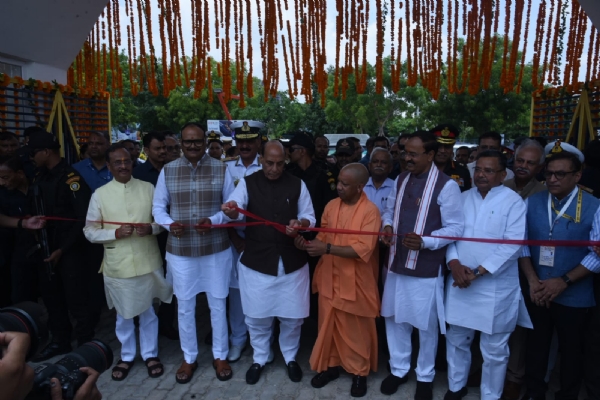
Indian Navy. Admiral Tripathi was in Lucknow for the opening of the 'Nausena
Shaurya Vatika' open-air museum, which was created to highlight the Indian
Navy's heritage, operational capabilities, and marine achievements, by Defence
Minister Rajnath Singh and Chief Minister Yogi Adityanath.
Addressing
the audience, Admiral Tripathi congratulated Singh and Adityanath for their
vision, support, and leadership in making the Nausena Shaurya Vatika a reality.
The Navy chief explained the rationale for establishing the maritime-themed
institute in Uttar Pradesh, saying, Despite being a landlocked state, it
has never been far from the sea.
Prior
to the development of trains and highways, rivers such as the Ganga, Gomti, and
Ghaghara connected the Awadh area to Kolkata and worldwide commerce routes. Banarasi
silk reached the Roman Empire via marine commerce, while hardwood and
metallurgical resources from Uttar Pradesh aided shipbuilding, according to
Admiral Tripathi, who will retire on May 31 and be followed by Vice Admiral
Krishna Swaminathan.
The
Admiral emphasized that Uttar Pradesh continues to make major contributions to
the armed services, stating, A large number of officers, sailors, and
Agniveers in the Navy come from Uttar Pradesh. Perhaps this is why it has
the highest number of military veterans in the country, he added. He mentioned
INS Gomti, which is named after the Gomti River, in order to highlight the
state's naval past.
INS
Gomti, which was commissioned in 1988, took part in operations Cactus and
Parakram. It carried the Indian and Uttar Pradesh flags throughout the world
for decades until being retired in 2022, he added. The Navy Chief also stated
that the displays at the Vatika, which include airplanes, missiles, cannons,
and radars, will assist young people comprehend the significance of maritime
security. These exhibits not only highlight the Indian Navy's long-standing
ties with Uttar Pradesh, but also motivate young people to learn about the
country's marine security, he added.
Admiral
Tripathi emphasized the significance of maritime security for India's economic
growth, stating, It is an established fact that India's economic progress
and trade development are inextricably linked to the sea.
The
Navy keeps our sea routes secure and open, allowing India's maritime trade to
flourish uninterrupted. He also emphasized Uttar Pradesh's expanding
involvement in defense industry, citing efforts like the defence industrial
corridor and the BrahMos plant in Lucknow. According to Prime Minister Modi's
vision of a 'Aatmanirbhar Bharat,' Uttar Pradesh now delivers not just vital
people to the armed forces, but also flexible missile systems and indigenous
capabilities, he added. Admiral Tripathi described Nausena Vatika as more than
a museum, stating that it represents Uttar Pradesh's proud commitment to
building the nation's defence on a daily basis.
He
expressed confidence in its future influence, saying, I am certain that
Nausena Shaurya Vatika will emerge as a source of national pride, maritime
awareness, and patriotism in the coming years.
Hindusthan Samachar / Abhishek Awasthi
30 May 2026