Lucknow,
03 May (HS): “Today’s world is a world of contradictions. On one hand, human
civilization is reaching unprecedented heights of technological
advancement—artificial intelligence, the digital revolution, and global
connectivity have made life faster and more accessible than ever before; on the
other hand, the planet’s environment is under severe stress, societies are
drifting away from their cultural roots, and the younger generation, despite
living amidst comfort and convenience, often lacks essential life skills. In
this context, it becomes crucial to reflect on the true purpose of education. Is
education merely a means to secure employment, or is it a process that teaches
us how to live meaningfully? Clearly, if education is not connected to core
human values, its impact remains incomplete. Therefore, the foremost
responsibility of educational institutions today is to nurture in children the
values of environmental conservation, ecological balance, cultural awareness,
and self-reliance, as these are the foundations upon which a safe and balanced
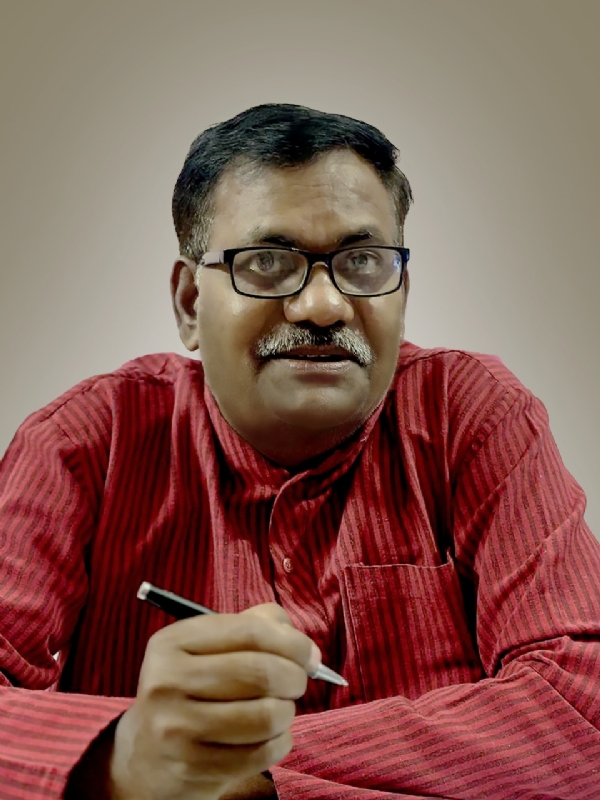
future can be built,” opined Dr Mani Shanker Dwivedi, Principal, Motilal Nehru
Post Graduate College Kaundhiyara, Prayagraj during az candid discussion with
reporters on Sunday.
“The
environment is no longer a peripheral subject; it has become a fundamental
question of human existence. Rising pollution, climate change, contamination of
rivers, rampant deforestation, and the reckless exploitation of natural
resources compel us to reconsider our direction. If immediate corrective steps
are not taken, future generations will face severe consequences. In such a
scenario, it is essential that children are not only taught theoretical
concepts about environmental protection but are also guided to practice them in
real life. Schools must transform their campuses into living laboratories where
students actively participate in tree plantation, adopt water conservation
practices, understand the importance of energy efficiency, and make cleanliness
a habit. When children engage in such activities, a sense of responsibility and
sensitivity toward the environment develops naturally within them,” he claimed.
“Similarly,
understanding ecology is equally important, as it teaches us the science of
balance in nature. Ecology explains how every component of nature—living or
non-living—is interconnected. Any disturbance in this balance affects the
entire system. For instance, deforestation does not merely reduce the number of
trees; it disrupts the water cycle, increases soil erosion, and harms biodiversity.
Likewise, the decline in bee populations is not just a biological issue but a
serious concern for food production and agriculture, as it impacts pollination.
Therefore, it is essential to provide children with a deep understanding of
ecological relationships so that they appreciate the importance of maintaining
harmony with nature. This can be effectively achieved through experiential
learning methods such as nature walks, studying local ecosystems, and engaging
in environmental projects,” he remarked.
“Cultural
preservation is another vital dimension of education, as culture forms the
identity and soul of any society. In a country like India, where diversity
itself is the foundation of unity, preserving cultural heritage becomes even
more significant. However, under the influence of globalization and modern
lifestyles, cultural values are gradually eroding. The younger generation is
increasingly distancing itself from its language, traditions, and moral values,
which poses a serious concern for the future. In this context, educational
institutions have the responsibility to reconnect children with their cultural
roots and instill a sense of pride in their heritage. Schools should give
greater importance to folk arts, traditional music, dance, yoga, and the study of
Indian history. At the same time, children must be taught that culture is not
merely a relic of the past but a living force that shapes both the present and
the future. The development of moral values—such as truth, non-violence,
tolerance, and cooperation—is also an integral part of this process, helping
children grow into responsible and compassionate citizens,” he added.
Self-reliance
has become one of the most essential competencies in today’s world. It is not
limited to economic independence but also encompasses the ability to make
decisions, solve problems, and adapt to changing circumstances. Unfortunately,
for a long time, the education system has emphasized rote learning and
examination performance, which has restricted the development of creativity and
practical skills among students. This approach must change. Educational
institutions should focus on equipping children with life skills such as
critical thinking, communication, leadership, and problem-solving abilities.
Additionally, vocational education and skill development programs should be
promoted to help students become self-sufficient. The proper and balanced use
of digital technology and innovation can also play a significant role in
fostering self-reliance among young learners.
If
these elements—environment, ecology, culture, and self-reliance—are integrated
holistically into education, we can nurture a generation that is not only
knowledgeable but also aware, responsible, and empowered. Achieving this
requires a transformation in the education system, including curriculum
reforms, innovative teaching methodologies, and changes in assessment
practices. Approaches such as project-based learning, experiential education,
and community engagement can make learning more meaningful and relevant to real
life.
“In
this entire process, the roles of teachers and parents are crucial. Teachers
are not merely providers of knowledge; they are role models and mentors who
shape the attitudes and values of children. Therefore, they must themselves be
aware and committed to these principles. Likewise, parents must ensure that the
home environment supports the holistic development of children. When consistent
values are reinforced both at school and at home, their impact becomes deeper
and more lasting. Ultimately, the decisions we make today will determine the
future we create tomorrow. If we continue to push our children into a race of
competition and consumption alone, we risk building an imbalanced society.
However, if we nurture them to be environmentally conscious, ecologically
aware, culturally rooted, and self-reliant, we can lay the foundation of a
strong, balanced, and prosperous nation. It is time to redefine education—not
merely as a pathway to career success, but as a means of building meaningful
lives—because a conscious, value-driven, and self-reliant generation is the
true strength of any nation,” said Dr Mani Shanker Dwivedi prior to signing
off.
Hindusthan Samachar / Abhishek Awasthi
03 May 2026
IUML writes to PM seeking centre to bear ₹10,000 additional Hajj cost
IUML writes to PM seeking centre to bear ₹10,000 additional Hajj cost..
03 May 2026