Thiruvananthapuram, 03 May (H.S.)
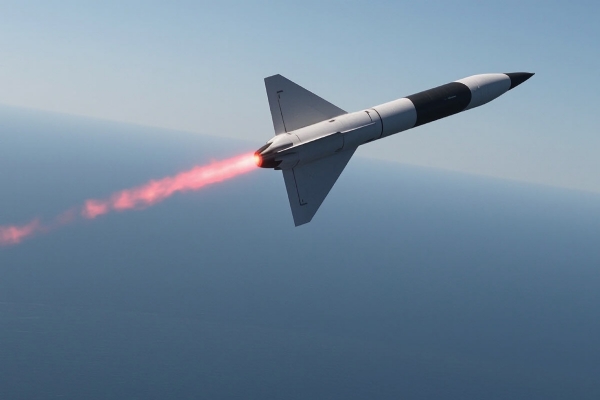
Hypersonic missiles have emerged as one of the most decisive technologies in modern military strategy, combining extreme speed, manoeuvrability, precision and survivability. Unlike conventional ballistic missiles that follow predictable arcs, hypersonic weapons travel at speeds above Mach 5—five times the speed of sound—and can manoeuvre during flight, making them far harder to detect, track and intercept.
Experts broadly classify them into two types: hypersonic boost-glide vehicles (HGVs), which are launched by rockets and then glide toward targets, and hypersonic cruise missiles (HCMs), powered by advanced scramjet engines.
The race for hypersonic weapons has now become a central feature of global military competition.
Countries such as Russia and China are considered early operational leaders, while the United States is accelerating its programmes after initial delays.
India has also entered this elite group following significant breakthroughs by the Defence Research and Development Organisation (DRDO).
India’s progress is particularly notable given the complexity of hypersonic technology, which requires mastery over propulsion systems, extreme heat-resistant materials, guidance systems, and precision targeting. In November 2024, DRDO successfully flight-tested India’s first long-range hypersonic missile from Dr A.P.J. Abdul Kalam Island in Odisha.
The missile demonstrated the ability to carry different payloads over distances exceeding 1,500 km with high accuracy.
This was followed by a major milestone in 2026, when DRDO conducted a long-duration ground test of a scramjet combustor, a key component for hypersonic cruise missiles.
The strength of hypersonic missiles lies not just in their speed but in their unpredictability.
A missile travelling at Mach 5 or higher drastically reduces the reaction time available to air defence systems.
For instance, a target located 1,000 km away could be reached in roughly 10 minutes. Unlike ballistic missiles, which follow predictable paths, hypersonic systems can manoeuvre mid-flight, making interception extremely difficult.
This makes them particularly effective against high-value and time-sensitive targets such as aircraft carriers, command centres, missile defence systems, and strategic infrastructure.
In terms of power, hypersonic missiles are highly versatile. They can be equipped with either conventional or nuclear warheads.
Even without a nuclear payload, the sheer kinetic energy generated by their speed can cause massive destruction upon impact.
When combined with precision guidance systems, these missiles can strike targets with high accuracy, reducing the need for large-scale bombardment.
This makes them a powerful tool for both deterrence and precision warfare.
Globally, different countries have adopted varied approaches to hypersonic development. Russia is widely seen as a pioneer in operational deployment, with systems such as Avangard, Kinzhal and Zircon.
These systems are designed for both nuclear and conventional roles and are intended to bypass advanced missile defence systems.
China has also made significant strides with its DF-17 missile, which is equipped with a hypersonic glide vehicle.
The system is designed to enhance China’s regional strike capabilities, particularly in the Indo-Pacific, where it could threaten naval assets such as aircraft carriers and forward military bases.
The United States, while slightly behind in operational deployment, is investing heavily in next-generation hypersonic systems. Key programmes include the Long-Range Hypersonic Weapon (Dark Eagle) and the Navy’s Conventional Prompt Strike system. Unlike Russia and China, the U.S. is primarily focusing on conventional hypersonic weapons, which demand extremely high levels of accuracy and reliability.
India, meanwhile, is steadily building its indigenous capabilities. DRDO’s recent tests indicate progress in both boost-glide and cruise missile technologies. For India, hypersonic weapons hold strategic importance in maintaining deterrence, especially in the context of regional security challenges involving China and the broader Indo-Pacific region.
Despite their advantages, hypersonic missiles face several technological challenges. These include extreme heat generated during flight, which can exceed 2,000°C, difficulties in maintaining stable communication due to plasma formation around the vehicle, and the high costs associated with development and production. Moreover, global powers are already working on countermeasures, including space-based tracking systems, advanced radar networks, and directed-energy weapons.
The comparison across nations reveals a clear strategic pattern: Russia has focused on nuclear deterrence and early deployment; China on regional dominance and anti-access capabilities; the United States on precision conventional strike; and India on developing self-reliant, strategic capabilities.
Hypersonic missiles are not just faster weapons—they represent a fundamental shift in modern warfare. Their speed compresses decision-making time, their manoeuvrability challenges existing defence systems, and their precision enhances strike effectiveness. As countries continue to refine both offensive and defensive technologies, hypersonic weapons are set to play a defining role in the future of global military power.
---------------
Hindusthan Samachar / Arun Lakshman
03 May 2026
Hypersonic missiles :The new speed frontier reshaping global warfare
Hypersonic missiles :The new speed frontier reshaping global warfare..