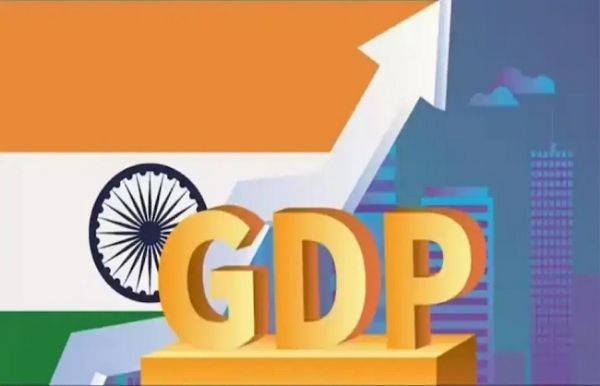
- Central Bank Says Indian Economy Remains Resilient Despite Challenging Global Environment
New Delhi, May 29 (H.S.): Amid the ongoing crisis in West Asia and rising global tensions, the Reserve Bank of India (RBI) has projected India’s Gross Domestic Product (GDP) growth at 6.9 percent for the financial year 2026-27.
In its Annual Report 2025-26 released on Friday, the Reserve Bank of India stated that the Indian economy continues to remain resilient despite challenging global conditions, and strong macroeconomic fundamentals are expected to support growth during the current financial year.
According to the report, despite elevated energy prices, supply chain disruptions, and challenges emanating from global markets, the strong balance sheets of corporates and the banking sector, along with the government’s continued emphasis on capital expenditure, remain favourable for sustaining India’s robust growth momentum. The report noted that India, backed by strong domestic fundamentals, will continue to advance rapidly on the path of economic development.
The RBI report further stated that geopolitical risks have emerged as a major impediment to global growth in 2026. The impact of the conflict in West Asia, which escalated toward the end of February, is already visible in global growth and inflation projections. However, despite a moderate global growth outlook, the Indian economy’s prospects for FY 2026-27 remain positive. The report cautioned that a prolonged conflict in West Asia could pose downside risks to growth.
According to the report, India remained the fastest-growing major economy during FY 2025-26, recording a growth rate of 7.6 percent, compared to 7.1 percent in FY 2024-25. This growth was supported by strong domestic demand, sustained investments, proactive policy initiatives, and solid macroeconomic fundamentals. The report added that the implementation of various trade agreements with key trading partners would further accelerate India’s growth trajectory.
The report also warned that ongoing geopolitical tensions could exert pressure on the availability and prices of key raw materials, particularly fertilizers. It noted that the outlook for the agriculture sector in FY 2026-27 will largely depend on the progress and distribution of the southwest monsoon.
According to the RBI, adequate food grain stocks, sufficient reservoir water levels, and stable agricultural prospects are expected to help inflation remain aligned with the target during 2026-27, despite the possibility of El Niño conditions and above-normal temperatures. In consultation with the RBI, the central government has retained the inflation target at 4 percent, with a tolerance band of plus or minus 2 percent, for the period from April 1, 2026, to March 31, 2031.
The central bank’s report also stated that the RBI plans to expand pilot use cases for the Central Bank Digital Currency (CBDC) in order to extend its application to Direct Benefit Transfer (DBT) schemes and new retail use cases within the domestic economy.
Additionally, the RBI is considering further pilot projects involving the tokenisation of financial assets and the inclusion of a wider range of participants in the digital financial ecosystem.
---------------
Hindusthan Samachar / Jun Sarkar
29 May 2026
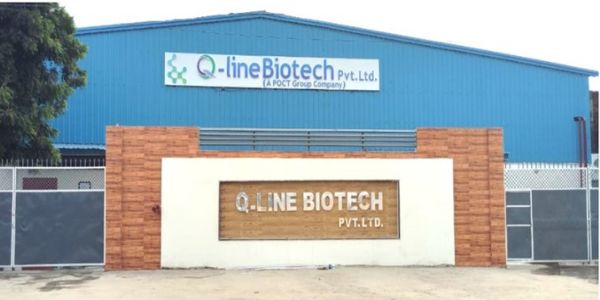
(Update)Q-Line Biotech Makes Stellar Stock Market Debut, Hits Upper Circuit After Strong Listing

29 May 2026
(Update)Bio Medica Enters Stock Market With Sharp Decline; IPO Investors Suffer Heavy Losses

29 May 2026