Lucknow, 23 May (HS): ‘Recently, a young man living abroad
began mocking India, Indian society, and Indian youth through a toxic online
narrative symbolically referred to as the “Cockroach Party.” What started as a
troll campaign slowly gained followers across digital platforms. But this was
not merely a joke, meme, or social-media trend. It reflected something far
deeper and more dangerous — a mindset that remains mentally weak and culturally
insecure despite being educated. It exposed a disturbing reality: how easily a
section of educated youth can be manipulated by a single word, a viral clip, or
a provocative slogan into developing a destructive attitude toward their own
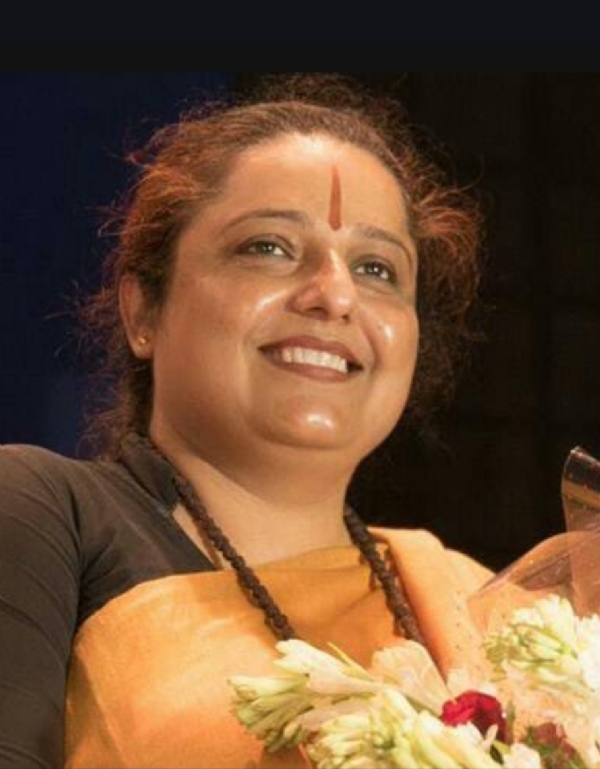
nation, civilization, and identity,’ opines Prof. Geeta Singh, Director, Centre
for Professional Development in Higher Education (CPDHE), University of Delhi, Convener,
Vishwagram.
This
raises a fundamental question for our times: Is education merely meant to
produce job-seekers and corporate employees? Are degrees creating minds that
laugh at their own roots in order to gain approval from global digital culture?
Has modernity become synonymous with disconnecting from one’s civilization and
doubting every achievement of one’s own nation? If education cannot awaken
self-respect, wisdom, and constructive vision within a human being, then that
education remains incomplete.
‘Today,
negativity has become fashionable in sections of digital discourse. Patriotism
is mocked as backwardness. Culture is dismissed as superstition. National
confidence is portrayed as extremism. Slowly and systematically, young minds
are conditioned to believe that nothing good can emerge from India. This is not
healthy criticism — it is psychological defeat packaged as intellectualism. The
tragedy is that India possesses the world’s largest youth population and
perhaps its greatest reservoir of untapped human energy. Yet certain digital
ecosystems thrive by disconnecting this generation from its roots, history, and
civilizational confidence. Troll culture is turning thoughtful youth into
reactionary crowds. Study is being replaced by sensationalism; character by
virality; wisdom by outrage. But this has never been the spirit of India’s
youth,’ she remarked.
‘Swami
Vivekananda did not teach young Indians self-hatred; he taught them
fearlessness and self-belief. He reminded the world that every soul carries
infinite potential. His vision was of an India that would guide humanity — not
an India ashamed of itself. Subhas Chandra Bose ignited in the youth the fire
of sacrifice for the nation. Bhagat Singh transformed courage and conviction
into a timeless ideal. Chhatrapati Shivaji Maharaj demonstrated in his youth
that self-respect and organized national will are stronger than any empire. None
of these icons taught young people to ridicule their own civilization. They
taught resistance against injustice, but never contempt for their own nation.
They encouraged questioning, but never civilizational self-destruction. The
youth of India must now understand that identity cannot be built through memes,
online mobs, or digital validation. Real identity is built through
consciousness, character, knowledge, and national purpose,’ she added.
Education
is not merely about degrees; it is about discovering the “Self.” True knowledge
is that which connects a human being to inner strength, culture, and
responsibility toward society. When knowledge moves in the right direction, it
becomes constructive — it builds science, innovation, literature, leadership,
and social harmony. But when knowledge is poisoned by insecurity and confusion,
it becomes destructive. This is not the time for India’s youth to see
themselves through the lens of “cockroach politics” or digital humiliation.
This is the time to rediscover civilizational confidence. This is the time to
rise above toxic propaganda, divisive narratives, and the culture of mockery. India’s
youth are not weak. They are one of the greatest forces of the 21st century.
And history has always shown that the nation which teaches its youth
self-respect, purpose, and pride can never be defeated for long,’ she said
prior to signing off.
Hindusthan Samachar / Abhishek Awasthi

23 May 2026
PM Poshan Yojana incorporating nutrition, education and values in lives of children: Sandeep Singh

23 May 2026