Washington/Tehran, May 21(HS): US President Donald Trump has said negotiations with Iran to formally end the recent Middle East conflict are in their “final stages,” even as both sides continue exchanging sharp warnings over the possibility of renewed military action.
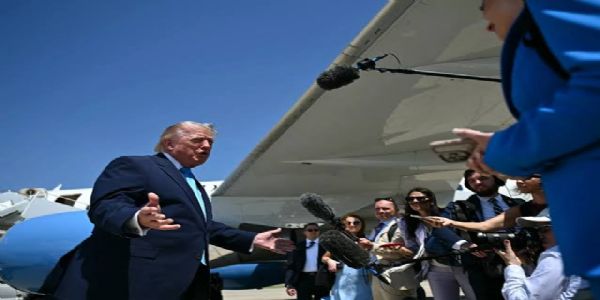
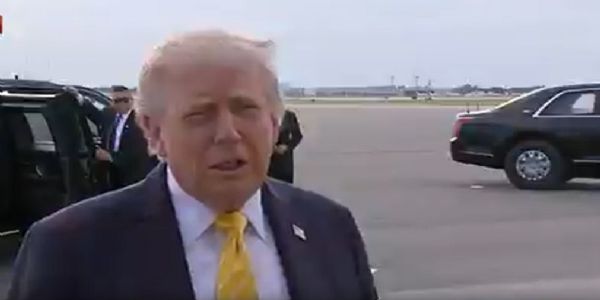
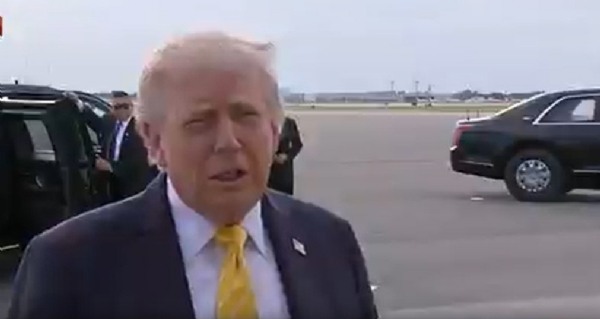
Speaking to reporters on Wednesday, Trump indicated that Washington remained open to a diplomatic resolution but warned that failure to reach an agreement could trigger tougher measures against Tehran.
“We’ll either have a deal or we’re going to do some things that are a little bit nasty. But hopefully that won’t happen,” Trump said, adding that he preferred diplomacy over further bloodshed.
The latest remarks come weeks after an April 8 ceasefire halted the US-Israeli military confrontation with Iran, a conflict that rattled global energy markets and intensified geopolitical tensions across the region.
Iran confirmed that it had received a fresh American proposal through Pakistani mediators and was currently reviewing it. Iranian Foreign Ministry spokesperson Esmaeil Baqaei stated that Tehran was examining “the points of view of the American side” while reiterating key Iranian demands, including the release of frozen Iranian assets abroad and the lifting of the US maritime blockade on Iranian ports.
Despite ongoing diplomatic contacts, tensions remain high. Iran’s senior negotiator Mohammad Bagher Ghalibaf accused Washington of seeking to reignite the conflict, while Iran’s Revolutionary Guards warned that any future military aggression would provoke a much broader regional confrontation.
“The enemy’s movements, both overt and clandestine, show that despite economic and political pressure, it has not abandoned its military objectives,” Ghalibaf said, warning of a “forceful response” if attacks resume.
The Revolutionary Guards further declared that any renewed conflict would spread “far beyond the region,” underscoring the growing volatility surrounding the negotiations.
At the same time, international actors have urged restraint. Saudi Foreign Minister Prince Faisal bin Farhan praised Trump’s decision to “give diplomacy a chance” and called on Iran to seize the opportunity to avoid further escalation in the Middle East.
Global oil prices reacted positively to hopes of a breakthrough, falling more than five percent on Wednesday amid expectations that a deal could stabilize energy supplies and reduce risks to international shipping routes.
However, major concerns remain unresolved, particularly regarding the Strait of Hormuz — one of the world’s most critical maritime trade corridors through which nearly one-fifth of global oil and liquefied natural gas supplies normally pass.
Although active fighting has stopped, the strait has not fully reopened to unrestricted commercial navigation. Iran’s Revolutionary Guards Navy said it facilitated the transit of 26 vessels, including oil tankers, over the previous 24 hours under coordinated security measures.
Meanwhile, the United States continues enforcing restrictions on Iranian maritime trade. US Central Command stated that American forces intercepted and searched an Iranian-flagged oil tanker in the Gulf of Oman suspected of violating the blockade before redirecting the vessel.
According to CENTCOM, US forces have redirected dozens of commercial ships in recent weeks to ensure compliance with sanctions and maritime restrictions.
The uncertainty surrounding the Strait of Hormuz has also triggered wider fears about the global economy. The route serves not only as a vital oil corridor but also as a key transit point for fertiliser shipments. The United Nations Food and Agriculture Organization warned that prolonged disruption could lead to a severe global food price crisis and broader agricultural supply shocks.
Israeli military officials have also maintained a heightened state of readiness. Israel’s army chief Lieutenant General Eyal Zamir said the military remained on its “highest alert level” and was prepared for any potential development.
Diplomatic efforts mediated by Pakistan continue, with reports indicating further high-level engagements between Iranian and Pakistani officials aimed at securing a long-term settlement and preventing another regional war.
---------------
Hindusthan Samachar / Jun Sarkar