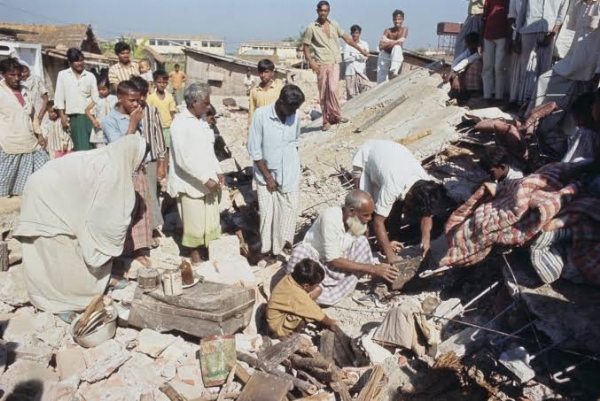
On May 20, 1971, in the quiet transit village of Chuknagar in what is now Khulna District, Bangladesh, one of the most devastating mass killings of the twentieth century unfolded in a matter of hours. Between 10,000 and 12,000 unarmed Bengali civilians, many of them Hindu families fleeing escalating violence during the Bangladesh Liberation War, were systematically killed in an operation that has remained largely absent from global historical consciousness.
The scale and speed of the massacre place Chuknagar among the most extreme episodes of mass civilian slaughter recorded in modern history. Survivors and historical accounts describe a coordinated attack in which Pakistani military personnel opened fire on densely concentrated refugee populations gathered along riverbanks, markets, and open fields. When ammunition ran low, the killing reportedly continued with close-range weapons, turning the Bhadra River into a channel of mass death.
The tragedy did not occur in isolation. By mid-May 1971, Chuknagar had become a critical transit point for displaced civilians from Khulna, Jessore, Barishal, and surrounding regions, all attempting to cross into India to escape escalating violence. The concentration of refugees in this small geographical area made them vulnerable to targeted military operations, transforming a site of refuge into a site of extermination.
Local accounts and documented testimonies suggest that intelligence about the civilian gathering was passed to military authorities shortly before the attack. What followed was not a battlefield engagement but a structured operation that divided forces into multiple directions, targeting clusters of unarmed civilians across different parts of the village. The attack lasted several hours without pause, leaving behind a scale of destruction that overwhelmed local capacity for burial and identification.
The aftermath of the massacre exposed the sheer magnitude of human loss. Thousands of bodies were reportedly disposed of in the river due to the inability to conduct proper cremations or burials. The psychological impact on survivors and nearby communities persisted for years, with economic and social life in the region severely disrupted in the immediate aftermath.
Despite its scale, the Chuknagar massacre remained largely absent from international discourse for decades. Documentation efforts by researchers and historians began much later, relying heavily on oral testimonies collected from survivors and witnesses. Even today, the massacre has not received formal recognition at the level of major international tribunals or United Nations frameworks that have acknowledged other twentieth-century atrocities.
This silence raises critical questions about selective memory in global justice systems. The international community has repeatedly affirmed the principle of “never again,” yet Chuknagar remains outside the formal list of recognized genocidal atrocities, despite its scale and documented evidence. The absence of recognition has also denied survivors and descendants formal acknowledgment and reparative justice.
The broader context of the 1971 Bangladesh Liberation War is now widely understood as involving widespread atrocities against civilian populations, particularly minority communities. In that framework, Chuknagar stands out not only for its scale but for its concentration of civilian deaths in a single day, making it one of the most severe episodes of mass killing in the conflict.
From a legal and moral standpoint, scholars argue that such incidents require deeper international examination under the framework of the 1948 Genocide Convention. The absence of sustained global investigation into sites like Chuknagar highlights structural gaps in how international institutions respond to geographically distant mass atrocities, particularly when geopolitical considerations have historically influenced diplomatic responses.
Calls have increasingly emerged for the United Nations and related human rights bodies to establish a structured mechanism to document, preserve, and analyze evidence from all identified mass killing sites of the 1971 conflict. Such an initiative, modelled on international investigative frameworks used in other post-conflict regions, would ensure that historical evidence is preserved before survivor testimony is lost to time.
Beyond documentation, there is also a growing demand for formal recognition of Chuknagar as a major site of genocide within the broader context of the 1971 war. Such recognition would not only serve historical accuracy but also provide long-overdue moral acknowledgment to victims and their families.
The case of Chuknagar underscores a larger global issue: the uneven distribution of historical memory. While some atrocities have become central reference points in international law and education, others of comparable or greater scale remain peripheral or forgotten. This disparity reflects not only historical oversight but also the influence of political narratives in shaping global remembrance.
As decades pass, the urgency of preserving testimony from surviving witnesses becomes more critical. Many who experienced the events of 1971 are now in the final stages of their lives, and with them, irreplaceable historical memory risks being lost permanently.
The Chuknagar massacre is not merely a regional tragedy; it is a test case for the credibility of global commitments to justice and historical truth. Recognition is not an act of reopening old wounds but of ensuring that those wounds are no longer erased from collective memory.
History has already named Jallianwala Bagh, Srebrenica, and Rwanda as symbols of humanity’s failures. Chuknagar belongs in that same moral and historical category. The question that remains is whether the international community has the resolve to acknowledge it in time.
Hindusthan Samachar / Satya Prakash Singh
_202605161337387909.jpg)