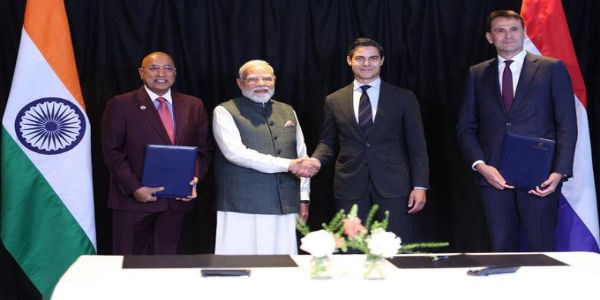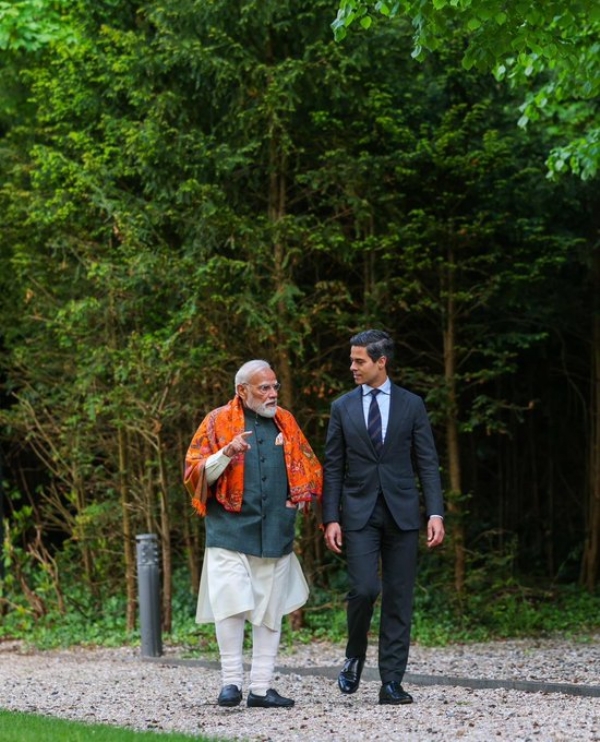
The Hague, Netherlands/New Delhi, 17 May (H.S.): Prime Minister Narendra Modi has described his discussions with Dutch Prime Minister Rob Jetten as “extensive” and wide‑ranging, with a strong emphasis on defence and security cooperation, including the early formulation of a joint defence industrial roadmap.
During bilateral talks in The Hague, PM Modi underscored that the two countries could deepen collaboration not only in conventional defence manufacturing but also in futuristic domains such as space, marine systems, and maritime security, aligning India–Netherlands ties more closely with the contours of 21st‑century strategic competition.
Push for a defence industrial roadmap
PM Modi told reporters that one of the key outcomes of the discussions was the shared understanding to work toward a defence industrial roadmap at the earliest, which would map out joint projects in technology transfer, co‑development, and co‑production of defence platforms. This follows a previously signed Letter of Intent on Defence Cooperation between India and the Netherlands, which envisages structured collaboration between the two defence industries, particularly in niche technologies and subsystems.
Officials in India and The Hague have separately indicated that such a roadmap could open avenues for Dutch firms to participate in India’s “Make in India” defence framework, including components for naval systems, surveillance and radar technologies, and advanced electronics. In turn, Indian contractors could gain access to Netherlands‑made precision engineering, sensor systems, and maritime‑surveillance capabilities, thereby reducing dependence on single‑source suppliers and enhancing interoperability with European partners.
Space, marine systems and maritime security
PM Modi also highlighted the potential for joint ventures in space‑linked technologies and marine systems, areas where Dutch expertise in satellite data, navigation, and underwater sensing can complement India’s expanding space and naval programmes. Both leaders noted that cooperation in maritime security—spanning the Indian Ocean, the Arabian Sea, and the wider Indo‑Pacific—is central to ensuring a free, open, and rules‑based maritime order amid growing regional tensions.
India has long argued that stable and secure sea lanes, supported by advanced surveillance, underwater‑domain awareness, and joint‑training platforms, are fundamental to global trade and energy security.
By aligning Indian and Dutch maritime‑security priorities, the Jetten–Modi dialogue signals a move toward a more institutionalised security partnership, with regular navy‑to‑navy interactions, information‑sharing protocols, and potentially joint exercises or patrols in strategically sensitive waters.
Strategic partnership deepens
The focus on defence and security comes as India and the Netherlands formally elevate their bilateral relationship to a strategic‑level partnership, embedding cooperation in critical sectors such as semiconductors, clean energy, and advanced manufacturing.
PM Modi’s remarks in The Hague—stressing the urgency of a defence industrial roadmap and collaboration in space, marine systems, and maritime security—position the Netherlands as one of India’s key non‑alliance strategic partners in Europe.
---------------
Hindusthan Samachar / Jun Sarkar
17 May 2026
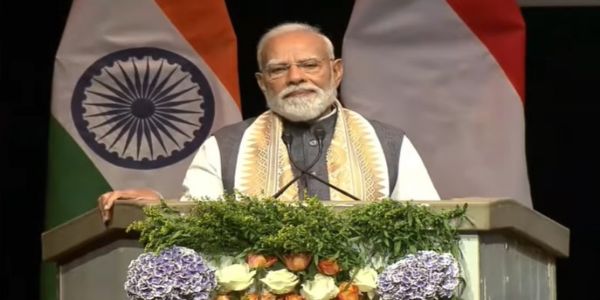
PM Modi Set to Embark on Sweden Visit to Deepen India–Nordic Ties on Energy, Trade and Tech
17 May 2026
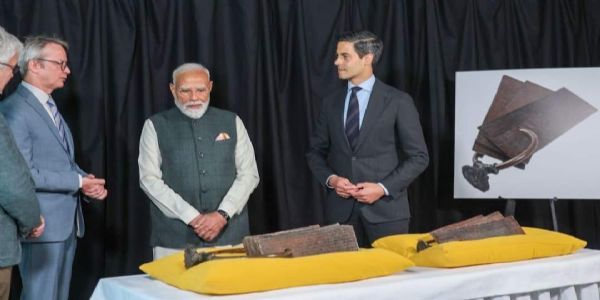
PM Modi Hails Return of 11th‑Century Chola Copper Plates as “Pride of India’s Civilisational Legacy”

17 May 2026