New Delhi, 17 May (H.S.):
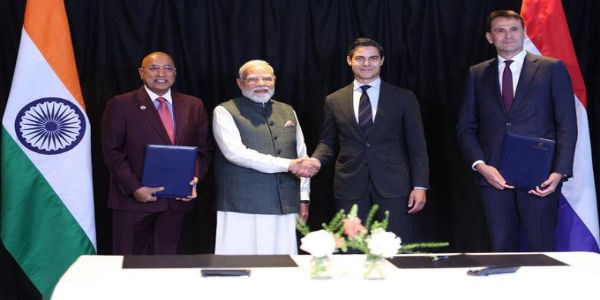
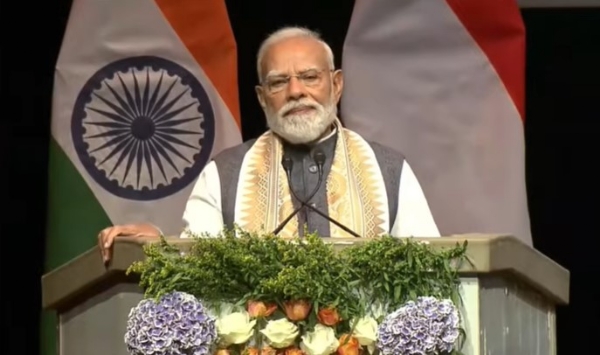
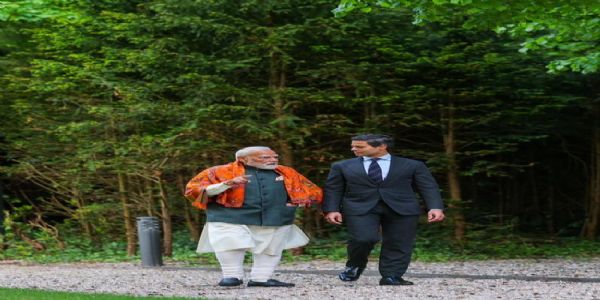
Prime Minister Narendra Modi is scheduled to arrive in Gothenburg, Sweden, on May 17 as the third leg of his six‑nation European‑West Asian tour, with the focus squarely on converting India–Sweden bilateral ties into a more structured, technology‑driven economic partnership. The visit will centre on high‑level talks with Prime Minister Ulf Kristersson, interaction with Swedish business leaders, and a broader push to position Sweden as a key Nordic partner in India’s green‑transition, digital‑innovation, and defence‑technology agendas.
Itinerary and high‑level schedule
According to the Ministry of External Affairs (MEA) and Swedish government sources, PM Modi will be in Sweden from May 17 to 18, with Gothenburg hosting the core bilateral engagements and associated business forums.
After arrival in Gothenburg—which Swedish officials describe as the country’s second‑largest city and a major seaport for trade—he will hold formal talks with PM Kristersson, followed by delegation‑level discussions on trade, investment, and emerging technologies.
The Indian government’s official brief notes that the Sweden leg is designed to “review the entire bilateral relationship and explore new avenues of cooperation,” with a dedicated agenda item on innovation‑driven partnerships, renewable energy, and digital governance.
PM Modi is also expected to attend a business roundtable or European‑style industry forum, co‑hosted with Swedish business leaders, to highlight India’s policy reforms and opportunities in sectors such as AI, advanced manufacturing, and clean‑energy technologies.
Key agenda points: trade, energy and technology
Economic and trade cooperation lies at the heart of the visit, with Swedish officials emphasising that Modi’s trip comes at a time when both countries are recalibrating supply chains, energy security, and industrial resilience amid global volatility.
Discussions are expected to cover expanding India–Sweden trade flows, enhancing Swedish participation in India’s manufacturing and green‑energy projects, and deepening collaboration in areas such as hydrogen, offshore wind, and smart‑city solutions.
Another central theme will be “future‑ready” technologies, including automation, industrial digitalisation, and India’s expanding semiconductor and AI ecosystems.
India’s Ministry of External Affairs has underlined the importance of aligning Sweden’s strong research‑and‑innovation base with India’s demand‑driven markets, digital‑public‑infrastructure platforms, and start‑up ecosystem, the world’s third‑largest.
India–Nordic dimension and Oslo follow‑up
The Sweden visit also feeds into the broader India–Nordic framework, with Prime Minister Modi slated to participate in the third India–Nordic Summit in Oslo on May 19, which Swedish Prime Minister Kristersson will attend along with the other Nordic leaders.
For Modi, the Sweden leg is framed as part of a deliberate effort to diversify India’s strategic partnerships beyond traditional anchors, weaving tighter connections with democratic, innovation‑centric economies in Northern Europe that share India’s emphasis on open‑source technology, sustainability, and network‑centric defence. By pairing bilateral talks with pan‑European business engagement and an India–Nordic summit, the visit signals that India’s economic‑and‑security diplomacy is now being calibrated on a regional‑as‑well‑as‑bilateral scale.
---------------
Hindusthan Samachar / Jun Sarkar
17 May 2026
PM Modi Set to Embark on Sweden Visit to Deepen India–Nordic Ties on Energy, Trade and Tech
17 May 2026
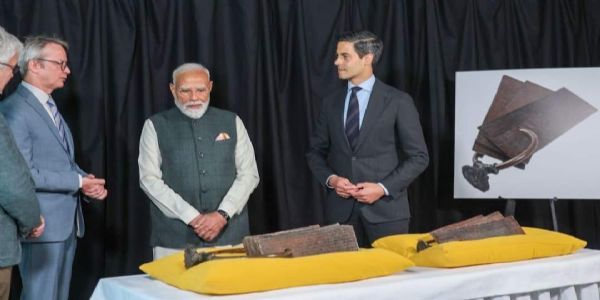
PM Modi Hails Return of 11th‑Century Chola Copper Plates as “Pride of India’s Civilisational Legacy”
17 May 2026