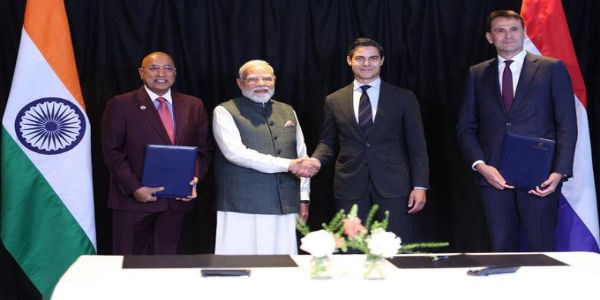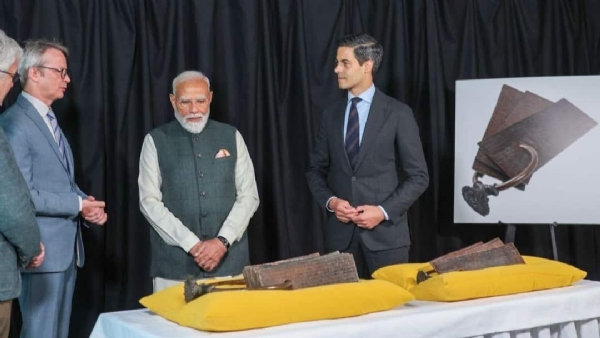
The Hague, Netherlands/New Delhi, 17 May (H.S.): Prime Minister Narendra Modi has hailed the return of a 1,000‑year‑old set of Chola‑era copper plates from the Netherlands as a “joyous moment for every Indian,” describing the artefacts as a living testament to the grandeur, culture, and maritime power of the Chola dynasty.
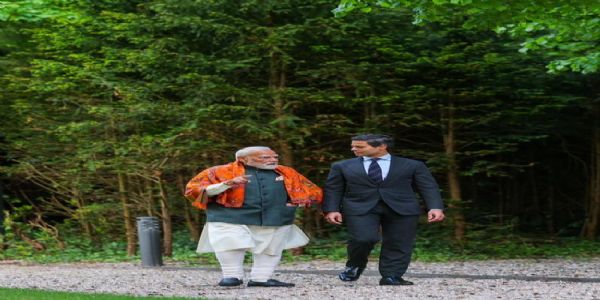
PM Modi attended a formal repatriation ceremony in The Hague in the presence of Dutch Prime Minister Rob Jetten, where he was presented with the historic Anaimangalam Copper Plates, also known as the Leiden Plates, which will now be physically returned to India after more than a century abroad.
Modi’s emotional tribute to the Cholas
In his remarks, PM Modi referred to the Chola Copper Plates as a “set of 21 large plates and 3 small plates” inscribed predominantly in Tamil, one of the oldest classical languages in the world. He noted that the plates record Emperor Rajendra Chola I’s formalisation of an oral commitment made earlier by his father, King Rajaraja I, reinforcing the dynasty’s tradition of documented royal grants and administrative continuity.
PM Modi emphasised that India takes immense pride in the Cholas, not only as builders of magnificent temples and powerful armies but also as pioneers of long‑distance maritime trade, cultural diplomacy, and religious pluralism. By highlighting the “maritime prowess” of the Cholas, he linked the return of the plates to a broader narrative of India’s historical connectivity with Southeast Asia, the Indian Ocean rim, and beyond.
Historical and cultural significance of the plates
The Chola Copper Plates, dating to the reign of Rajaraja I and his son Rajendra I, are regarded among the most important surviving records of Chola administration, land grants, and taxation. They document the grant of land revenues and taxes to the Chudamani Vihara, a Buddhist monastery in Nagapattinam founded by the Srivijayan king Sri Mara Vijayottunga Varman, illustrating how Hindu‑dominated southern Indian rulers patronised Buddhist institutions across maritime Asia.
Weighing nearly 30 kilograms and bound by a bronze ring bearing the royal Chola seal, the set is as much a symbol of imperial authority as it is a legal and administrative charter.
Historians often describe it as a rare, multi‑layered record: part dynastic genealogy in Sanskrit, part administrative charter in Tamil, and part evidence of India’s far‑reaching maritime and diplomatic networks.
Diplomatic and restitution context
The plates were removed from the Coromandel Coast during the 18th‑century Dutch colonial presence and have remained in the collections of Leiden University ever since, eventually becoming part of its Asian Library. Over the past decade, India has pursued their return through sustained diplomatic engagement, aligning with the Netherlands’ broader 2022 restitution policy for colonial‑era cultural property.
PM Modi publicly thanked both the Dutch government and Leiden University for acknowledging the plates’ rightful place in India’s cultural heritage and for cooperating in the repatriation. In his words, the ceremony in The Hague symbolises not only the restoration of a specific artefact but also a renewed understanding between former colonial powers and post‑independence states about the need to return significant cultural records to their countries of origin.
Modi’s message on national pride and heritage
For Modi, the return of the Chola Copper Plates is framed as part of a larger project of “reclaiming” and re‑engaging with India’s civilisational history, from the imperial Cholas to other classical dynasties. He has repeatedly used such moments to tie material heritage—scripts, inscriptions, temples, and royal charters—to contemporary ideas of national pride, linguistic heritage (especially Tamil), and historical self‑confidence.
With the plates scheduled to be housed in an Indian cultural or archival institution, PM Modi’s remarks signal that future generations of Indians will be able to study and celebrate these inscriptions not as distant objects in a European library, but as centrepieces of India’s own narrative of statecraft, commerce, and cultural pluralism.
Hindusthan Samachar / Jun Sarkar
17 May 2026
PM Modi Set to Embark on Sweden Visit to Deepen India–Nordic Ties on Energy, Trade and Tech
17 May 2026
PM Modi Hails Return of 11th‑Century Chola Copper Plates as “Pride of India’s Civilisational Legacy”
17 May 2026