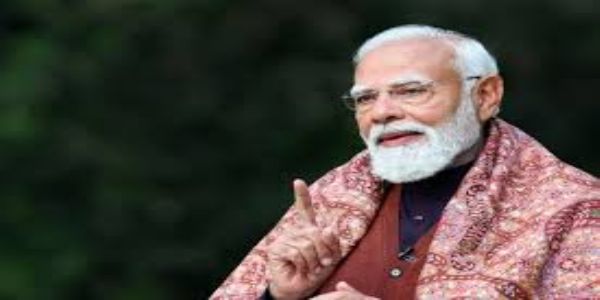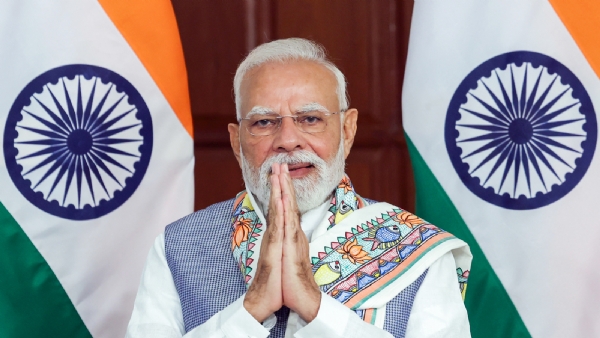
New Delhi, 15 May (H.S.): Prime Minister Narendra Modi is scheduled to launch a high‑stakes five‑nation diplomatic tour today, weaving together critical energy, technology, and trade partnerships across the United Arab Emirates and four European capitals between 15 and 20 May, 2026.
The itinerary begins with a one‑day stop in Abu Dhabi, before PM Modi flies swiftly to the Netherlands, Sweden, Norway, and Italy, in a tightly choreographed sequence designed to elevate India’s footprint in both West Asia and continental Europe.
Today’s UAE leg: energy, diaspora and strategic ties
On 15 May,PM Modi is expected to arrive in Abu Dhabi for his first scheduled engagement with UAE President Sheikh Mohamed bin Zayed Al Nahyan. Discussions will centre on strengthening the India–UAE Comprehensive Strategic Partnership, with a particular focus on energy security, renewable projects, and the robust flow of investments between the two nations.
The UAE is India’s third‑largest trading partner and a major source of cumulative foreign direct investment, underpinned by a 4.5 million‑strong Indian diaspora whose welfare will also feature prominently in talks.
Officials in New Delhi have indicated that the two leaders may also exchange views on regional stability in West Asia, including the impact of ongoing tensions on global energy markets and maritime routes.
PM Modi’s visit is expected to lay the groundwork for expanded collaboration in hydrogen, clean energy infrastructure, and defence‑linked technology transfers, setting the tone for his subsequent European engagements.
Netherlands: defence, water and green tech
From Abu Dhabi,PM Modi is slated to travel to the Netherlands on the same day, marking his first visit to the country since 2017 and underlining India’s desire to deepen a relationship that has grown from a modest trade base to a strategic partnership.
In The Hague, he will call on King Willem‑Alexander and Queen Máxima and hold formal talks with Prime Minister Rob Jetten, during which priorities such as defence cooperation, semiconductors, AI‑driven innovation, and green hydrogen are expected to feature.
India and the Netherlands recorded bilateral trade of roughly USD 27.8 billion in 2024–25, with Dutch investments in India exceeding USD 55.6 billion cumulatively, making the Netherlands the fourth‑largest source of FDI into India.
The two sides are also expected to take forward discussions on a Strategic Partnership on Water, building on Dutch expertise in water management and climate‑resilient infrastructure to support India’s coastal and urban adaptation plans.
Sweden: trade, tech and Nordic‑India business outreach
PM Modi’s schedule in Sweden is set for 17–18 May, when he will fly to Gothenburg for bilateral talks with Prime Minister Ulf Kristersson. The visit echoes Modi’s participation in the 2018 India–Nordic Summit in Stockholm and is designed to leverage Sweden’s strengths in clean tech, artificial intelligence, advanced manufacturing, and sustainable urban development.
Bilateral trade between India and Sweden reached about USD 7.75 billion in 2025, with Swedish FDI into India standing at roughly USD 2.825 billion over the 2000–2025 period. A key highlight of the Sweden leg will be Modi’s address alongside European Commission President Ursula von der Leyen at the European Roundtable for Industry, where he aims to pitch India as a reliable partner for resilient supply chains, green transitions, and digital‑twin technologies.
Norway: Nordic summit and blue‑economy push
On 18–19 May, PM Modi will land in Oslo for the 3rd India‑Nordic Summit and the first Indian prime ministerial visit to Norway in 43 years. He will meet King Harald V and Queen Sonja and hold talks with Prime Minister Jonas Gahr Støre, with the India–EFTA Trade and Economic Partnership Agreement serving as a central reference point for boosting trade — currently around USD 2.73 billion in 2024 — and expanding Norway’s substantial investments in Indian markets.
The India‑Norway Business and Research Summit during the visit is expected to spotlight collaboration in clean‑energy technologies, offshore wind, hydrogen, and the blue economy, including maritime and Arctic‑related research.
The third India‑Nordic Summit will gather leaders from Norway, Denmark (Prime Minister Mette Frederiksen), Finland (Prime Minister Petteri Orpo), Iceland (Prime Minister Kristrún Frostadóttir), and Sweden, with an agenda spanning technology, renewables, climate resilience, defence, space, and Arctic‑Nordic cooperation.
Italy: G7 anchor and India–EU‑EFTA linkages
PM Modi’s tour concludes with an official visit to Italy on 19–20 May at the invitation of Prime Minister Giorgia Meloni, following his earlier participation in the G7 summit in 2024. He is expected to meet President Sergio Mattarella and Italian cabinet colleagues to operationalise the Joint Strategic Action Plan 2025–2029, translating political convergence into concrete projects in trade, defence, clean energy, innovation, science, and people‑to‑people exchanges.
India and Italy recorded bilateral trade of about USD 16.77 billion in 2025, with Italian FDI into India exceeding USD 3.66 billion cumulatively since April 2000. Rome’s support for the India–EU Free Trade Agreement and the India–EFTA Trade and Economic Partnership Agreement will likely be invoked to accelerate the integration of Indian and European industrial and digital ecosystems, particularly in sectors such as machinery, pharmaceuticals, fashion, and aerospace.
Broader strategic significance
Taken together,PM Modi’s five‑nation tour is framed by India’s bid to position itself as a central node in global trade, technological innovation, and green‑energy transitions. The near‑simultaneous pursuit of deeper energy ties with the UAE and advanced‑technology partnerships with the Netherlands, Sweden, Norway, and Italy underpins India’s “multi‑aligned” foreign‑policy posture, seeking diversified partnerships without exclusive bloc loyalty.
As regional tensions continue to unsettle global energy markets and shipping lanes, PM Modi’s schedule is also expected to project India as a stable, rules‑oriented partner for both diversified energy supply chains and Indo‑Pacific‑linked security dialogues. With the India–EU FTA and India–EFTA TEPA providing the institutional scaffolding, the tour could prove pivotal in scaling India’s engagement with Europe and the Gulf toward a more enduring, rules‑based architecture of trade and technology cooperation.
---------------
Hindusthan Samachar / Jun Sarkar