Bhopal, May 15 (HS): In a major verdict in the historic Bhojshala case located in Dhar district headquarters of Madhya Pradesh, the High Court on Friday ruled that, based on the survey report of the Archaeological Survey of India (ASI), the structure has been recognised as a temple of Goddess Vagdevi (Saraswati).
The ASI had submitted a detailed 2,100-page report before the court. The report was prepared after a 98-day-long scientific survey, during which several significant findings emerged. According to the report, idols, coins, and several historical remains were recovered during excavation. It stated that later constructions had been raised over the foundation stones of a Parmar-period structure. The pillars and architectural features found during the survey indicate that these were originally part of a temple and were later reused in the construction of a mosque.
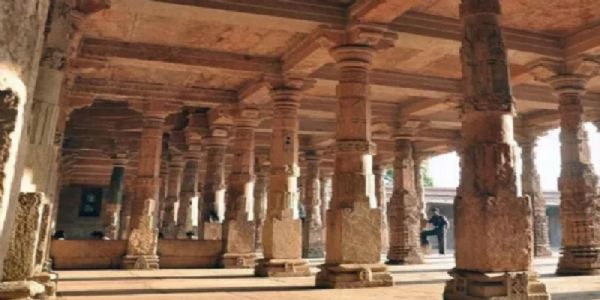
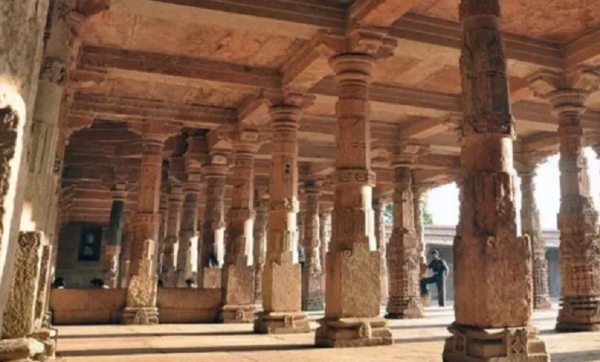
The report further noted that 106 standing pillars and 82 horizontal pillars were found across all four directions of the complex, making a total of 188 pillars. The design and craftsmanship of these pillars strongly suggest that they originally belonged to temple architecture. It was also observed that the figures of deities and human forms carved on the pillars had later been damaged using tools.
Images of Deities Found on the Walls
During the survey, the ASI team discovered figures of Hindu deities carved on the walls of the Bhojshala complex. The report also included sculptures that had earlier been removed from the site and preserved in the Mandu Museum. These sculptures, according to the report, were originally recovered from the Bhojshala premises and shifted to the museum for protection and preservation.
The artefacts recovered during excavation were made of marble, soft stone, sandstone, and limestone. The carvings included figures and symbols of Lord Ganesha, Narasimha, Bhairava, various deities, and animals.
The survey also found two pillars inscribed with the words “Om Saraswatyai Namah.” Page 148 of the survey report reportedly states that the architectural style of the pillars present in Bhojshala indicates they were once part of a temple and were later reused on elevated basalt platforms during mosque construction. The report also mentions that one pillar bears a visible deity figure.
A large inscription found in the eastern section contains two poems in the Prakrit language, each comprising 109 verses. On the western side, the walls of the archway are attached to basalt platforms beneath which carvings are visible. According to the report, the construction style of the platform and the arch walls are different, suggesting they belong to separate phases.
The report also noted that Bhojshala had been surveyed during British rule. In addition, excavations carried out by the ASI in 1987 had recovered 32 sculptures associated with Hindu religious traditions. The report concluded that parts of an earlier temple structure had been used in the construction of the present Kamal Maula Dargah complex.
Evidence of Parmar-era Temple
The ASI survey claims to have found several indications suggesting that Bhojshala was originally a temple. According to the report, the present structure, identified as the Kamal Maula Dargah, incorporated parts of an earlier Parmar-period temple. The report further highlighted that the recovered artefacts — made from basalt, marble, soft stone, sandstone, and limestone — reflect a rich artistic and cultural heritage.
Key Findings Highlighted in the Report
The report mentions that inscriptions in Sanskrit, Prakrit, and local dialects written in Nagari script were found within the Bhojshala-Kamal Maula Mosque complex. These inscriptions are believed to date between the 12th and 16th centuries CE. Important inscriptions such as Parijatamanjari-Natika, Avanikurmasatam, and Nagabandha were also referenced in the findings.
According to the report, a massive inscription featuring Parijatamanjari-Natika and Vijayashri states that the work was composed by Madan, the guru of King Arjunavarman of Dhar. Arjunavarman, son of Subhatavarman, belonged to the Parmar dynasty and is considered a descendant of Emperor Bhojdeva. The preface of the inscription states that the play was first performed at the temple of Goddess Saraswati (Sharada Devi).
Another major inscription contains two poems in the Prakrit language, each consisting of 109 verses. The concluding section of the first poem identifies it as “Avanikurmasatam” and states that it was dedicated to Maharajadhiraj Parmeshwar Bhojdeva.
The second poem does not contain a concluding note, but the report suggests that it was also authored by Bhoj. The inscriptions found on two separate pillars in the western colonnade have been described as highly important from the perspective of grammar and education. According to the report, these inscriptions point towards the existence of a traditional centre of learning believed to have been established by Raja Bhoj.
One of the inscriptions begins with verses mentioning King Naravarman, son of Udayaditya of the Parmar dynasty, who ruled between 1094 and 1133 CE.
---------------
Hindusthan Samachar / Indrani Sarkar