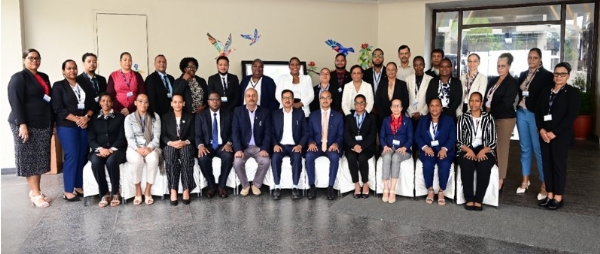
New Delhi, 12 May (H.S.): A capacity‑building programme has been organised at the National Centre for Good Governance (NCGG) in Mussoorie to train civil servants from Seychelles in areas such as good governance, policy‑making, technological innovation, and judicial reforms. The two‑week training programme, being held from 11 to 22 May in Mussoorie and New Delhi, is being attended by 29 senior officials, including officers from the defence, finance, education, judiciary, and the President’s Office of Seychelles.
The Ministry of Personnel, Public Grievances and Pensions has stated that the programme is being conducted under a bilateral agreement signed between India and Seychelles in February this year, which envisions the training of 250 civil servants over a three‑year period. The inaugural session was chaired by Dr. Surendra Kumar Bhardwaj, Director General of NCGG, who said that the curriculum has been designed in line with the participants’ professional requirements and aims to equip them with the capacity to implement high‑impact national programmes effectively.
Alex Henderson, head of the delegation, thanked the Government of India, saying that the training will not only strengthen institutional capacity but also reinforce bilateral ties between the two countries. He added that the programme will deepen the historical and cultural links that already exist between India and Seychelles.
The programme coordinator, Dr. B.S. Bisht, explained that the training includes subjects such as the principles of good governance, policy‑making, technological innovation, judicial reforms, e‑courts, transparency in government procurement, AI‑based governance, Project Gati‑Shakti, and administrative ethics. In the second phase, participants will visit various institutions to gain hands‑on, practical exposure.
It is noteworthy that the NCGG has so far trained over 5,500 civil servants from 52 countries, including officials from Sri Lanka, Bangladesh, Nepal, Bhutan, Myanmar, Kenya, Tanzania, Tunisia, The Gambia, the Maldives, and several other African and Latin American nations.
---------------
Hindusthan Samachar / Jun Sarkar
13 May 2026