New Delhi, 12 May (H.S.): Union Home Minister Amit Shah said on Tuesday that the Modi government is continuously working towards building a “Cyber‑Secure India” and that mule accounts remain a major obstacle in checking cybercrimes. He added that a new AI‑based system will play a key role in tackling cyber fraud.
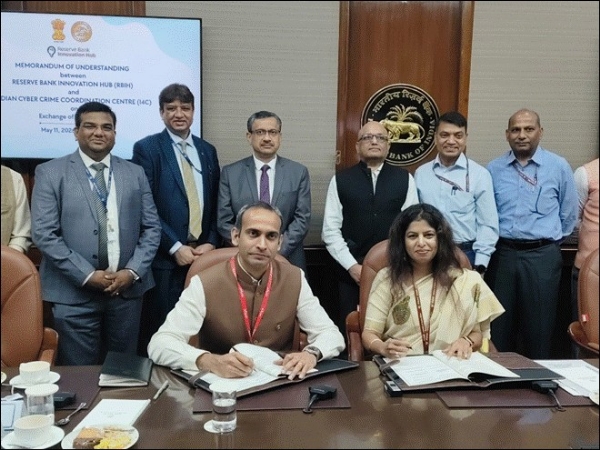
Under the Ministry of Home Affairs, the Indian Cyber Crime Coordination Centre (I4C) has signed a Memorandum of Understanding (MoU) with the Reserve Bank Innovation Hub (RBIH) to curb cyber financial fraud and tackle illegal or mule accounts in the banking system.
Amit Shah, in a post on X, said, “The Modi government is relentlessly working to make India cyber‑secure. Mule accounts are a big hurdle in controlling cybercrime. Today, the I4C under the Ministry of Home Affairs has signed an MoU with RBIH to harness the power of Artificial Intelligence in fighting cyber fraud.”
He explained that the I4C’s ‘Suspicious Registry’ data will be integrated with AI‑based fraud detection systems, enabling the rapid identification and blocking of hidden mule accounts. This mechanism, he said, will act as a “next‑generation shield” for citizens against cybercriminals.
Under the agreement, I4C and RBIH will work together on sharing fraud‑risk information, analytical collaboration, and operational coordination to counter cyber‑enabled financial crimes. The MoU was signed on behalf of I4C by IG (Administration) Rupa M and on behalf of RBIH by CEO Sahil Kinny. RBI Deputy Governor Rohit Jain, Special Secretary Anand Swaroop, Joint Secretary Rakesh Rath, and I4C Chief Executive Officer Rajesh Kumar were among the senior officials present on the occasion.
Officials added that the data received from I4C’s ‘Suspicious Registry’ will be used to further strengthen RBIH’s AI‑based fraud‑risk assessment models and systems such as ‘MuleHunter.ai’.
---------------
Hindusthan Samachar / Jun Sarkar

13 May 2026