New Delhi, 11 May (H.S.): The Central government has issued the notification for implementing the ‘Viksit Bharat–Guarantee For Employment And Livelihood Mission (Rural)’, also known as the VB–G Ram Ji Act 2025, with the aim of revitalising rural development and employment. The new legislation will come into force across rural areas of the country from 1 July 2026, effectively replacing the Mahatma Gandhi National Rural Employment Guarantee Act (MGNREGA) 2005.
According to the government, under this scheme, rural jobseekers will now receive 125 days of employment per financial year instead of the previous 100 days. During the transition period, all MGNREGA provisions will remain in effect, and any incomplete works will be finalised under the old Act before 1 July.
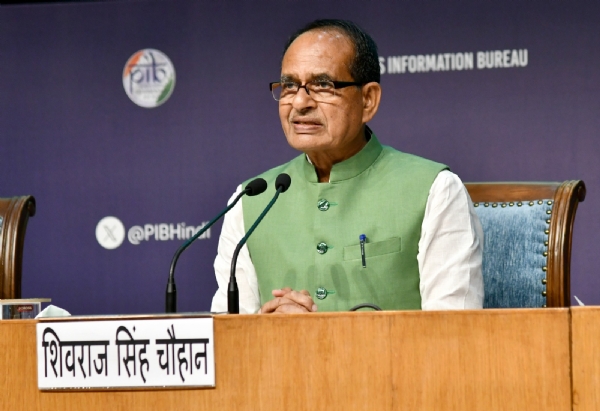
Union Minister for Agriculture & Farmers’ Welfare and Rural Development Shivraj Singh Chouhan said in a statement that the Act will usher in new hope, higher income security and large‑scale sustainable development works in villages for rural poor families, labourers, women, self‑help groups and farmers. He added that consultations with states are underway to frame the rules, but the government’s priority is to ensure no labourer is deprived of work during the transition phase, with full arrangements already in place.
Chouhan clarified that most states will have up to six months to complete preparations. If any state is not ready by 1 July, funding for works post that date will follow the Viksit Bharat G‑Ram Ji scheme pattern.
The Modi government has allocated over ₹95,000 crore in its budget for employment generation under the scheme. States have also made provisions in their budgets, bringing the combined Central and state outlay to more than ₹1,51,000 crore annually.
Wages for workers will be credited directly to their bank or post‑office accounts via Direct Benefit Transfer (DBT). The target is to complete payments within three days, but the maximum timeline is 15 days. Workers will be entitled to delayed payment compensation if funds are not credited within 15 days, and an unemployment allowance if work is not provided on demand.
Describing the scheme as a comprehensive initiative for labourers’ welfare, Chouhan said the ₹1,51,000 crore annual allocation will enable large‑scale infrastructure development in villages. Works will include water conservation, rural infrastructure, roads, bridges, culverts, schools, anganwadi buildings and farm‑related projects.
Under livelihood activities, self‑help groups (SHGs) and Farmer Producer Organisations (FPOs) can construct working sheds and other infrastructure. In areas prone to natural disasters, retaining walls along rivers or in flood‑prone zones can also be built under the scheme.
To ensure timely and adequate wage payments, the administrative expenditure ceiling has been raised from 6% to 9% of the total allocation, allowing better staffing and monitoring.
Chouhan expressed confidence that the scheme will mark the beginning of a new era for labourers’ lives and serve as a milestone in realising the vision of developed villages for a developed India.
The VB–G Ram Ji Act thus promises not just more workdays but a broader basket of rural infrastructure and livelihood projects, with stronger safeguards against payment delays and unemployment, positioning it as the next evolution of India’s flagship rural‑employment programme.
---------------
Hindusthan Samachar / Jun Sarkar

13 May 2026