New Delhi, 10 May (H.S.):
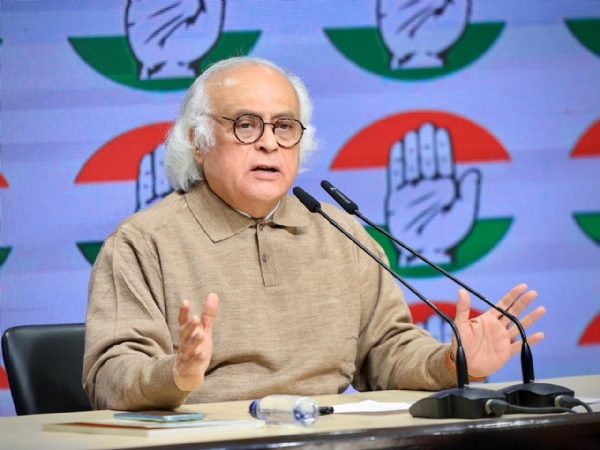
Congress General Secretary (Communications) Jairam Ramesh has once again raised serious questions over the Centre’s Great Nicobar Island Development Project. In a letter to Union Environment, Forest and Climate Change Minister Bhupender Yadav, he alleged that the environmental clearance granted to the project was based on incomplete and inadequate environmental impact assessment (EIA) reports.
Ramesh said several claims made in the government’s “Great Nicobar Project FAQ” do not match the ministry’s official documents and available studies.
Sharing his letter on social media platform X, Ramesh said the government had claimed in the FAQ issued on May 1 that the project’s potential environmental impacts were being comprehensively identified, assessed and managed through a robust EIA process and a detailed environmental management plan. He said he had already responded in detail on this issue on May 3, but now wished to draw the government’s attention to some additional facts and technical points.
In his letter, Ramesh said that, under the law, a comprehensive environmental impact assessment study is mandatory for port projects in the Andaman and Nicobar Islands. He argued that Great Nicobar’s biodiversity and ecology are extremely sensitive and unique, and therefore at least a three-season baseline study was necessary to properly assess seasonal changes and environmental impacts.
Ramesh referred to a Ministry of Environment office memorandum dated November 3, 2009, saying that for port projects in the Andaman and Nicobar Islands with a capacity of more than 5 million tonnes per annum, a detailed EIA, physical and mathematical modelling, and ground-truthing are mandatory.
According to him, granting approval for such a large project on the basis of a study conducted over a limited period amounts to ignoring environmental standards.
The Congress leader said that the 2021 mapping by the Indian Space Research Organisation marked a large part of Galathea Bay as an eroded coastal area. He said such sensitive zones require detailed and long-term environmental studies. He also cited a 2015 Lok Sabha statement by former Environment Minister Prakash Javadekar, who said that a rapid EIA based on data from just one season cannot adequately address environmental concerns.
Ramesh alleged that the final EIA report for the project was submitted in March 2022, but it itself admits that the environmental baseline study was carried out only during one season, between December 2020 and February 2021. In his view, this does not meet scientific standards or the requirement for a long-term environmental assessment.
Referring to the report, he said the primary biodiversity survey was conducted only between December 14 and 22, 2020, while the leatherback turtle study was limited to February 12 to 18, 2021. He said such a short study period cannot properly capture the ecological condition and biodiversity of an area.
He also said the EIA report admits that surveys were limited because of dense and impenetrable forests. The report further noted that the information available so far is incomplete and that what remains unknown may in fact be more significant and valuable. According to Ramesh, this itself shows that the study was incomplete.
The Congress General Secretary said the Zoological Survey of India report was based on data from February-March 2021, while the Wildlife Institute of India report described itself as a “rapid assessment study,” based on a visit lasting only a few days in April 2021. In addition, the application submitted by project proponent ANIIDCO also stated that the EIA study period was limited to a few days and weeks.
Ramesh alleged that the studies on which environmental clearance was granted were neither comprehensive EIAs nor scientific studies based on sufficient baseline data. He said such reports make a mockery of both science and the EIA process.
The Congress leader also referred to a National Green Tribunal judgment dated April 3, 2023, saying the tribunal had pointed to “unanswered deficiencies” in the environmental clearance and directed the setting up of a high-level committee for review.
He alleged that the Environment Ministry has kept the committee’s report confidential, even though the matter is of public importance and environmental concern.
In his letter, Ramesh said Great Nicobar’s biodiversity is globally unique and rare, with new plant and animal species still being discovered there. He said the project in its current form could cause serious damage to this distinctive ecosystem. He also dismissed the argument of compensatory afforestation, saying that centuries-old natural forests cannot be replaced by artificial plantation.
He further said that several security experts have already written that the country’s strategic and security needs can be met without environmental destruction. Ramesh finally urged the Environment Minister to review the project’s current design, the environmental clearance process and all related studies.
---------------
Hindusthan Samachar / Jun Sarkar
13 May 2026