Tehran, 09 April (H.S.):
Amid escalating tensions across West Asia, Iran has struck a markedly harder tone toward the United States, warning that Washington must choose clearly between a genuine ceasefire and continued warfare.
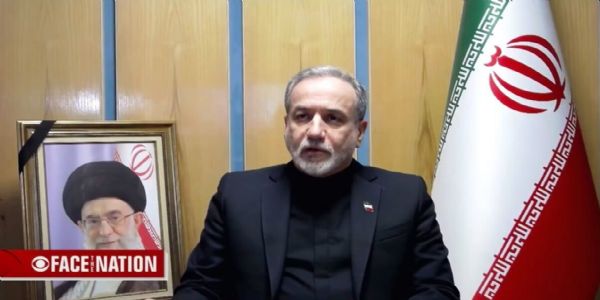
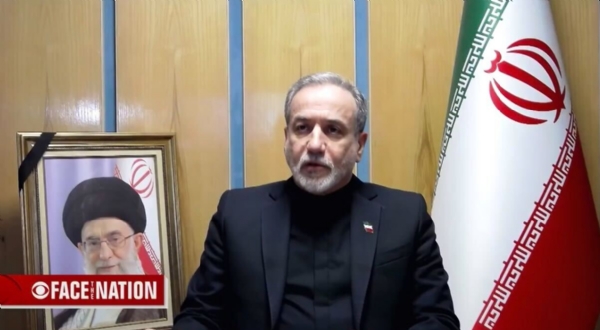
Iran’s Foreign Minister Abbas Araghchi said in uncompromising terms that a situation in which both ceasefire and military action coexist is no longer tenable, sharpening the pressure on Washington as regional hostilities flare.
Addressing the current regional crisis, Araghchi stated that the existing conditions do not allow “ceasefire and war” to run side by side. He argued that if the United States genuinely wants a conflict pause, it must implement such a ceasefire in full and without exception.
Conversely, he added, as long as Israel continues carrying out military operations under the umbrella of U.S. backing, what is being called a ceasefire cannot be treated as such.
The minister directed attention to the ongoing violence in Lebanon, where fresh Israeli strikes have killed scores of civilians, underscoring what he described as a double‑speak in Western diplomacy. Araghchi insisted that the entire world is watching, and the time has come for Washington to stand by its stated commitments and adopt a clear, unambiguous stance instead of allowing proxy actions to continue.
Araghchi’s remarks come at a moment when the Middle East’s security landscape is exceptionally fragile. On one side sits a publicly announced U.S.–Iran ceasefire, brokered under intense international mediation; on the other, Israel’s sustained bombardment of Lebanon and adjacent areas continues, with attacks that have killed more than 180 people in a single day in recent episodes. This dissonance has raised hard questions about the credibility and enforceability of the ceasefire framework.
Analysts suggest that Iran’s hard‑line language is deliberately calibrated both to signal resolve to domestic audiences and to push Washington into a more constrained diplomatic corner. By framing the crisis as a binary choice—either a real truce or open escalation—Iran appears to be testing the limits of U.S. willingness to rein in Israel’s conduct in Lebanon and the wider region.
Behind the bluntness, the subtext is clear: Tehran is not willing to accept a ceasefire that only partially binds its adversaries while allowing military operations to continue through intermediaries. Officials close to Iran’s leadership argue that unless hostilities in Lebanon and neighboring zones are halted, Tehran will not rule out taking more assertive measures of its own, including potential retaliatory strikes or renewed support for allied armed groups.
At the same time, Araghchi’s warning is widely seen as part of a broader pressure campaign aimed at nudging Washington toward stronger de‑escalation steps, including direct leverage on Israel and a more coherent regional security understanding.
For now, the spotlight has shifted to Washington and its next diplomatic or military signal. Observers in capitals from Europe to Asia are watching closely to see whether the United States responds with tighter constraints on Israel’s actions, or whether it permits the current pattern—where ceasefire and war appear to run in parallel—to persist.
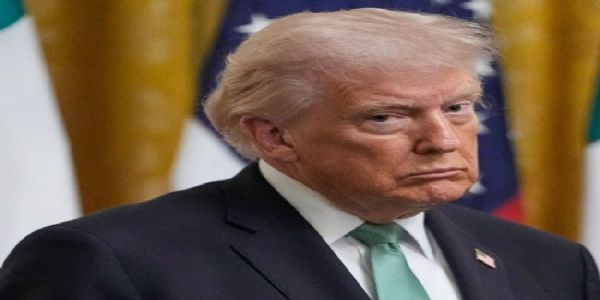
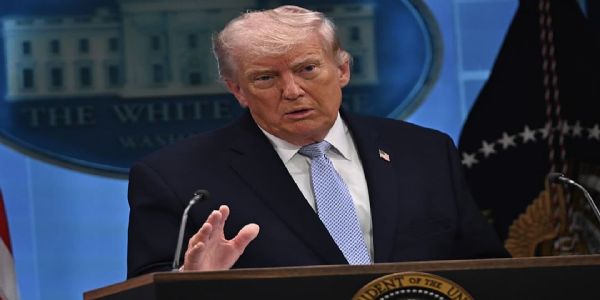
How U.S. President Donald Trump’s administration reacts to this explicit Iranian ultimatum will likely shape the trajectory of the conflict in the coming days: either toward a more robust and credible ceasefire, or a slide into broader regional warfare that could redraw the Middle East’s security map once again.
---------------
Hindusthan Samachar / Jun Sarkar