Tehran, 08 April (H.S.):
Iran has accepted a two‑week ceasefire with the United States, conditionally agreeing to reopen the Strait of Hormuz for commercial shipping, marking a dramatic de‑escalation in the Middle East conflict that has rattled global energy markets.
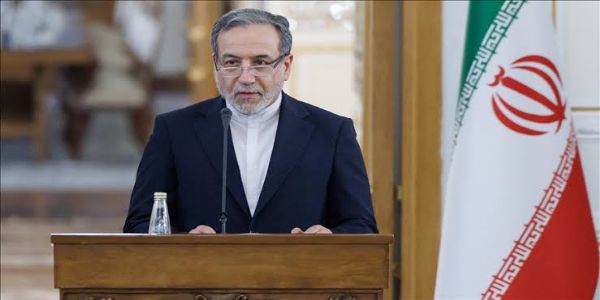
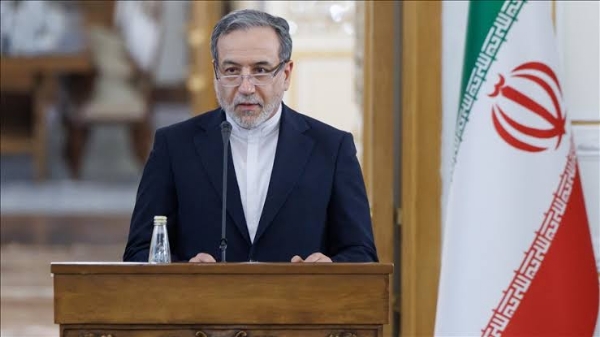
In a carefully worded statement, Iranian Foreign Minister Seyed Abbas Araghchi confirmed that Iran’s armed forces will suspend defensive operations if attacks against Iran are halted, while affirming that safe passage through the strategic waterway will be possible for the duration of the truce.
Araghchi announces conditional ceasefire
Writing on the social‑media platform X (formerly Twitter), Araghchi announced on behalf of Iran’s Supreme National Security Council that Iran would cease its defensive military actions if hostilities against the country are stopped.
He explicitly tied the suspension of operations to the cessation of attacks on Iranian territory, framing the move as a reciprocal measure rather than a unilateral surrender.
Araghchi also stated that for a period of two weeks, the Strait of Hormuz would remain open and allow safe passage for shipping, provided navigation is coordinated with Iran’s armed forces and remains within technical and operational limits. This signaled a retreat from Iran’s earlier posture of effectively restricting or suspending transit through the chokepoint, which supplies roughly one‑fifth of the world’s seaborne oil flows.
Strait of Hormuz: from chokepoint to open corridor
The Strait of Hormuz, a narrow maritime channel linking the Persian Gulf to the Gulf of Oman, has long been a flashpoint in U.S.–Iran tensions because a significant share of global oil exports passes through it.
In recent weeks, Iran had limited or obstructed access for certain vessels, particularly those linked to the United States and Israel, while maintaining that the route remained open to “neutral” or non‑hostile countries.
By now agreeing that safe passage “will be possible” for two weeks via coordination with Iran’s Armed Forces, Araghchi’s statement effectively transforms the strait from a tightly controlled war‑zone corridor back into an open, albeit monitored, shipping lane, at least for the interim.
Analysts note that this concession is likely meant to reassure global energy markets and major trading partners such as China, India, and much of Europe, while still preserving Iran’s authority over its own territorial waters.
Pakistan’s role and diplomatic groundwork
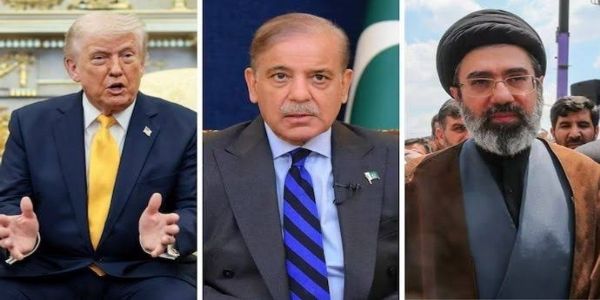
Iran’s acceptance of the ceasefire followed a flurry of shuttle diplomacy led by Pakistan, whose Prime Minister Shehbaz Sharif and Army Chief Field Marshal Asim Munir have been mediating between Washington and Tehran.
Araghchi publicly thanked both Sharif and Munir, referring to them as “dear brothers” and crediting their “tireless efforts” to end the war in the region, underscoring the importance of Islamabad’s role in brokering the temporary truce.
Reports indicate that Pakistan floated a four‑nation initiative involving Egypt, Saudi Arabia and Turkiye to create a framework for de‑escalation, including a time‑bound ceasefire as a confidence‑building measure.
U.S. and Iranian officials have signaled openness to a broader negotiation framework, with sources suggesting that a potential meeting between U.S. and Iranian diplomats could be scheduled in Pakistan if the two‑week truce holds.
Trump’s statement and conditions
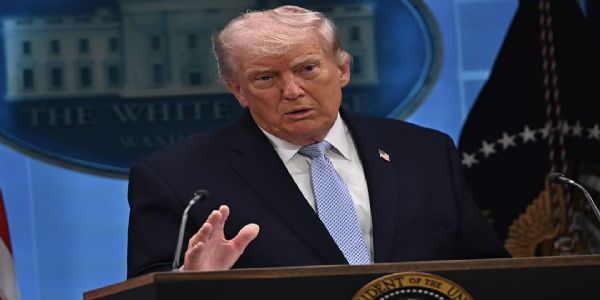
U.S. President Donald Trump, speaking late on Tuesday (local time), announced a “double‑sided ceasefire” with Iran, insisting that the arrangement is contingent on the “complete, immediate, and safe opening” of the Strait of Hormuz.
He claimed that the United States had already achieved its core military objectives and was “very far along” with a long‑term peace agreement, describing the two‑week interval as a window to finalize and “consummate” a broader deal.
Trump also acknowledged that the U.S. had accepted the general framework of Iran’s 10‑point proposal, while Iran, in turn, is expected to accept key elements of a 15‑point U.S. counter‑proposal.
The exact details of both proposals remain opaque, but their convergence suggests a tentative consensus on issues such as shipping rights through the strait, limits on military escalation, and a de‑confliction mechanism between the two sides.
Geopolitical and economic implications
The two‑week truce and the conditional reopening of the Strait of Hormuz have already triggered a sharp drop in global oil prices, as traders price in the prospect of resumed, unimpeded flows from the Persian Gulf.
Major energy‑importing economies, including India, China and several European states, have cautiously welcomed the pause in hostilities, though officials warn that any recurrence of attacks or renewed blockade attempts could quickly revive market volatility.
Strategically, Araghchi’s statement represents an attempt to frame the ceasefire as a diplomatic and political victory for Iran, rather than a military defeat, by emphasizing that Iran’s armed forces are only suspending defensive operations and that control over the strait remains coordinated through Tehran‑led mechanisms.
At the same time, it leaves the door open for a more durable settlement, should the U.S. and its allies refrain from further strikes and engage in sustained negotiations.
What comes next
Over the next two weeks, the world will be watching three key indicators:
whether attacks on Iranian territory cease, as demanded by Araghchi;
how shipping through the Strait of Hormuz evolves in practice, including any incidents or frictions between Iran’s navy and foreign vessels; and
whether Pakistan‑backed talks can produce a concrete long‑term agreement that goes beyond the current ceasefire.
For now, Abbas Araghchi’s announcement marks a rare moment of calibrated de‑escalation in a region that has been on the brink of all‑out war, placing the onus squarely on Washington and its allies to avoid actions that could collapse the fragile truce.
---------------
Hindusthan Samachar / Jun Sarkar