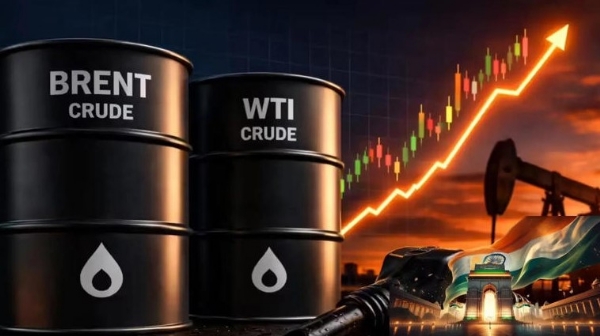
New Delhi, 30 April (H.S.): The sustained surge in international crude oil prices threatens to severely impact India's economy. India imports nearly 88% of its crude oil requirements from global markets. This price escalation has created mounting pressure on the nation's finances, adversely affecting various economic indicators.
Market experts note that the oil price rally is already showing negative effects. Oil marketing companies face losses of ₹22-28 per litre on petrol and diesel sales amid this uptick. This persists despite the central government's recent relief measures a month ago, slashing excise duty on petrol from ₹13 to ₹3 per litre and eliminating the ₹10 per litre duty on diesel entirely.
Even post-duty cuts, unchecked crude price rises have shielded consumers but deepened oil firms' losses. The crude import bill continues to swell, exerting negative pressure on India's economy. ICRA Senior Vice President Prashant Vashishtha warns that this surge could sharply widen India's current account deficit while jeopardising fiscal deficit targets.
Vashishtha adds that elevated crude prices could weaken the Indian rupee alongside deficits. Today, the rupee plummeted past 95.30 against the dollar to record lows. The rally may also stoke domestic inflation and trigger heightened foreign capital outflows.
Experts predict prolonged high prices with no immediate relief in sight. A key factor is U.S. pressure, as President Donald Trump has hardened his stance on the Strait of Hormuz blockade. Trump stated the U.S. Navy will maintain the blockade until Iran agrees to a nuclear deal. This has nearly halted oil supplies via Hormuz.
Notably, since West Asia conflict erupted on February 28, Iran blocked Hormuz passage for cargo ships, oil, and gasoline tankers—allowing only its own or allied vessels sporadically. The situation worsened in April when the U.S. announced a full Hormuz blockade, halting all traffic. No second round of U.S.-Iran peace talks has materialised, nor has normal shipping resumed. This has stalled Gulf nations' oil exports, primarily routed through Hormuz.
Around 20% of global crude and gas supply transits the Strait of Hormuz. The ongoing West Asia conflict has choked this route, sparking worldwide disruption and a 55-60% surge in Brent and WTI crude prices.
---------------
Hindusthan Samachar / Jun Sarkar