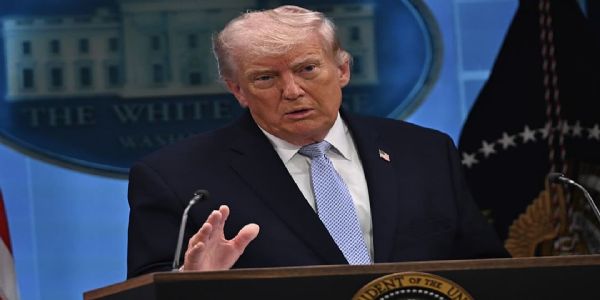
Washington, 28 April (H.S.): US President Donald Trump has intensified his campaign against the Democratic Party, accusing opposition lawmakers of prolonging a funding deadlock that has left the Department of Homeland Security (DHS) effectively shut down for over two months.
The standoff, which centers on bitter disagreements over immigration‑policy reforms tied to DHS appropriations, has now entered its tenth week, raising serious concerns about national‑security readiness and the stability of the federal workforce.
In a series of posts on Truth Social, Trump lashed out at what he described as “Radical Left Democrats,” who he claimed have blocked DHS funding since February 14. He argued that the impasse is depriving Immigration and Customs Enforcement (ICE) and US Border Patrol of “FULL FUNDING” and called on Republicans to “UNIFY” behind a party‑backed budget blueprint to bypass Senate obstruction.
The president set a hard deadline of June 1 for Congress to deliver a final DHS funding bill, framing the shutdown as a Democratic failure that endangers public safety.
The White House has also promoted a symbolic rebranding of ICE, proposing to rename it “National Immigration and Customs Enforcement” (NICE). Trump has publicly endorsed the move, portraying it as part of a broader effort to modernize and legitimize federal immigration enforcement structures.
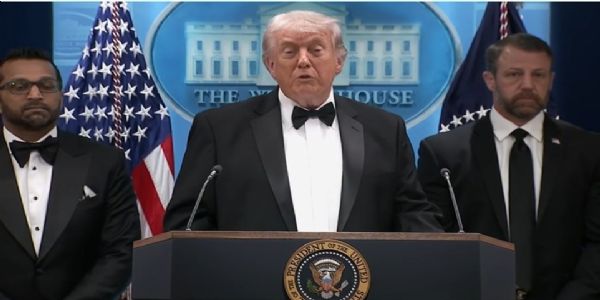
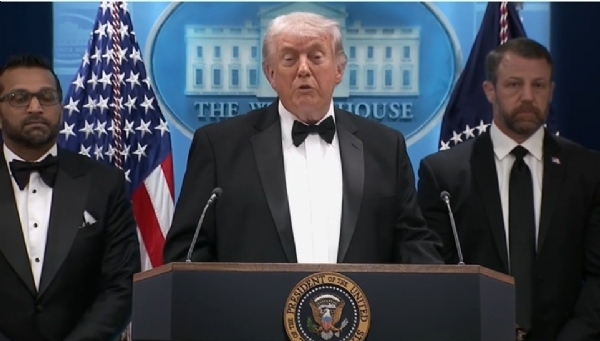
White House Press Secretary Karoline Leavitt has warned that the prolonged defunding of DHS—now entering its 73rd day—has already taken a tangible toll on frontline operations. She pointed to the recent shooting at the Washington Hilton during the White House Correspondents’ Dinner, arguing that the incident underscores the urgency of restoring full funding to the Secret Service and other DHS components.
The Transportation Security Administration (TSA), which operates under DHS, has reported severe staffing shortages and unpaid personnel, leading to long security queues and travel disruptions at major airports across the United States. Critics say the crisis is no longer a purely political standoff but a practical failure that weakens the country’s border and aviation security architecture.
The core of the dispute lies in the sharp divergence between Republican and Democratic visions of immigration policy. Democrats have insisted on reforms to enforcement practices before approving funding for ICE and Customs and Border Protection (CBP), particularly in response to Trump’s aggressive mass‑deportation agenda. Republican leaders, including House Speaker Mike Johnson, have rejected these conditions as non‑negotiable, arguing that any such concessions would undermine the rule of law and national‑border integrity.
Attempts to resolve the impasse have been further complicated by internal divisions among House Republicans, with some moderates pushing for a more conciliatory approach while hard‑liners demand a clean, uncompromising DHS funding bill. Congressional sources say efforts to revise a Senate‑approved funding measure have stalled, leaving the DHS shutdown in an uncertain limbo heading toward the June 1 deadline set by the president.
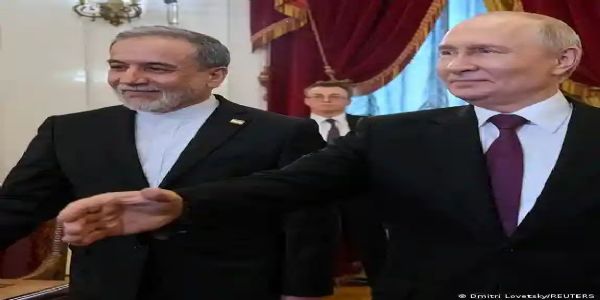
Against this backdrop of domestic gridlock, Trump’s administration continues to pursue a highly assertive foreign‑policy posture, especially in the Middle East. US officials are currently reviewing an Iranian‑proposed plan to de‑escalate hostilities and reopen the Strait of Hormuz, which Iran has intermittently blocked amid a five‑week conflict.
The White House has signaled that any agreement must ensure “Peace, Security, and Safety” for Israel, the broader Middle East, and the United States, while maintaining economic pressure on Tehran through a blockade of Iranian ports.
Analysts at think tanks such as the Carnegie Endowment and the Brookings Institution argue that Trump’s transactional, confrontational style both at home and abroad is reshaping the global order and forcing countries like India to recalibrate their foreign‑policy calculations. The DHS shutdown, they note, is emblematic of a broader pattern of domestic polarization that increasingly spills over into America’s foreign‑policy credibility and alliance management.
As the June 1 deadline looms, Trump shows no sign of moderating his rhetoric, instead doubling down on his narrative of a “Democrat shutdown” that he claims is costing the US economy and national security. Whether that narrative will translate into a breakthrough in Congress or merely deepen the political divide remains one of the most closely watched questions in Washington.
---------------
Hindusthan Samachar / Jun Sarkar
28 Apr 2026