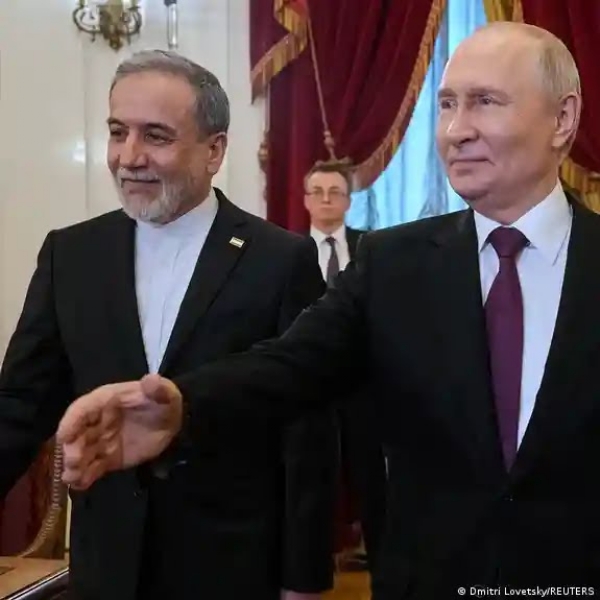
Moscow, 28 April (H.S.): Russian President Vladimir Putin has pledged Moscow’s firm backing for Iran during a high‑level meeting in St. Petersburg with Iranian Foreign Minister Abbas Araghchi on Monday, as both sides seek to navigate the escalating Middle East conflict and stalled US‑Iran negotiations. The talks underscore a deepening strategic alignment between Moscow and Tehran at a moment when diplomacy between Washington and Tehran has effectively ground to a halt.
During the meeting in St. Petersburg, Putin told Araghchi that Iran would “navigate this difficult period of war” and that Russia would do everything in Iran’s interests and those of the wider region to secure peace as soon as possible. According to Russian state media, he reiterated that Moscow regarded its relationship with Tehran as a strategic partnership and would continue to strengthen it despite parallel pressures from the West over Russia’s war in Ukraine.
Putin also conveyed that he had received a message from Iran’s Supreme Leader and asked Araghchi to relay “sincere words of gratitude” while affirming Russia’s commitment to the alliance. In turn, the Iranian foreign minister described the Russia–Iran relationship as “strategic at the highest level,” saying the two countries planned to move forward on that basis.
Araghchi’s diplomatic push amid US‑Iran deadlock
Araghchi’s visit follows a regional tour that included Pakistan, Oman, and consultations with Gulf and Arab partners, all aimed at building diplomatic cover for Iran amid a standoff with the United States over the Strait of Hormuz and Iran’s nuclear program. The first round of US–Iran negotiations in Pakistan, held in mid‑April, collapsed after what Iranian officials claimed were “excessive demands” from Washington and Washington’s refusal to ease pressure on Tehran’s oil exports.
In remarks cited by Iranian state media, Araghchi accused the United States of being responsible for the failure of those talks, arguing that American conditions proved incompatible with Iranian red lines on sovereignty and security. He also stressed that safe passage through the Strait of Hormuz was an “important global issue,” pointing to widespread disruptions in global energy markets caused by the conflict‑driven restrictions on shipping.
Russia’s balancing act in the Middle East
Russia has so far avoided direct military involvement in the US–Iran war, even as it continues its full‑scale invasion of Ukraine. Instead, Moscow has positioned itself as a political backer of Tehran and a potential mediator, with the Kremlin indicating a readiness to offer “goodwill or mediation services” in future US–Iran negotiations.
Implications for the Iran war and global diplomacy
For Iran, the meeting with Putin signals that Tehran can count on a major great‑power patron at a time when Washington maintains a blockade on Iranian oil exports and insists that Tehran abandon or scale back its uranium‑enrichment program, which the US claims is aimed at nuclear weapons development. Tehran continues to insist its nuclear activities are for peaceful purposes only.
Hindusthan Samachar / Jun Sarkar
28 Apr 2026