New Delhi, 23 April (H.S.):
The Indian badminton teams are set to enter the 2026 Thomas and Uber Cup with contrasting but equally ambitious objectives: the men’s side aiming to reproduce its historic title‑winning form, while the women’s side targeting a stronger, more consistent performance on the global stage. With the tournament scheduled in Horsens, Denmark, from April 24 to May 3, India finds itself in a demanding group draw yet buoyed by a blend of seasoned campaigners and rising young talent.
The men’s team, still riding the confidence of its maiden Thomas Cup triumph in 2022, will open its campaign against Canada on Friday before facing Australia on April 27 and the 11‑time champions China on April 29. That 2022 title, carved out by inspired performances from K. Srikanth, H. S. Prannoy, Satwiksairaj Rankireddy and Chirag Shetty, ended a long wait for India and elevated the sport’s profile nationwide. Two years later, the dream to retain the trophy ended in the quarterfinals to China, but the core of that squad has regrouped for 2026, now seasoned by further experience.
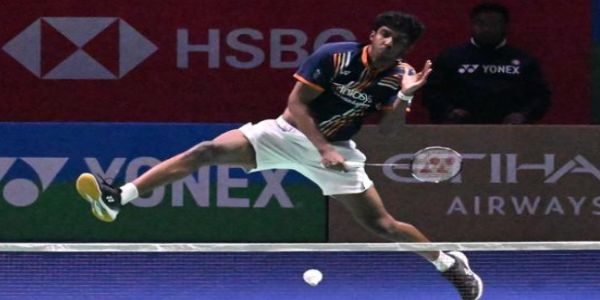
This time, the nucleus remains Srikanth and Prannoy in singles, with Lakshya Sen leading the current generation, and the world‑class doubles pair of Satwiksairaj Rankireddy and Chirag Shetty back after recovering from injury. The addition of Ayush Shetty, who recently became the first Indian in 61 years to reach the men’s final at the Badminton Asia Championships, injects youthful energy and depth. Sen has also consolidated his status by finishing runner‑up at the All England Championships for the second time in a row, further sharpening India’s singles‑lineup prospects.
In Group A, India’s path will be far from easy, with China, Canada and Australia looming as stiff challengers, particularly Canada’s Victor Lai and Brian Yang, who can trouble India’s top players if the conditions favour their rhythm.
On the women’s side, the Uber Cup assignment is more about building on recent strides than chasing a podium, at least in the immediate term. Led by two‑time Olympic medallist P. V. Sindhu, India faces Denmark on April 24, Ukraine on April 25 and China on April 27 in a tough Group A. The team has, in the past, claimed bronze medals in 2014 and 2016, but the absence of injured doubles stars Gayatri Gopichand and Treesa Jolly has forced a late reshuffle, placing greater responsibility on younger shuttlers.
The revised women’s squad leans on emerging singles players such as Tanvi Sharma, Devika Sihag, Unnati Hooda and Isharani Barua, while the revamped doubles combinations—Priya Konjengbam and Shruti Mishra, and Kavipriya Selvam with Simran Singh—must gel quickly under pressure. Sindhu’s role remains pivotal, even though her recent form has been marked by inconsistency; her ability to raise her level in knockout‑style ties could still tilt crucial matches in India’s favour.
Overall, expectations differ but are high. The men’s team, with a proven track record and the return of key players from injury, is viewed as a credible contender to not only reach the quarterfinals but potentially challenge for the title if the draws and the day‑to‑day form line up favourably. The women’s team, though facing a tougher card overall, carries the promise of a spirited, attack‑oriented performance that could mark it as a rising force in the Uber Cup landscape, driven by the same energy that has reshaped Indian badminton over the past decade.
---------------
Hindusthan Samachar / Jun Sarkar