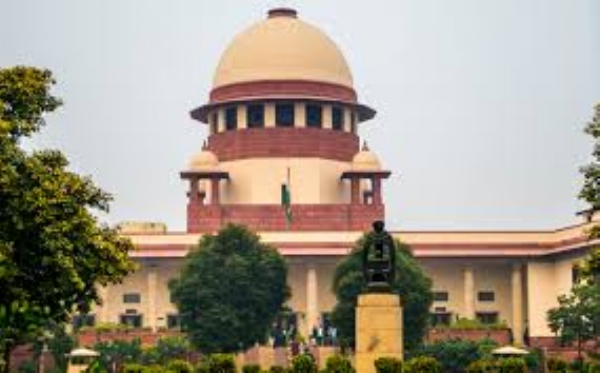
New Delhi, 23 April (H.S.): The Supreme Court’s ongoing hearing on the Sabarimala temple issue briefly took a lighter turn on Thursday when Justice B. V. Nagarathna dismissed references to “WhatsApp University” as a valid source of judicial information. The comment came during arguments in which senior advocate Neeraj Kishan Kaul, appearing for the Dawoodi Bohra community, cited an article by Congress leader Shashi Tharoor arguing that judicial intervention in religious matters is inappropriate.
Justice Nagarathna remarked that information drawn from what she called the “WhatsApp University” cannot be treated as acceptable legal material, underscoring the court’s preference for rigorous, academically grounded scholarship over widely circulated, informal content.
Chief Justice Surya Kant, presiding over the nine‑judge bench, added that while the court respects prominent writers and thinkers, individual opinions remain personal and cannot substitute for reasoned legal doctrine.
Justice Nagarathna then quipped that views must not originate from “WhatsApp University,” prompting laughter in the courtroom and a quick clarification that the debate is not about judging which “university” is better, but about the reliability of the source.
The bench, comprising Justice B. V. Nagarathna, Justice M. M. Sundresh, Justice Ahsanuddin Amanullah, Justice Arvind Kumar, Justice A. J. Mishra, Justice P. B. Varale, Justice R. Mahadevan and Justice Joymalya Bagchi, is revisiting the broader question of religious autonomy, gender equality and the extent of judicial interference in temple‑entry disputes.
The current hearing follows the court’s landmark 4–1 decision of September 28, 2018, which held that long‑standing discrimination against women at Sabarimala was unconstitutional and that biological and physiological differences cannot be used to curtail women’s right to religious freedom.
In that earlier judgment, the court observed that women have been treated as less worthy than men for decades, and pointedly noted that while society worships women in the form of goddesses, it simultaneously denies them equal access to holy spaces.
The present proceedings are expected to refine the contours of that ruling, particularly in the context of religious denominations that claim exemption from gender‑equality norms under the Constitution’s right to manage religious affairs.
---------------
Hindusthan Samachar / Jun Sarkar
23 Apr 2026
PM Modi announces ex‑gratia for Uttarakhand road‑accident victims, 8 dead in Tehri Garhwal gorge plunge
23 Apr 2026