Tehran / Tel Aviv / Dubai,02 April (H.S.): The joint U.S.–Israel military campaign against Iran, launched on February 28, has turned West Asia into a battlefield, with Israel, Iran, Kuwait, and Lebanon engulfed in a firestorm of missiles, rockets, and drones. In retaliation for American‑Israeli strikes on Iranian territory, Tehran has intensified attacks on Israel and on every Gulf country that hosts U.S. or allied forces, turning the skies over the region into a hailstorm of burning projectiles.
Under pressure from the global community, U.S. President Donald Trump has floated indirect peace overtures, but Iran’s leadership has dismissed them as tricks, insisting it will not accept an endless cycle of “war, negotiations, cease‑fire, and then repeat.”
Iranian Foreign Ministry spokesperson Ismail Baghai warned that the conflict is catastrophic not only for Tehran but for the entire region, saying Iran’s armed forces are fully prepared to respond to every strike. “The war has been imposed on us; survival means fighting back,” he said.
In the capital Tehran, Mayor’s spokesperson Abdolmohammad Mohammadkhani said repeated strikes have damaged roughly 33,000 homes, ranging from broken windows and doors to large‑scale reconstruction or complete rebuilding.
About 1,869 families are struggling to find shelter, with 1,245 already relocated to 23 separate housing complexes.
Iran’s “Khater‑Al‑Anbiya” Air and Space Command has warned that the U.S. and Israel underestimate its military strength.
The command claims that its strategic missile‑production centres, long‑range precision drones, modern air‑defence and electronic‑warfare systems, and special‑operations assets remain intact and were not hit in the strikes. “Only peripheral facilities have been targeted,” it said, promising “crushing counter‑strikes until the last breath.”
In northern Israel, Iranian rockets have hit the Upper Galilee region, sending residents of Hatzor, Haglilit, and Amuka running for shelters and setting the skyline ablaze. In Kiryat Shmona, two people aged 85 and 34 were injured in rocket strikes that also blew out the walls of a house.
Meanwhile, Hezbollah in Lebanon has escalated its campaign against Israel, concentrating its operations around the border town of Anjar, from where fighters are said to launch rockets and drones into Israeli military positions. Hezbollah claims that, over four weeks of fighting, the death toll in Lebanon has risen to 1,318, with nearly 4,000 injured; a recent strike reportedly wiped out an entire family—husband, wife, and two daughters—in the Nabatieh district.
In the Gulf, attacks have hit multiple countries. Bahrain’s Amazon‑owned cloud‑computing centre was damaged in an Iranian strike; missiles were fired at Qatar’s Al Udeid Air Base and at a U.S. military base in Jordan. Kuwait and the UAE have seen hits on energy infrastructure and areas near U.S. installations, while Saudi military sites have reported American casualties.
Starting on March 30, Iranian forces have repeatedly targeted flights at Kuwait International Airport, forcing prolonged disruptions. The country’s National Bank has closed its main headquarters for security reasons.
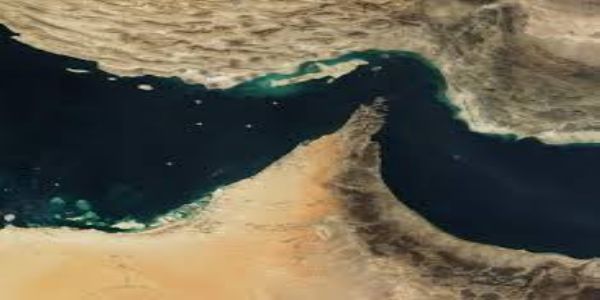
Iran has also laid mines and deployed underwater drones in the Strait of Hormuz, threatening one of the world’s busiest maritime corridors.
The conflict has now claimed civilian and diplomatic spaces once seen as neutral: the U.S. Embassy in Baghdad has warned that Iran‑linked militias may stage mass attacks on central Baghdad in the next 24–48 hours, targeting Americans, universities, hotels, airports, and U.S.‑linked facilities, and even plotting abductions. The embassy has urged all U.S. citizens to leave Iraq immediately.
From Tel Aviv to Tehran, Beirut to Dubai, the region is in a state of near‑total warfare, with no diplomatic off‑ramp in sight and the risk of further escalation mounting by the hour.
---------------
Hindusthan Samachar / Jun Sarkar

02 Apr 2026