Kathmandu, 19 April (H.S.):
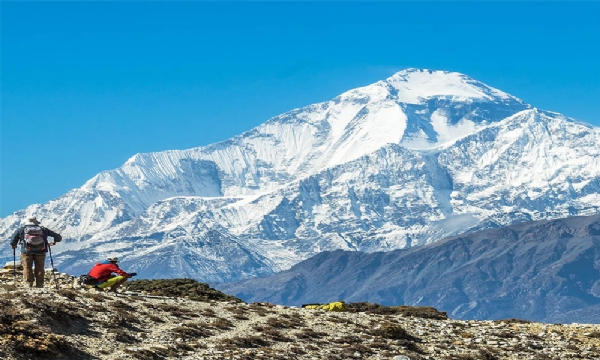
The spring 2026 climbing season on Annapurna Himal, the world’s tenth‑highest mountain, has officially begun with the first successful ascent of the year. Rising to 8,091 metres in the Annapurna region of Myagdi district, Nepal, the peak is renowned for its technical difficulty and avalanche‑prone slopes, making any successful summit a notable milestone in the Himalayan climbing calendar.
A seven‑member Nepali climbing team led by Lakpa Sherpa of Seven Summit Treks joined five foreign mountaineers in completing the season’s inaugural climb on Sunday morning. The team reached the summit just as the first rays of sunlight broke over the western Himalayas, marking a symbolic opener to this year’s high‑altitude campaign.
The international contingent included Charles Page of Canada, Valery Babanov and Vladimir Afanasiev of Russia, Yuri Kuglov of Russia, and Isfarali Asurli of Azerbaijan. On the Nepali side, the team comprised Lakpa Sherpa along with Chhewang, Dawa Nurbu, Pasang Dungpa, Chhangba, Taraman, and Pasang Sherpa. Expedition organisers said the group followed the standard route via the Herzog trajectory, with careful coordination between Sherpa guides and climbers to manage altitude and weather risks.
In the same morning window, a separate team of two climbers—one from the Netherlands and one from Australia—reached the summit with the assistance of a Sherpa guide, further confirming that the mountain is now open for the season. Tejbahadur Gurung, the route engineer on the Maurice Herzog Track, noted that this first successful push will likely encourage more climbers to move through the base‑camp area in the coming days, boosting footfall for trekkers and tourism‑related services.
Nepal’s Department of Tourism has already issued permits for 27 climbers organised into four expedition groups targeting Annapurna I this year, generating approximately ₹1.20 crore and 49,175 Nepali rupees in revenue. By comparison, in last year’s spring season, 66 climbers had obtained permits for Annapurna, reflecting both the peak’s enduring appeal and the cautious scaling of numbers in response to safety and environmental concerns.
Annapurna’s place in mountaineering history is deeply symbolic. In 1950, French climber Maurice Herzog made the first successful ascent of an 8,000‑metre peak anywhere when he summited Annapurna, a feat that reshaped high‑altitude climbing. Three years later, in 1953, Edmund Hillary and Tenzing Norgay Sherpa would carry that pioneering spirit to the world’s highest summit, Mount Everest (Sagarmatha).
This season’s opening climb on Annapurna is being seen not only as a triumph for the mountaineers involved but also as a vital boost for Nepal’s tourism sector, which continues to rebuild and diversify its offerings around trekking and expedition‑based high‑altitude tourism.
---------------
Hindusthan Samachar / Jun Sarkar

19 Apr 2026