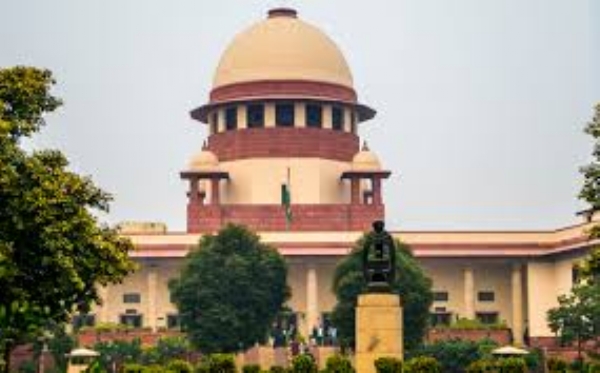
New Delhi, 17 April (H.S.): A petition relating to the alleged forced‑conversion and sexual‑harassment scandal at the Tata Consultancy Services (TCS) unit in Nashik, Maharashtra, has been moved before the Supreme Court, with the petitioner demanding that such acts be treated as terrorist‑like offences and a nationwide framework be put in place to curb unlawful conversions. The plea, filed by BJP leader and lawyer Ashwini Kumar Upadhyay, characterises the incident as a case of “organised” religious coercion that has “shaken the conscience of the nation.”
Allegations inside the TCS office
The Supreme Court petition references complaints by female employees that at the Nashik TCS office they were subjected to sexual harassment, mental abuse, and pressure to change their religion, including being coerced into religious practices and rituals.
Citing the ongoing criminal investigation and the arrest of several accused, including a senior HR official, the petition argues that the conduct goes beyond routine workplace misconduct and reflects a pattern of targeted religious conversion.
The petitioner submits that the modus operandi at the Nashik facility—where trainees and young employees on probation allegedly faced financial and emotional pressure, followed by overtures to convert—reveals an organised network that exploits vulnerable workers, especially women and religious minorities.
The plea urges the Court to treat such organised conversion schemes not merely as moral or social issues but as serious, systemic threats to social harmony and national integrity.
Upadhyay’s petition seeks a declaration that “forced religious conversion” carried out in a systematic, coercive manner falls within the ambit of a “terrorist‑act‑like” offence under the Bharatiya Nyaya Sanhita, 2023, even though it does not involve explosives or weapons. He argues that when conversion is engineered through intimidation, exploitation, and sexual pressure, it undermines public order and social cohesion and should be treated as a grave offence.
The petition additionally calls for directions to the Union and state governments to set up special courts dealing exclusively with forced‑conversion cases, and to evolve graded, non‑arbitrary sentencing structures that reflect the gravity of deceitful and coercive conversions.
It also demands that the Centre issue binding guidelines prohibiting religious coercion in workplaces, educational institutions, and shelter homes, and that states strengthen implementation of existing anti‑conversion and anti‑harassment laws, especially in the wake of the TCS‑Nashik episode.
By framing the Nashik‑based case as part of a wider national pattern, the petitioner urges the Supreme Court to treat the matter as a public‑interest benchmark, so that future occurrences of similar abuse can be met with consistent, deterrent‑oriented judicial and legislative responses.
The Supreme Court is expected to decide in due course whether to admit the petition for detailed hearing or to issue any interim directions on the framing of stricter norms against forced religious conversion.
---------------
Hindusthan Samachar / Jun Sarkar


17 Apr 2026