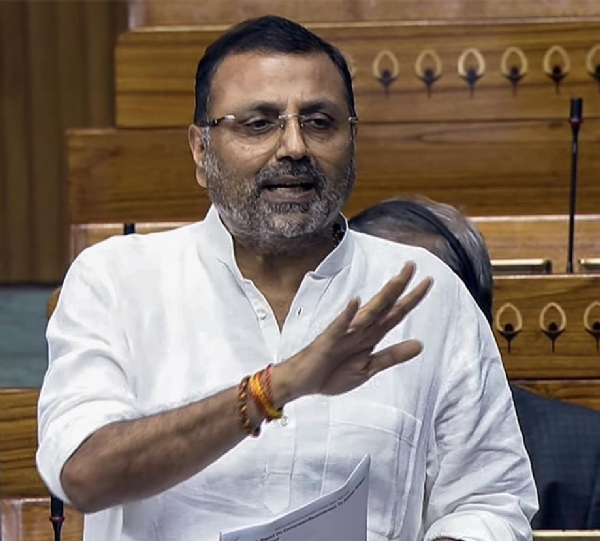
New Delhi, 17 April (H.S.): During Friday’s Lok Sabha debate on the trio of bills linked to women’s reservation, BJP MP Nishikant Dubey claimed that if the Nari Shakti Vandan Adhiniyam and related delimitation legislation fail to be enacted, the political representation of southern Indian states at the national level will shrink.
Dubey, the Lok Sabha member from Godda, Jharkhand, explained that the women’s reservation law envisages delimitation based on the latest population data, with 33 per cent of seats reserved for women under the constitutional framework laid down in Articles 81 and 82. He stressed that once delimitation is carried out on a population‑based quotient, some states will gain seats while others will lose them, altering the regional balance in Parliament.
Projecting the implications, Dubey asserted that in the absence of fresh delimitation following the bill’s passage, Uttar Pradesh’s Lok Sabha strength could rise to 87 seats, while Tamil Nadu’s would fall to 29, thereby diluting the voice of the south in the House.
He framed this as a direct consequence of the unresolved status of the delimitation‑linked provisions tied to the women’s reservation framework.
Accusing the Congress of shifting the debate toward OBC reservation, Dubey pointed out that former Prime Minister Manmohan Singh and party chairperson Sonia Gandhi had earlier resisted a caste‑wise census, which he argued has now become a sticking point in the broader discussion on fair representation. He maintained that the delay in implementing the women’s quota and accompanying delimitation would not only stall gender‑inclusive reform but also tilt parliamentary power further toward certain demographic regions at the expense of the south.
---------------
Hindusthan Samachar / Jun Sarkar

17 Apr 2026