Washington, 14 April (H.S.):
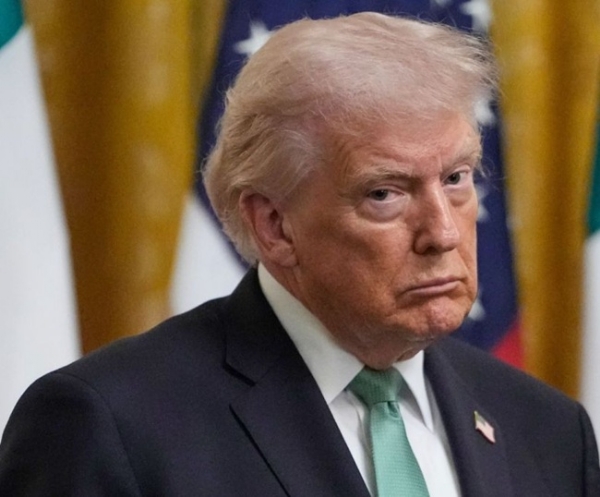
As the U.S. tightens its grip on the Strait of Hormuz with a large‑scale naval and air deployment, President Donald Trump has publicly reaffirmed that he has not yet spoken directly with Chinese leader Xi Jinping about the Iran war, even as Washington and Beijing prepare for a rescheduled summit in Beijing this May.
The posture underscores a delicate balancing act: Trump is using the threat of further escalation against Iran while simultaneously trying to keep Beijing on the sidelines—and, crucially, out of any military support role for Tehran.
Trump’s Iran‑Focused Agenda
In remarks at the White House late Monday, Trump reiterated that the United States maintains a “very good relationship” with China, but he made clear that Beijing would “have big problems” if it extended military help to Iran.
His language reflected a blend of public diplomacy and calibrated pressure, aimed both at deterring Chinese solidarity with Tehran and reassuring domestic audiences that Washington remains firmly in control of the Middle East posture.
Trump linked the prior delay of his China visit explicitly to the U.S. military operation in Iran, telling reporters that operational demands in the Middle East required him to remain in Washington during the initial phase of the conflict.
The pause, he suggested, was not a sign of estrangement but a reflection of what his administration portrays as a high‑stakes, time‑sensitive campaign to secure the Strait of Hormuz and force Iran back to the negotiating table.
The Beijing Summit Re‑Scheduled
Announcing the new dates on his social‑media platform, Trump wrote that his meeting with Xi has been rescheduled for May 14–15 in Beijing, with a reciprocal visit by the Chinese leadership to Washington to follow later in the year.
He described the exchanges as “Historic Visits” and a “Monumental Event,” casting them as moments that could either stabilize or, if mismanaged, deepen the global fault lines emerging from the Iran crisis.
White House officials confirmed that the original postponement was framed around “operational priorities” in the Middle East rather than political disagreement.
A senior administration figure noted that Xi had accepted the necessity of Trump’s presence in Washington during the military campaign, signaling that both leaders are treating the Hormuz standoff as a short‑term, high‑risk episode rather than a permanent rupture in their broader relationship.
Xi’s Stance on the West Asia Conflict
Throughout the Iran war, Beijing has consistently urged de‑escalation, calling for an immediate cessation of hostilities and warning that sustained strikes could plunge the region into a “vicious circle” of instability. Chinese statements have emphasized that unilateral force jeopardizes global energy security and trade, implicitly targeting the U.S. naval blockade and expanded military presence near the Strait of Hormuz.
At the same time, analysts note that Beijing is under growing pressure from Washington to cooperate on regional security, including on the reopening of the Strait, yet has resisted any binding military alignment.
This measured posture allows Xi to position China as a stabilizing power while avoiding entanglement in a conflict that could disrupt Sino‑Iranian economic ties and antagonize other Gulf partners.
Hormuz, Hangars, and High‑Stakes Diplomacy
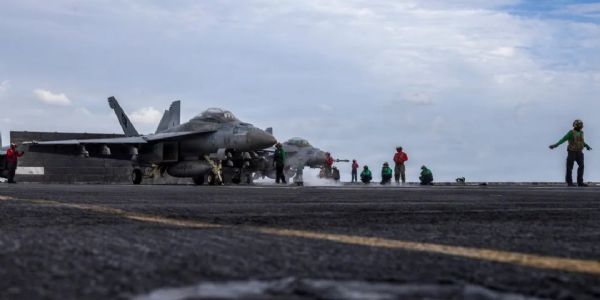
Trump’s recently announced blockade of Iranian ports, backed by carrier groups, F‑35B stealth fighters, MV‑22 Osprey tilt‑rotors, and amphibious assault ships, has turned the Strait of Hormuz into a highly militarized corridor.
Satellite imagery and defense‑industry reports indicate that U.S. forces are operating in a wide maritime buffer zone rather than a narrow, chokepoint‑centric deployment, a shift designed to control commercial flows without triggering a single, catastrophic flashpoint.
U.S. officials have framed the blockade as a tool to force Iran to reopen the Strait “fully, immediately, and safely,” while also restricting Tehran’s ability to enrich uranium and conduct related activities.
Critics, including some allies and arms‑control experts, warn that such a posture risks a miscalculation that could lock both sides into a prolonged standoff, especially if China perceives the U.S. actions as a prelude to permanent realignment in the Gulf.
The Trump–Xi Relationship in Play
Trump’s comments about Xi’s desire to “see the war ended” suggest that Washington believes Beijing has its own incentive to help cap the conflict, even as Beijing publicly distances itself from any U.S.‑led military framework.
The underlying tension, however, is clear: the United States wants to leverage the Iran crisis to extract concessions on security and trade, while China seeks to avoid direct confrontation and to preserve its role as a multilateral mediator.
As the May Beijing summit approaches, the Horn of Hormuz may become the silent third party at the table.
Whether the meetings solidify a fragile U.S.–China understanding on the Iran file—or expose a deeper rift shaping the global balance of power—will likely hinge on how Trump and Xi balance the short‑term urgency of the Strait with the long‑term logic of their intertwined economies and rivalries.
---------------
Hindusthan Samachar / Jun Sarkar