New Delhi, 14 April (H.S.):
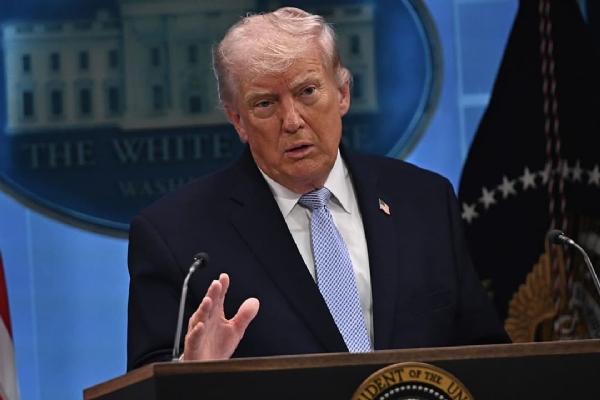
US President Donald Trump announced on Monday, a sweeping naval blockade of Iranian ports along the Persian Gulf and Gulf of Oman, deploying over 15 warships, F-35B Lightning II stealth fighters, and MV-22 Ospreys to compel Tehran to reopen the Strait of Hormuz. This escalation follows the collapse of ceasefire talks in Pakistan, where the US demanded Iran halt its nuclear ambitions and end restrictions on the vital waterway through which 20% of global oil flows.
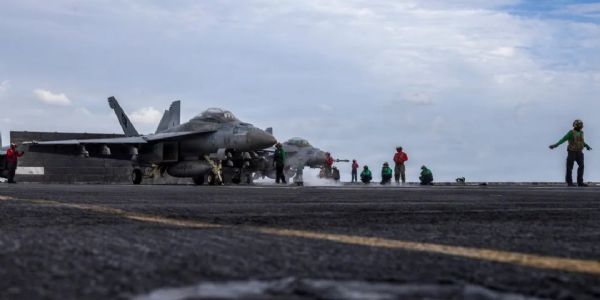
The amphibious assault ship USS Tripoli leads the arsenal, conducting night flight operations in the Arabian Sea with capacity for over 20 F-35B jets and tiltrotor MV-22 Ospreys, as confirmed by US Central Command (CENTCOM), which initiated enforcement at 1400 GMT.
CENTCOM specified the blockade targets all vessels entering or departing Iranian ports, sparing non-Iranian transits through the strait amid reports of two tankers reversing course post-announcement.
No US warships currently operate inside the Persian Gulf, with the USS Abraham Lincoln carrier group positioned offshore alongside 16 vessels total.
Tehran vowed reciprocal threats across regional ports, declaring Persian Gulf security indivisible and warning no haven exists for adversaries. Iranian officials, including parliament spokesperson Mohammad Bagher Qalibaf, dismissed the move as bluff and promised fierce resistance, while UN envoy Amir-Saeid Iravani seeks reparations from US allies like Saudi Arabia and UAE.
State media released footage of prior US warship standoffs, amplifying rhetoric of elimination from Trump, who claimed Iran's navy obliterated yet cautioned against fast-attack remnants.
Brent crude neared $100 per barrel, up from $70 pre-war, inflating gasoline and commodity costs worldwide as Iran's wartime oil exports—often via sanction-evading dark fleet tankers—face interdiction.
UK and French leaders plan an urgent summit, while analysts question the blockade's viability under international law, which mandates impartiality and humanitarian access.
With the ceasefire expiring April 22 amid 3,000+ Iranian deaths and stalled nuclear talks, the standoff tests endurance: Iran's economy versus global price shocks.
---------------
Hindusthan Samachar / Jun Sarkar