Islamabad, 11 April (H.S.):
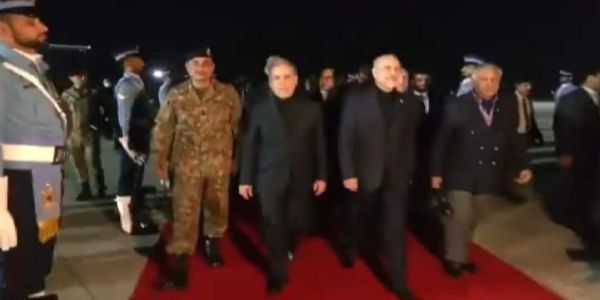
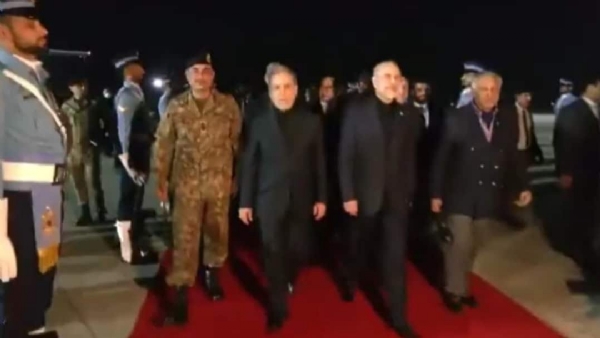
On this pivotal Saturday morning, a formidable Iranian delegation has arrived in Pakistan's capital, setting the stage for high-stakes peace negotiations with the United States amid a fragile two-week ceasefire that teeters on the brink of either resolution or rupture.
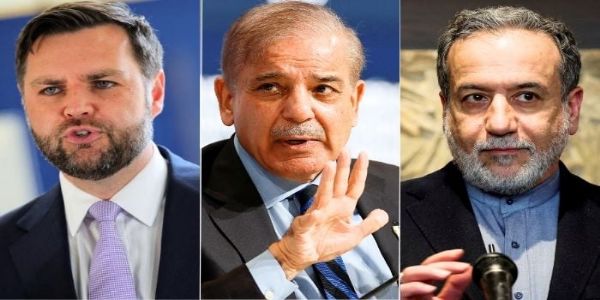
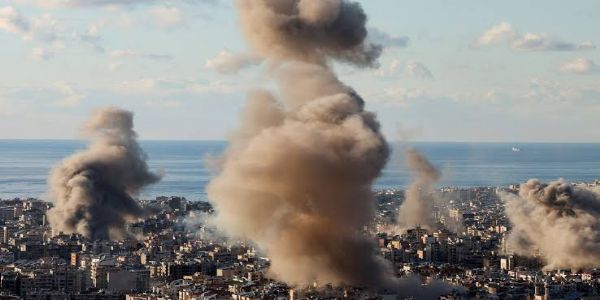
Spearheaded by the venerable Parliament Speaker Mohammad Bagher Ghalibaf also rendered as Baqer Qalibaf and Foreign Minister Abbas Araghchi, the extensive entourage of officials and technical experts underscores the intricate gravity of the impending parleys. Their advent follows President Donald Trump's announcement earlier this week of a temporary truce, suspending a harrowing six-week conflagration marked by U.S. and Israeli strikes on Iran, Tehran's retaliatory blockade of the Strait of Hormuz, and persistent skirmishes involving Hezbollah in Lebanon.
Upon disembarking, Speaker Ghalibaf articulated Tehran's tempered disposition, blending diplomatic openness with profound wariness forged by history. Our experience of negotiations with the Americans has always been met with failure and breach of promise. They attacked us twice in the middle of the negotiations. We have goodwill but no trust, he avowed, while affirming Iran's readiness for a bona fide accord that honors its sovereign prerogatives.
Tehran has stipulated preconditions for substantive discourse, encompassing the expeditious unfreezing of its sequestered overseas assets and ironclad assurances of a parallel cessation in Lebanon. Ghalibaf emphasized that deliberations will not advance absent fulfillment of these imperatives, reflecting Iran's strategic calculus in a conflict that has disrupted global energy arteries and inflicted widespread devastation.
From Washington, Vice President JD Vance helms the American delegation, exuding measured optimism tempered by vigilance. If they're going to try to play us, then they're going to find the negotiating team is not that receptive, he cautioned, signaling resolve against perceived gamesmanship.
President Trump, in characteristically forthright remarks, amplified the asymmetry of leverage, proclaiming on social media: The Iranians don't seem to realize they have no cards, other than a short term extortion of the World by using International Waterways.
The only reason they are alive today is to negotiate! This unyielding rhetoric arrives as U.S. naval assets linger in the Gulf, poised to enforce the Strait's reopening—a non-negotiable red line amid Iran's 10-point proposal and Washington's counter-framework demanding nuclear renunciation and military curtailment.
Islamabad, fortified into a high-security bastion with its Red Zone sealed, owes its improbable role to the deft mediation of Prime Minister Shehbaz Sharif and military stewards.
As closed-door sessions loom this Saturday, analysts portray the summit as a crucible of mutual suspicion, where Iran's preconditioned overtures clash with America's maximalist demands. Triumph could unfurl de-escalation and economic reprieve; impasse imperils a vortex drawing in Lebanon, the Gulf, and beyond, with the Hormuz lifeline and nuclear specter suspended in the balance.
---------------
Hindusthan Samachar / Jun Sarkar