Jerusalem, 10 April (H.S.):
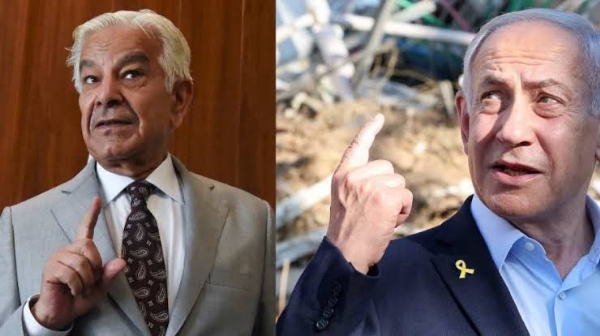
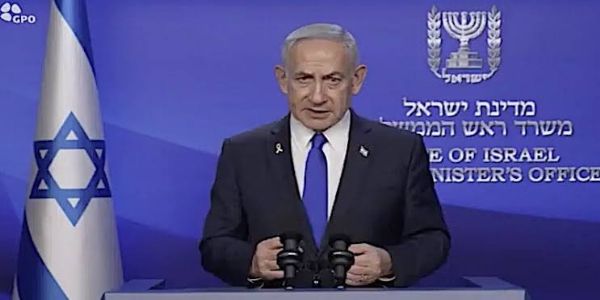
Israeli Prime Minister Benjamin Netanyahu issued a scathing rebuke against Pakistan's Defence Minister Khawaja Asif, branding his inflammatory social media post as an outrageous incitement to destroy Israel, amid escalating tensions over Israel's military strikes in Lebanon.
In a post on X dated Thursday, Asif lambasted Israel as an evil entity and a curse for humanity, accusing it of perpetrating genocide in Lebanon while peace talks unfolded in Islamabad. He escalated his rhetoric by declaring, I hope and pray that the people who created this cancerous state on Palestinian land... burn in hell. The remarks came against the backdrop of Israel's heaviest bombardment of Lebanon since Iran-backed Hezbollah entered the fray, which has killed hundreds and strained a fragile US-Iran ceasefire less than 48 hours old.
Netanyahu's office swiftly countered on X, stating that such a call for Israel's annihilation from any government—let alone one positioning itself as a neutral mediator—is intolerable. This is not a statement that can be tolerated from any government, especially not from one that claims to be a neutral arbiter for peace, the statement read. Israel's Foreign Minister Gideon Sa'ar amplified the response, denouncing Asif's words as blatant antisemitic blood libels that implicitly demand Israel's eradication. Sa'ar affirmed that Israel would robustly defend itself against any threats vowing its destruction.
This rare public diplomatic clash underscores Israel's deepening skepticism toward Pakistan's mediating role in Middle East peace efforts. Israel's envoy to India, Reuven Azar, explicitly voiced distrust in Pakistan during an interview Thursday, asserting that both Jerusalem and Washington view Islamabad solely as a logistical conduit, not a trustworthy broker.
The exchange unfolds amid a volatile regional landscape. Lebanon was drawn into the conflict on March 2, when Hezbollah launched rockets at Israeli cities in retaliation for the assassination of Iran's supreme leader Ayatollah Ali Khamenei on the war's outset.
Israel's Wednesday strikes shattered an uneasy calm, prompting Netanyahu to clarify that the US-Iran truce—brokered by President Donald Trump—excludes Lebanon.
Trump had suspended attacks on Iran for two weeks following urgent appeals from Pakistan's Prime Minister Shehbaz Sharif and Army Chief Asim Munir, paving the way for talks originally slated for Islamabad.
Sharif had claimed the ceasefire encompassed everywhere, including Lebanon—a position Iran endorsed—but US Vice President JD Vance, overseeing the Iran negotiations, contradicted this, confining the pause to direct US-Iran hostilities.
Netanyahu, meanwhile, has directed ministers to pursue direct Washington-mediated talks with Lebanon next week, prioritizing Hezbollah's disarmament.
Complicating matters, Iranian outlets reported Thursday that Tehran might suspend its scheduled US dialogue in Islamabad unless Israel ceases Lebanese operations, threatening to unravel the diplomatic momentum. The broader war ignited on February 28 with joint US-Israeli strikes on Iran, and Strait of Hormuz tensions persist despite Trump's warnings that oil transit would continue with or without Iran.
Netanyahu's forthright engagement marks a departure from Israel's longstanding policy of minimal interaction with Pakistan, a nation without formal ties to the Jewish state. Analysts see this as a signal of fraying patience with intermediaries perceived as biased, potentially reshaping mediation dynamics in the protracted conflict.
---------------
Hindusthan Samachar / Jun Sarkar
10 Apr 2026