BEIRUT/Tel Aviv, 10 April (H.S.):
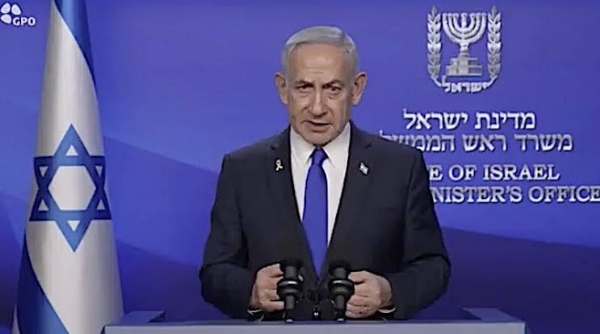
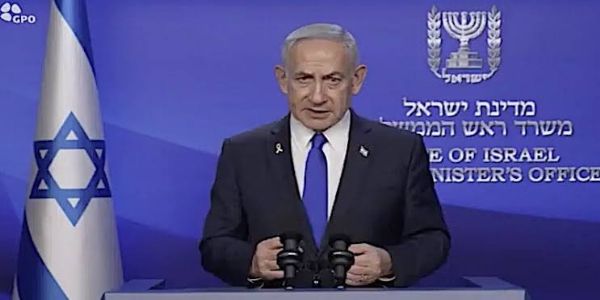
Israeli Prime Minister Benjamin Netanyahu has declared that there is “no ceasefire” in Lebanon, hours after authorising direct negotiations with the Lebanese government to disarm Hezbollah and pursue a formal peace pact. In a televised address, Netanyahu vowed that Israel would continue attacking Hezbollah with “full force” until Israeli border communities could be declared secure.
Netanyahu’s dual‑track strategy
Netanyahu told the nation that, despite opening a diplomatic channel, Israel would not halt its military campaign. “There is no ceasefire in Lebanon. We are continuing to strike Hezbollah with full force, and we will not stop until we restore your security,” he said. The Prime Minister’s Office later clarified that he had instructed the cabinet to begin direct talks with Lebanon as soon as possible, following what it described as repeated overtures from Beirut.
The stated objectives of the nascent negotiations are twofold: the full disarmament of Iran‑backed Hezbollah and the establishment of what Israeli officials have called a “historic peace agreement” between Israel and Lebanon.
Netanyahu’s office also noted that Israel “appreciates the call” from Lebanon’s Prime Minister earlier Thursday to demilitarise Beirut’s downtown area—a move seen in diplomatic circles as a tentative step toward de‑escalating the capital’s exposure to cross‑border attacks.
Lebanese leadership’s ceasefire focus
Lebanon’s President Joseph Aoun, speaking in a separate statement, reiterated that a comprehensive ceasefire remains the only viable path out of the current crisis. “The only solution to the current situation in Lebanon is to achieve a ceasefire between Israel and Lebanon,” he told reporters, as relayed by regional outlets such as Al Jazeera. Aoun added that the ceasefire proposal and the launch of direct talks with Israel had already begun and had so far received what he termed a “positive response.”
However, on the ground, the security environment remains tense. Lebanese officials reported fresh Israeli airstrikes targeting Hezbollah launch sites overnight, killing at least several individuals and damaging infrastructure in southern and central regions.
The strikes come barely hours after the announcement of upcoming negotiations, underscoring the fragile balance between diplomacy and military pressure.
The latest developments are playing out against a broader Middle East test of a recently brokered US–Iran truce agreement. Tehran has insisted that the ceasefire should also encompass Israeli military operations in Lebanon, framing ongoing attacks as a breach of the understanding. Washington and Tel Aviv, by contrast, have maintained that the truce does not extend to Lebanon, a disagreement that threatens to erode trust between the negotiating parties.
Analysts warn that the disconnect over the geographic scope of the truce could catalyse another spike in regional tensions, particularly if Hezbollah attempts to portray continued Israeli strikes as evidence that diplomacy is merely a cover for military consolidation. Iranian officials have already warned that any perception of Israel’s “impunity” in Lebanon could undermine the credibility of the broader de‑escalation framework now being managed from Washington and other Western capitals.
Within Israel, Netanyahu’s announcement has drawn both backing and criticism. Security hawks have praised the prime minister for combining military pressure with a clear diplomatic endgame, while some opposition figures have questioned whether striking Hezbollah while simultaneously engaging Lebanon could send mixed signals to both allies and adversaries.
Abroad, Arab governments have responded cautiously. Several Gulf states have privately urged Israel to accept a full ceasefire in Lebanon, citing the risk of further civilian casualties and regional spillover. At the same time, Western diplomats have welcomed the move toward direct talks, calling it a potential “first step” toward a long‑term security arrangement that could reduce the risk of recurring border conflicts.
Israeli officials say that the direct negotiations with Lebanon are expected to convene in Washington next week, under US‑mediated auspices. The talks are likely to focus on the practical modalities of Hezbollah’s disarmament, the delineation of security arrangements along the border, and the possible demilitarisation of key zones in both Lebanon and northern Israel.
As the diplomatic calendar takes shape, the skies above Lebanon remain unpredictable. The Israeli military has signalled that it will continue striking Hezbollah launch sites “as necessary,” while Hezbollah has vowed to retaliate for every Israeli incursion. With both sides insisting they are prepared for a prolonged standoff, the coming days will test whether Netanyahu’s dual‑track strategy of “peace through pressure” can translate into a durable ceasefire—or merely rearrange the front lines of a conflict that has already cost thousands of lives.
Hindusthan Samachar / Jun Sarkar
10 Apr 2026