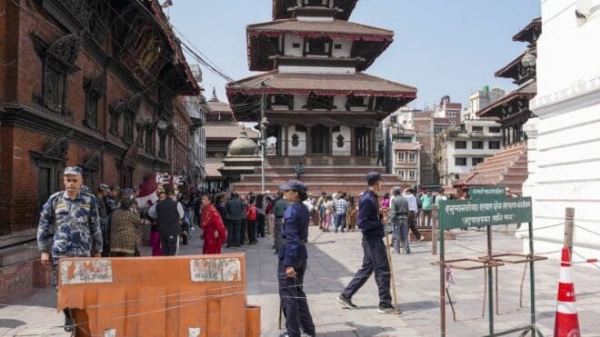
Kathmandu, 06 March (H.S.): Nepal's election officials kicked off vote counting early Friday for the nation's first general elections since explosive Gen Z-led protests toppled Prime Minister KP Sharma Oli's coalition government last year, marking a pivotal moment in the Himalayan republic's turbulent democracy.
With about 60% voter turnout recorded during Thursday's polling—higher than recent cycles amid widespread youth mobilization—results could reshape Nepal's political landscape. Frontrunners include Oli's Communist Party of Nepal (Unified Marxist-Leninist) (CPN-UML), Nepali Congress under Sher Bahadur Deuba, and Pushpa Kamal Dahal's CPN (Maoist Centre).
However, the wildcard is the Rastriya Swatantra Party (RSP), spearheaded by charismatic former rapper and Kathmandu Mayor Balendra Shah, whose anti-establishment campaign has galvanized disillusioned youth.The protests, erupting in mid-2025, accused Oli's administration of corruption, economic mismanagement, and failing to address climate vulnerabilities like glacial lake outburst floods.
Sparked by social media virality on platforms like TikTok and Instagram, the Gen Z uprising—dubbed Youth Storm—forced Oli's resignation after weeks of street clashes that claimed over 20 lives, per Human Rights Watch reports. An interim government, backed by the Supreme Court, fast-tracked these polls to restore stability.
Election Commission Nepal (ECN) data shows over 18 million eligible voters participated across 165 constituencies, with urban centers like Kathmandu and Pokhara logging turnout above 70%. Shah's RSP, founded in 2022, surged from municipal wins to national contention, promising digital governance, job creation for graduates, and anti-corruption tech platforms.
This isn't just an election; it's a reckoning for a generation ignored too long, Shah declared in a pre-poll rally streamed to millions.Veteran parties counter with experience: CPN-UML touts infrastructure gains, Nepali Congress emphasizes democratic continuity, and Maoists highlight social welfare. Yet, analysts from the Kathmandu-based Martin Chautari think tank warn of fragmentation risks, noting RSP's appeal could split the left vote.
As of 6:48 AM IST, early trends from sample counts in Lumbini and Bagmati provinces hinted at tight races, with RSP edging ahead in Kathmandu Valley seats. Full results are expected by evening, amid tightened security due to regional tensions from the Iran crisis spilling into South Asian energy markets.International observers from the European Union and India praised the process as largely peaceful, contrasting Nepal's upheaval with neighbors' stability.
A stable outcome could unlock stalled Belt and Road Initiative projects and IMF aid packages worth $500 million.This election underscores South Asia's youth bulge—Nepal's median age is 25—pushing for responsive governance in an era of climate shocks and economic precarity.
Hindusthan Samachar / Jun Sarkar

06 Mar 2026